



Parametry
- 296 stron
- 11 godzin czytania
Więcej o książce
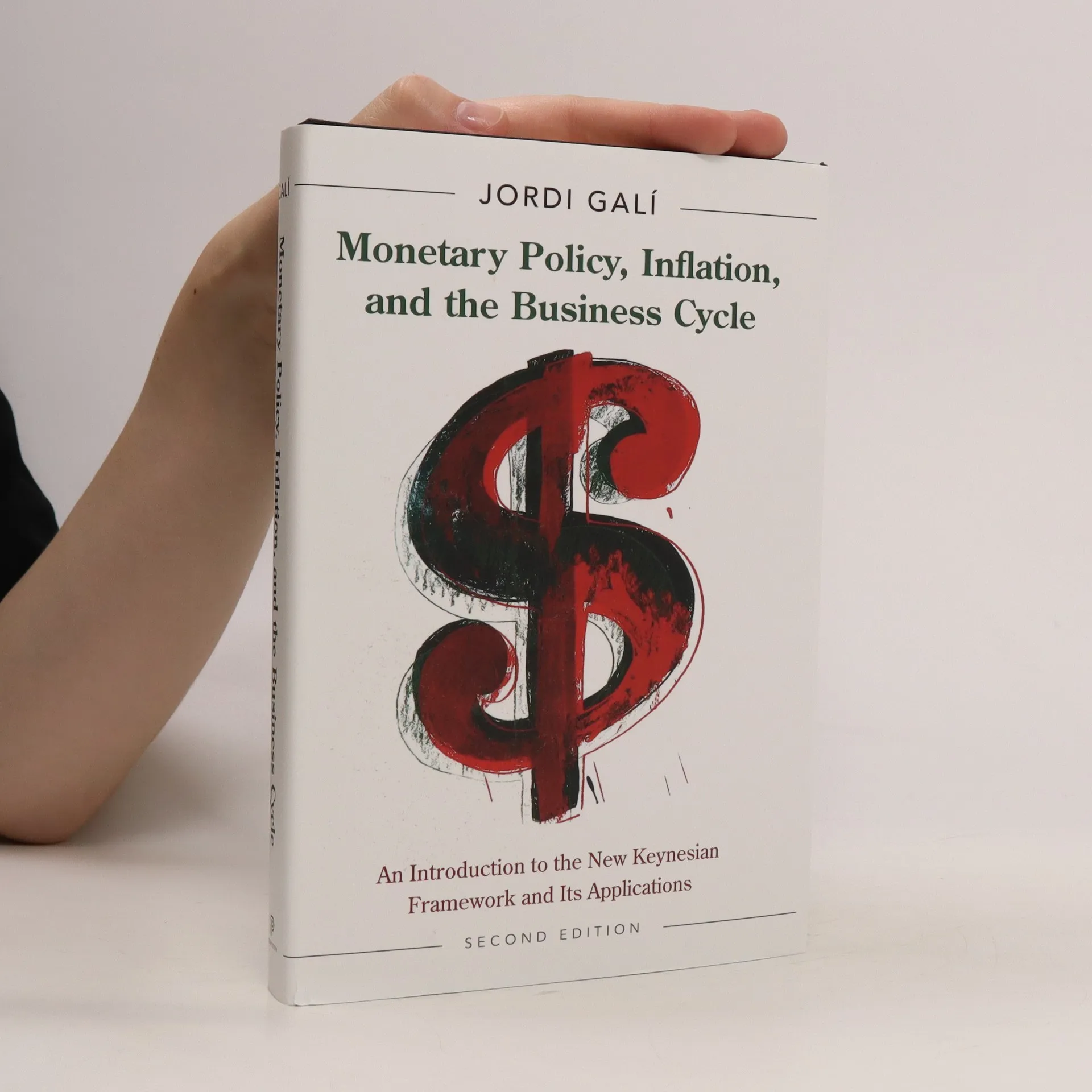
This revised second edition offers a rigorous graduate-level introduction to the New Keynesian framework and its applications to monetary policy. Serving as a foundational tool for analyzing monetary policy, inflation, economic fluctuations, and welfare, this framework is central to the medium-scale models developed at major central banks and international policy institutions. It underpins the price stability strategies adopted by most industrialized nations' central banks. Using a canonical version of the New Keynesian model, the author explores key issues in monetary policy design, including optimal strategies and the effectiveness of simple policy rules. Extensions of the baseline model are examined, incorporating factors like cost-push shocks, nominal wage rigidities, and open economy dynamics, with a focus on the implications for monetary policy and the benefits of inflation-targeting. New content addresses labor and financial market frictions, the zero lower bound on nominal interest rates, and the role of unemployment in monetary policy. This edition is the most current introduction to the New Keynesian framework, featuring a consistent benchmark model, new materials, and exercises, making it an ideal resource for graduate students, researchers, and market analysts.
Zakup książki
Monetary Policy, Inflation and the Business Cycle, Jordi Galí
- Język

- Rok wydania
- 2015
- Oprawa
- (twarda)
Metody płatności
Brakuje nam tutaj Twojej recenzji.
- Tytuł
- Monetary Policy, Inflation and the Business Cycle
- Język
- angielski
- Autorzy
- Jordi Galí
- Wydawca
- Princeton University Press
- Rok wydania
- 2015
- Oprawa
- twarda
- Liczba stron
- 296
- ISBN10
- 0691164789
- ISBN13
- 9780691164786
- Seria
- Kategorie
- Ocena
- 4 z 5
- Opis
- This revised second edition offers a rigorous graduate-level introduction to the New Keynesian framework and its applications to monetary policy. Serving as a foundational tool for analyzing monetary policy, inflation, economic fluctuations, and welfare, this framework is central to the medium-scale models developed at major central banks and international policy institutions. It underpins the price stability strategies adopted by most industrialized nations' central banks. Using a canonical version of the New Keynesian model, the author explores key issues in monetary policy design, including optimal strategies and the effectiveness of simple policy rules. Extensions of the baseline model are examined, incorporating factors like cost-push shocks, nominal wage rigidities, and open economy dynamics, with a focus on the implications for monetary policy and the benefits of inflation-targeting. New content addresses labor and financial market frictions, the zero lower bound on nominal interest rates, and the role of unemployment in monetary policy. This edition is the most current introduction to the New Keynesian framework, featuring a consistent benchmark model, new materials, and exercises, making it an ideal resource for graduate students, researchers, and market analysts.