

Parametry
Więcej o książce
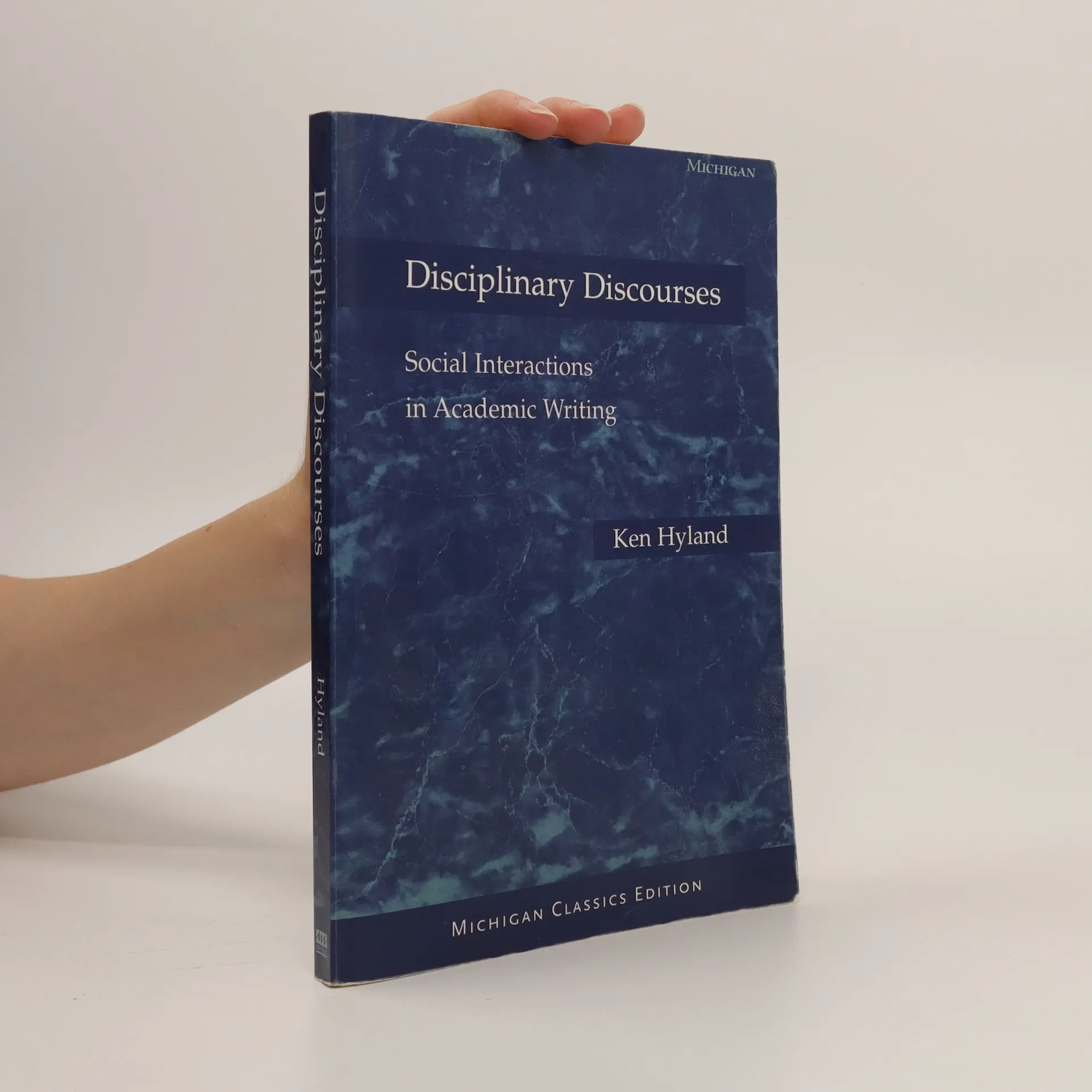
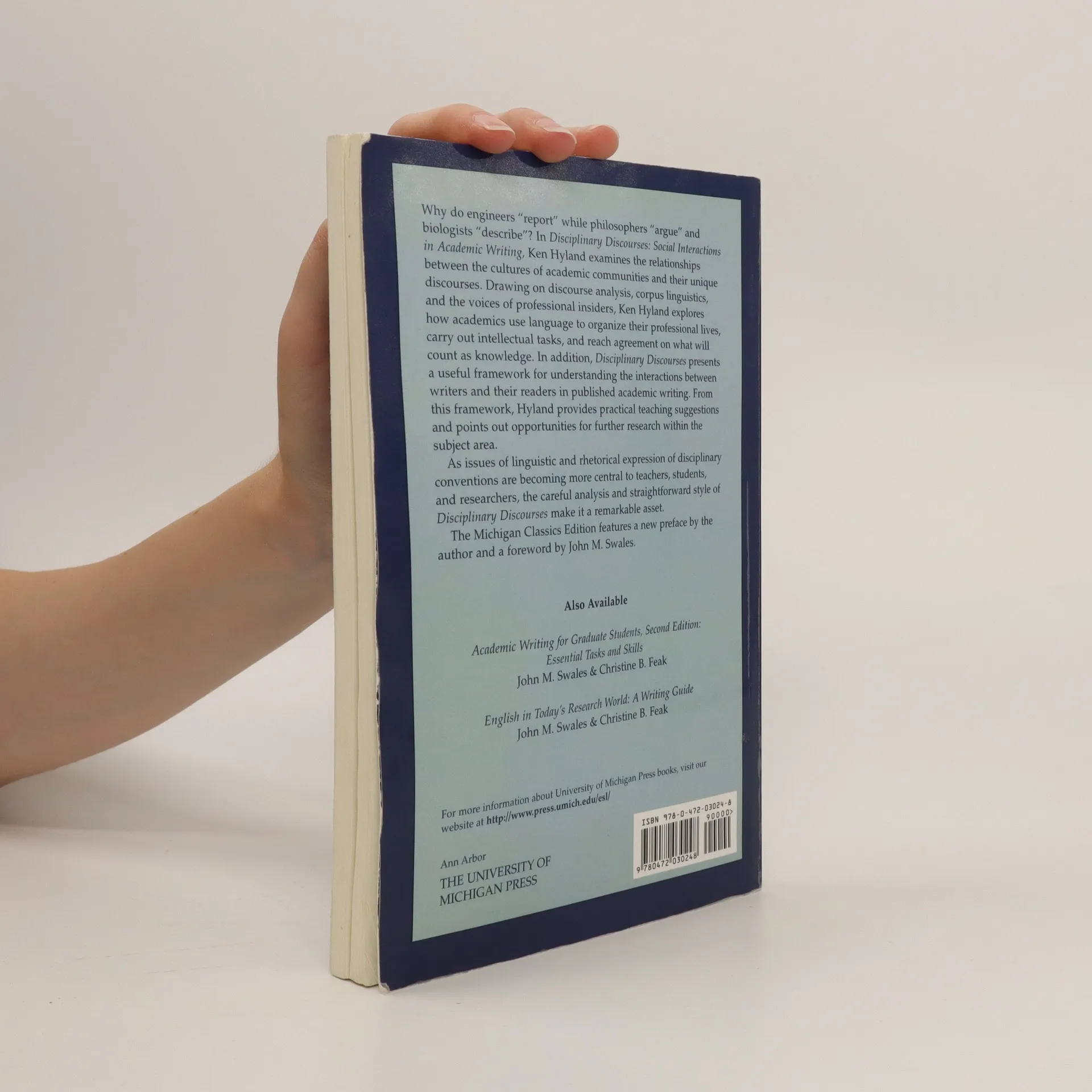
Why do engineers "report" while philosophers "argue" and biologists "describe"? In the Michigan Classics Edition of Disciplinary Social Interactions in Academic Writing , Ken Hyland examines the relationships between the cultures of academic communities and their unique discourses. Drawing on discourse analysis, corpus linguistics, and the voices of professional insiders, Ken Hyland explores how academics use language to organize their professional lives, carry out intellectual tasks, and reach agreement on what will count as knowledge. In addition, Disciplinary Discourses presents a useful framework for understanding the interactions between writers and their readers in published academic writing. From this framework, Hyland provides practical teaching suggestions and points out opportunities for further research within the subject area.As issues of linguistic and rhetorical expression of disciplinary conventions are becoming more central to teachers, students, and researchers, the careful analysis and straightforward style of Disciplinary Discourses make it a remarkable asset.The Michigan Classics Edition features a new preface by the author and a new foreword by John M. Swales.
Zakup książki
Disciplinary Discourses, Ken Hyland
- Język

- Rok wydania
- 2004
- Oprawa
- (miękka)
Metody płatności
Brakuje nam tutaj Twojej recenzji.
- Tytuł
- Disciplinary Discourses
- Język
- angielski
- Autorzy
- Ken Hyland
- Wydawca
- University of Michigan Press
- Rok wydania
- 2004
- Oprawa
- miękka
- ISBN10
- 0472030248
- ISBN13
- 9780472030248
- Seria
- Kategorie
- Tagi
- Pisanie
- Ocena
- 4,35 z 5
- Opis
- Why do engineers "report" while philosophers "argue" and biologists "describe"? In the Michigan Classics Edition of Disciplinary Social Interactions in Academic Writing , Ken Hyland examines the relationships between the cultures of academic communities and their unique discourses. Drawing on discourse analysis, corpus linguistics, and the voices of professional insiders, Ken Hyland explores how academics use language to organize their professional lives, carry out intellectual tasks, and reach agreement on what will count as knowledge. In addition, Disciplinary Discourses presents a useful framework for understanding the interactions between writers and their readers in published academic writing. From this framework, Hyland provides practical teaching suggestions and points out opportunities for further research within the subject area.As issues of linguistic and rhetorical expression of disciplinary conventions are becoming more central to teachers, students, and researchers, the careful analysis and straightforward style of Disciplinary Discourses make it a remarkable asset.The Michigan Classics Edition features a new preface by the author and a new foreword by John M. Swales.