




Więcej o książce
As an uncompromising defense of legal positivism, this book insists on the separability of law and morality. After distinguishing among three main dimensions of morality, the book explores a variety of ways in which law has been perceived by natural-law theorists as integrally connected to each of those dimensions. Some of the chapters pose arguments against major philosophers who have written on these issues, including David Lyons, Lon Fuller, Antony Duff, Joseph Raz, Ronald Dworkin, John Finnis, Philip Soper, Neil MacCormick, Robert Alexy, Gerald Postema, Stephen Perry, and Michael Moore. Several other chapters extend rather than defend legal positivism; they refine the insights of positivism and develop the implications of those insights in strikingly novel directions. The book concludes with a long discussion of the obligation to obey the law a discussion that highlights the strengths of legal positivism in the domain of political philosophy as much as in the domain of jurisprudence.
Zakup książki
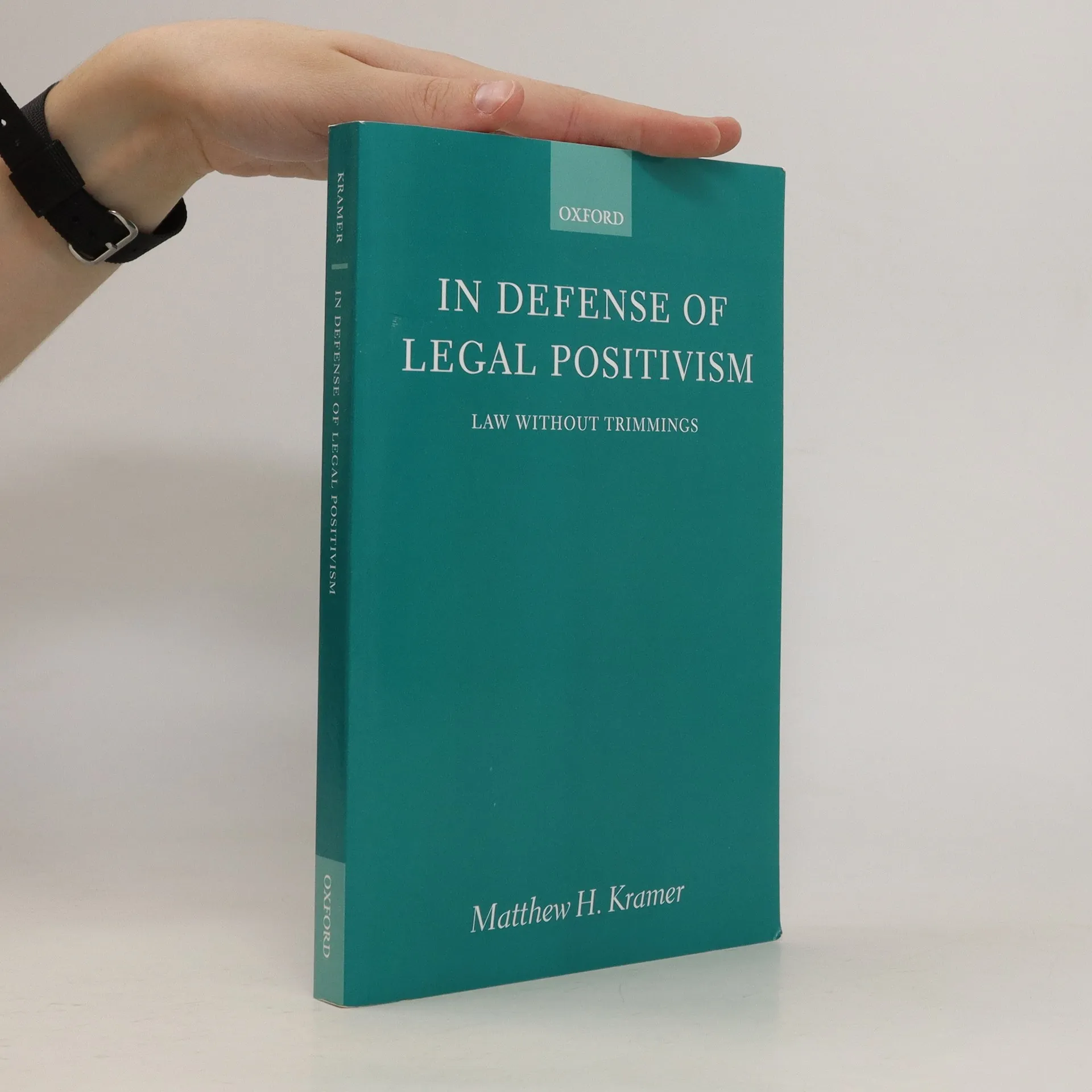
In Defense of Legal Positivism, Matthew H. Kramer
- Język

- Rok wydania
- 2007
- Oprawa
- (miękka)
Metody płatności
Brakuje nam tutaj Twojej recenzji.
- Tytuł
- In Defense of Legal Positivism
- Język
- angielski
- Autorzy
- Matthew H. Kramer
- Wydawca
- Oxford University Press, USA
- Rok wydania
- 2007
- Oprawa
- miękka
- Liczba stron
- 328
- ISBN10
- 019926483X
- ISBN13
- 9780199264834
- Seria
- Tagi
- Biznes, Tematy prawne
- Ocena
- 3 z 5
- Opis
- As an uncompromising defense of legal positivism, this book insists on the separability of law and morality. After distinguishing among three main dimensions of morality, the book explores a variety of ways in which law has been perceived by natural-law theorists as integrally connected to each of those dimensions. Some of the chapters pose arguments against major philosophers who have written on these issues, including David Lyons, Lon Fuller, Antony Duff, Joseph Raz, Ronald Dworkin, John Finnis, Philip Soper, Neil MacCormick, Robert Alexy, Gerald Postema, Stephen Perry, and Michael Moore. Several other chapters extend rather than defend legal positivism; they refine the insights of positivism and develop the implications of those insights in strikingly novel directions. The book concludes with a long discussion of the obligation to obey the law a discussion that highlights the strengths of legal positivism in the domain of political philosophy as much as in the domain of jurisprudence.