

Więcej o książce
This book was compiled and edited from lectures given by Venerable Ajahn Sumedho about the central teaching of the Buddha – that human unhappiness can be transcended through the spiritual path. The first exposition of the Four Noble Truths was presented by the Buddha in 528 B.C. at the Deer Park in Sarnath, near Varanasi. This consisted of a sutra – discourse – called the Dhammacakkappavattana Sutta, which literally means ‘the discourse that sets in motion the vehicle of teaching’. Excerpts from this sutra are quoted at the beginning of each chapter, describing the Four Noble Truths. The cited reference corresponds to the section of the scriptures where this discourse can be found. However, in the scriptures, the theme of the Four Noble Truths appears many more times, such as in the quotation that appears at the beginning of the Introduction.
Zakup książki
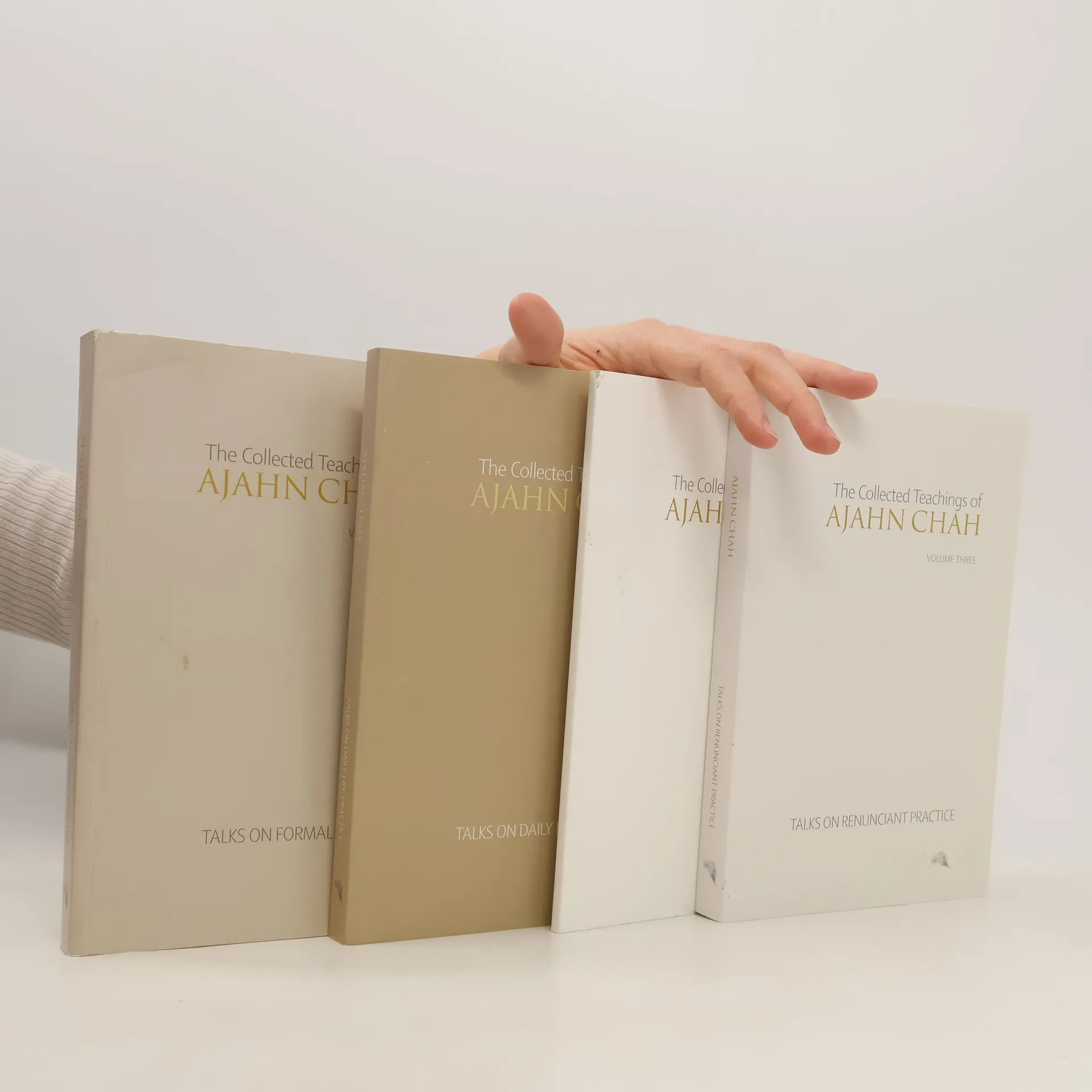
The collected teachings of Ajahn Chah., Phra Phōthiyānathēra
- Język

- Rok wydania
- 2011
- Oprawa
- (miękka)
Metody płatności
Brakuje nam tutaj Twojej recenzji.
- Tytuł
- The collected teachings of Ajahn Chah.
- Język
- angielski
- Autorzy
- Phra Phōthiyānathēra
- Wydawca
- Aruna Publications
- Rok wydania
- 2011
- Oprawa
- miękka
- ISBN10
- 0956884806
- ISBN13
- 9780956884800
- Seria
- Ocena
- 4,45 z 5
- Opis
- This book was compiled and edited from lectures given by Venerable Ajahn Sumedho about the central teaching of the Buddha – that human unhappiness can be transcended through the spiritual path. The first exposition of the Four Noble Truths was presented by the Buddha in 528 B.C. at the Deer Park in Sarnath, near Varanasi. This consisted of a sutra – discourse – called the Dhammacakkappavattana Sutta, which literally means ‘the discourse that sets in motion the vehicle of teaching’. Excerpts from this sutra are quoted at the beginning of each chapter, describing the Four Noble Truths. The cited reference corresponds to the section of the scriptures where this discourse can be found. However, in the scriptures, the theme of the Four Noble Truths appears many more times, such as in the quotation that appears at the beginning of the Introduction.