

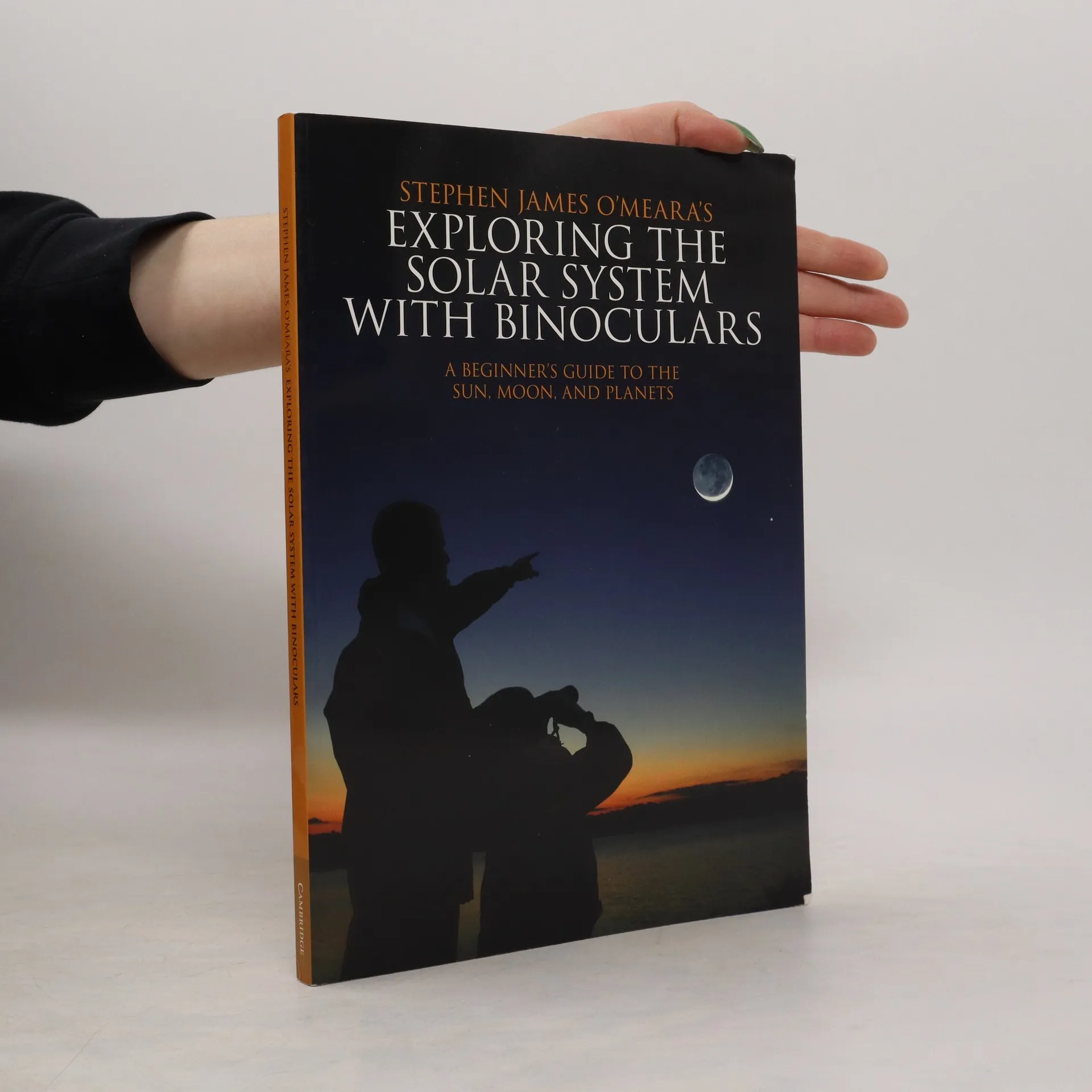
Więcej o książce
"In this journey of discovery, Stephen James O'Meara shows readers how to observe our Solar System wonders with ease and clarity, using the unaided eye, inexpensive handheld binoculars or large mounted binoculars. The book presents a new way to see and appreciate the wonders of the Solar System in detail, including lunar and solar eclipses, sunspots, craters on the Moon, planetary detail, meteors, and comets. It is a unique observing guide for all amateur astronomers proving you don't need big and expensive equipment to enjoy astronomy from your own backyard. Readers will learn how to find Venus in the daytime, how to observe faint features in bright comets, how to maximize your chances of seeing the most meteors during a shower, how to monitor the changing aspects of the planets and their moons, and much more"--Provided by publisher.
Zakup książki
Exploring the Solar System with Binoculars, Stephen James O'Meara
- Język

- Rok wydania
- 2010
- Oprawa
- (miękka)
Metody płatności
Brakuje nam tutaj Twojej recenzji.
- Tytuł
- Exploring the Solar System with Binoculars
- Język
- angielski
- Autorzy
- Stephen James O'Meara
- Wydawca
- Cambridge University Press
- Rok wydania
- 2010
- Oprawa
- miękka
- Liczba stron
- 166
- ISBN10
- 0521741289
- ISBN13
- 9780521741286
- Seria
- Tagi
- Kosmos
- Ocena
- 5 z 5
- Opis
- "In this journey of discovery, Stephen James O'Meara shows readers how to observe our Solar System wonders with ease and clarity, using the unaided eye, inexpensive handheld binoculars or large mounted binoculars. The book presents a new way to see and appreciate the wonders of the Solar System in detail, including lunar and solar eclipses, sunspots, craters on the Moon, planetary detail, meteors, and comets. It is a unique observing guide for all amateur astronomers proving you don't need big and expensive equipment to enjoy astronomy from your own backyard. Readers will learn how to find Venus in the daytime, how to observe faint features in bright comets, how to maximize your chances of seeing the most meteors during a shower, how to monitor the changing aspects of the planets and their moons, and much more"--Provided by publisher.