

Więcej o książce
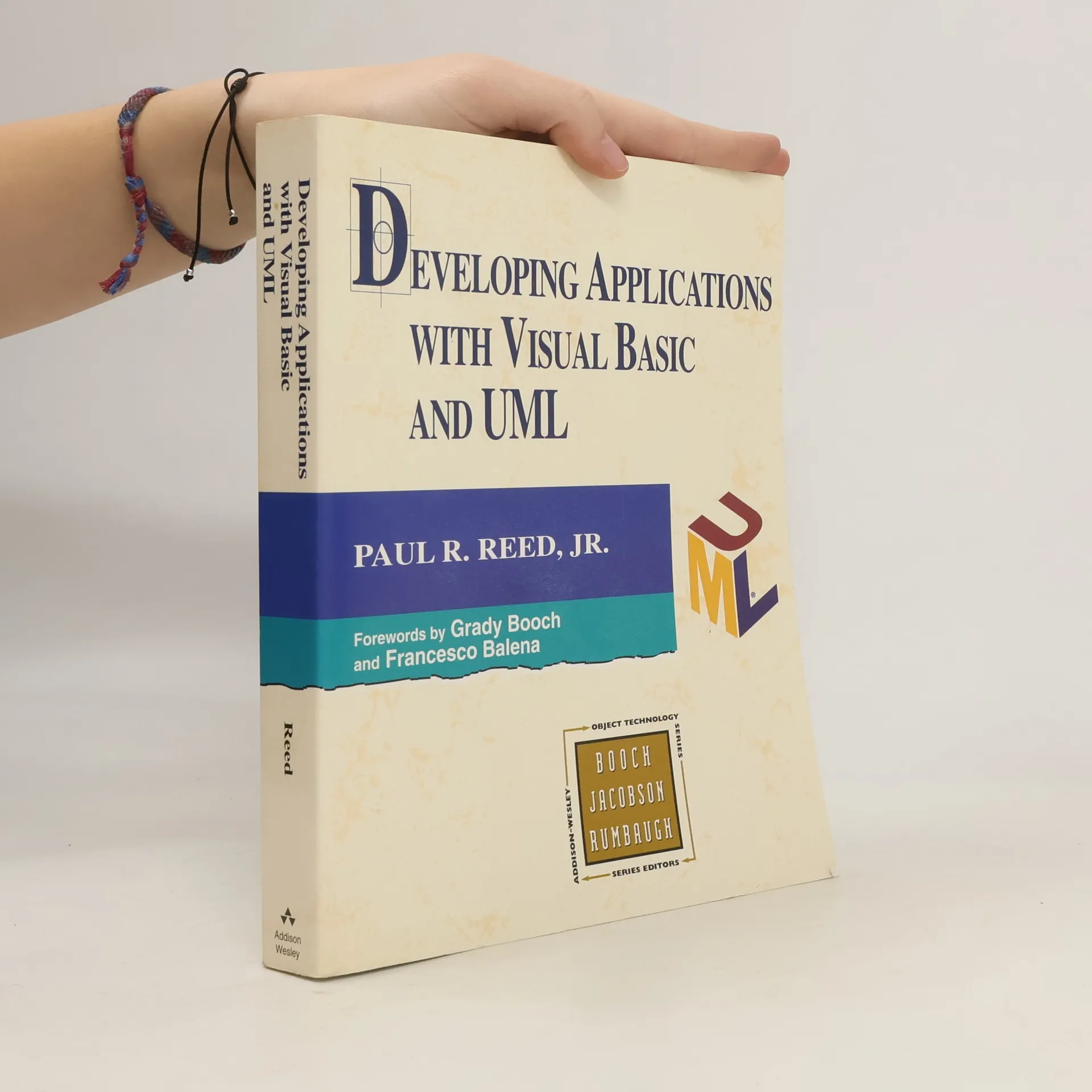
An essential resource for Visual Basic (VB) programmers who want to develop applications that are both resilient and robust, Developing Applications with Visual Basic and UML describes a proven development process for designing and implementing object-oriented client/server applications in VB using the Unified Modeling Language (UML). Guided by his own experiences as a developer applying UML and VB, the author provides clear explanations of the fundamentals of UML while also examining and illustrating the often misrepresented object-oriented properties of Visual Basic. In addition, the book incorporates in-depth information on developing VB applications utilizing DNA concepts, incorporating technologies such as DCOM and MTS, and integrating Web tools such as ASP, VB Script, and JavaScript to Internet-enable Visual Basic applications. A significant case study runs throughout the book, leading the reader through the lifecycle of a projectofrom requirements analysis to modeling and prototyping through finalizing the architecture and generating code. Through this study, the author demonstrates the design benefits of UML and shows how to translate a UML specification into Visual Basic code.
Zakup książki
Developing Applications with Visual Basic and UML, Paul R. Reed
- Język

- Rok wydania
- 2000
- Oprawa
- (miękka)
Metody płatności
Brakuje nam tutaj Twojej recenzji.
- Tytuł
- Developing Applications with Visual Basic and UML
- Język
- angielski
- Autorzy
- Paul R. Reed
- Wydawca
- Addison-Wesley Professional
- Rok wydania
- 2000
- Oprawa
- miękka
- Liczba stron
- 592
- ISBN10
- 0201615797
- ISBN13
- 9780201615791
- Tagi
- Ocena
- 2,35 z 5
- Opis
- An essential resource for Visual Basic (VB) programmers who want to develop applications that are both resilient and robust, Developing Applications with Visual Basic and UML describes a proven development process for designing and implementing object-oriented client/server applications in VB using the Unified Modeling Language (UML). Guided by his own experiences as a developer applying UML and VB, the author provides clear explanations of the fundamentals of UML while also examining and illustrating the often misrepresented object-oriented properties of Visual Basic. In addition, the book incorporates in-depth information on developing VB applications utilizing DNA concepts, incorporating technologies such as DCOM and MTS, and integrating Web tools such as ASP, VB Script, and JavaScript to Internet-enable Visual Basic applications. A significant case study runs throughout the book, leading the reader through the lifecycle of a projectofrom requirements analysis to modeling and prototyping through finalizing the architecture and generating code. Through this study, the author demonstrates the design benefits of UML and shows how to translate a UML specification into Visual Basic code.