



Więcej o książce
Will the rush of the information super-highway leave U.S. telecommunication policy behind, or can our policy effectively regulate the industry's future? Former FCC Bureau Chief Gerald Brock argues that existing agencies with overlapping responsibilities can wisely navigate the rapid changes ahead. He introduces a new theory of decentralized public decision-making to clarify the significant transformation from a heavily regulated monopoly to a market-oriented landscape. Drawing from his firsthand experience, Brock provides an authoritative and current history of telecommunication policy, examining decisions made by the FCC, state agencies, the Department of Justice, Congress, and federal courts. He illustrates how the decentralized decision-making process, often criticized for its chaotic nature, has positioned the U.S. as a leader in telecommunication reform. Brock traces the flow of information through the bureaucratic web that managed the divestiture and earlier transitions, such as the initial erosion of monopolies and the rise of private microwave systems. He convincingly argues that decentralized policymaking yields rational outcomes aligned with public preferences. With detailed insights on subsidies' impact on policy and an analysis of post-divestiture events, this study could revitalize U.S. telecommunication policymaking and is essential for those engaged in the ongoing debate over the information infrastructure and p
Zakup książki
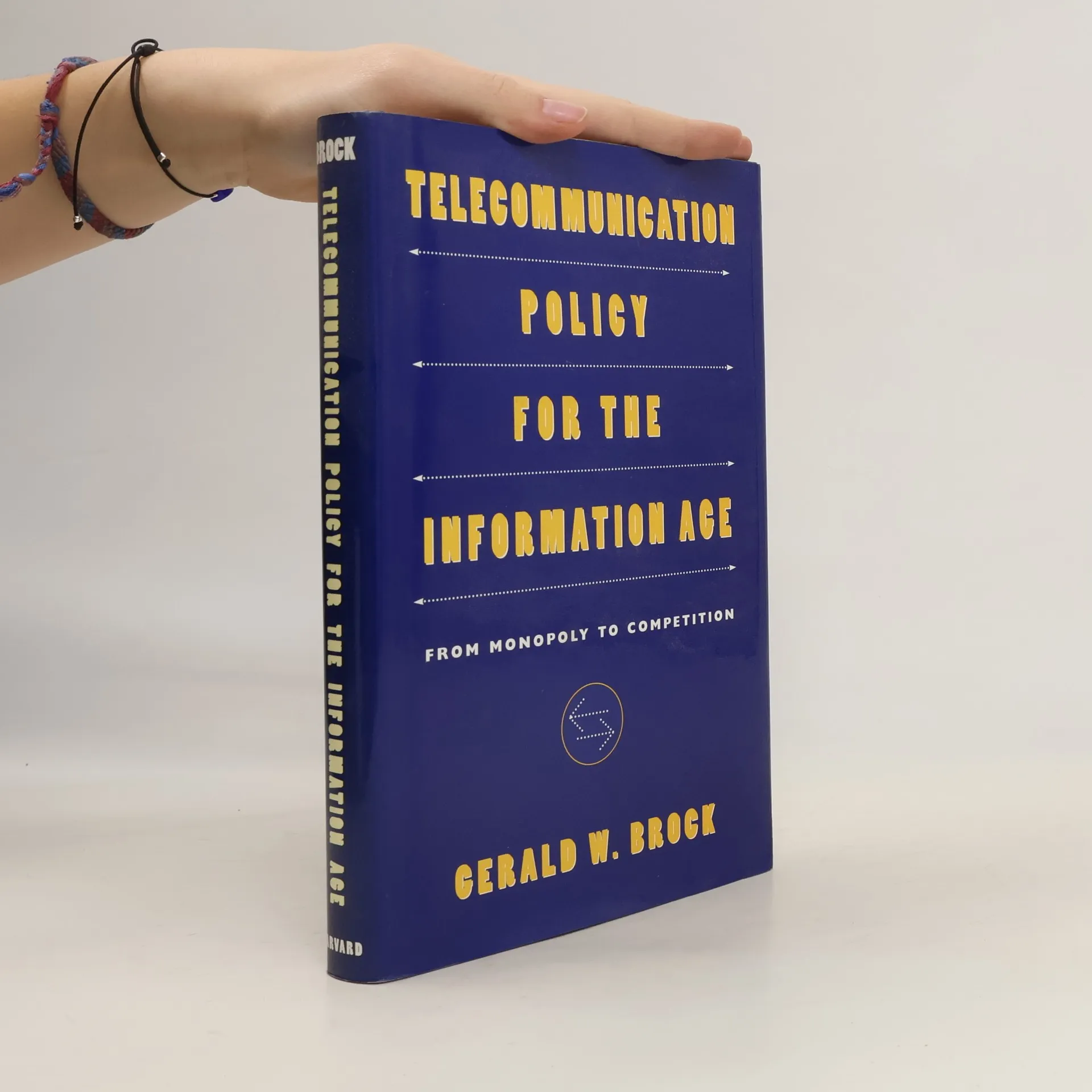
Telecommunication Policy for the Information Age, Gerald W. Brock
- Język

- Rok wydania
- 1994
- Oprawa
- (twarda)
Metody płatności
Nikt jeszcze nie ocenił.
- Tytuł
- Telecommunication Policy for the Information Age
- Język
- angielski
- Autorzy
- Gerald W. Brock
- Rok wydania
- 1994
- Oprawa
- twarda
- Liczba stron
- 336
- ISBN10
- 0674872770
- ISBN13
- 9780674872776
- Seria
- Opis
- Will the rush of the information super-highway leave U.S. telecommunication policy behind, or can our policy effectively regulate the industry's future? Former FCC Bureau Chief Gerald Brock argues that existing agencies with overlapping responsibilities can wisely navigate the rapid changes ahead. He introduces a new theory of decentralized public decision-making to clarify the significant transformation from a heavily regulated monopoly to a market-oriented landscape. Drawing from his firsthand experience, Brock provides an authoritative and current history of telecommunication policy, examining decisions made by the FCC, state agencies, the Department of Justice, Congress, and federal courts. He illustrates how the decentralized decision-making process, often criticized for its chaotic nature, has positioned the U.S. as a leader in telecommunication reform. Brock traces the flow of information through the bureaucratic web that managed the divestiture and earlier transitions, such as the initial erosion of monopolies and the rise of private microwave systems. He convincingly argues that decentralized policymaking yields rational outcomes aligned with public preferences. With detailed insights on subsidies' impact on policy and an analysis of post-divestiture events, this study could revitalize U.S. telecommunication policymaking and is essential for those engaged in the ongoing debate over the information infrastructure and p