

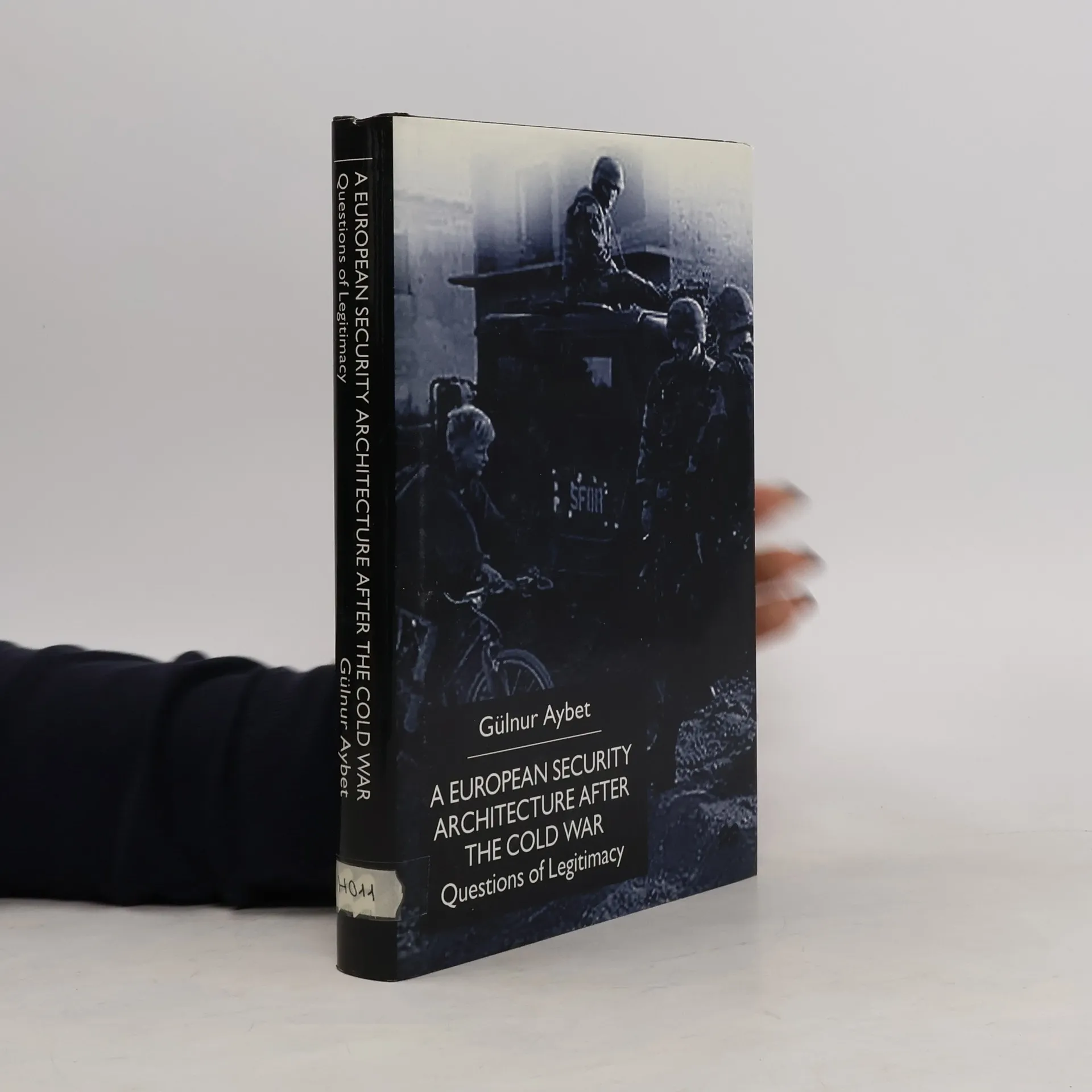


Więcej o książce
A European Security Architecture after the Cold War provides a critical account of the re-projection and redefinition of Western values and security institutions in the post-Coldwar era. This transformation is explored in three stages. The first stage covers the period 1990-91 and explains the preservation of a `western security community' inherited from the Cold War, through a process of institutional reconstruction largely carried out on paper. The second stage from 1991 to 1992 sees the incorporation of a `purpose' for these institutions as a framework for the implementation of collective security. The third stage explores the emerging questions of legitimacy surrounding the new tasks of these institutions as they become embroiled in the war in the former Yugoslavia. The precedents of legitimate intervention in upholding democracy, free markets and human rights in the post-coldwar era are examined from the perspectives of international law and Gramscian derived concepts of legitimacy, focusing on the acceptance of military power by civil society, and how intervention in these terms becomes a 'cultural practice'.
Zakup książki
A european security architecture after the cold war : questions of legitimacy, Gülnur Aybet
- Język

- Rok wydania
- 2000
- Oprawa
- (twarda)
Metody płatności
Nikt jeszcze nie ocenił.
- Tytuł
- A european security architecture after the cold war : questions of legitimacy
- Język
- angielski
- Autorzy
- Gülnur Aybet
- Wydawca
- Palgrave Macmillan
- Rok wydania
- 2000
- Oprawa
- twarda
- Liczba stron
- 316
- ISBN10
- 0333719263
- ISBN13
- 9780333719268
- Seria
- Opis
- A European Security Architecture after the Cold War provides a critical account of the re-projection and redefinition of Western values and security institutions in the post-Coldwar era. This transformation is explored in three stages. The first stage covers the period 1990-91 and explains the preservation of a `western security community' inherited from the Cold War, through a process of institutional reconstruction largely carried out on paper. The second stage from 1991 to 1992 sees the incorporation of a `purpose' for these institutions as a framework for the implementation of collective security. The third stage explores the emerging questions of legitimacy surrounding the new tasks of these institutions as they become embroiled in the war in the former Yugoslavia. The precedents of legitimate intervention in upholding democracy, free markets and human rights in the post-coldwar era are examined from the perspectives of international law and Gramscian derived concepts of legitimacy, focusing on the acceptance of military power by civil society, and how intervention in these terms becomes a 'cultural practice'.