


Więcej o książce
The launch ofa new book series is always a challenging eventn ot only for the Editorial Board and the Publisher, but also, and more particularly, for the first author. Both the Editorial Board and the Publisher are delightedt hat the first author in this series isw ell able to meet the challenge. Professor Freudenthal needs no introduction toanyone in the Mathematics Education field and it is particularly fitting that his book should be the first in this new series because it was in 1968 that he, and Reidel, produced the first issue oft he journal Edu cational Studies in Mathematics. Breakingfresh ground is therefore nothing new to Professor Freudenthal and this book illustrates well his pleasure at such a task. To be strictly correct the ‘ground’ which he has broken here is not new, but aswith Mathematics as an Educational Task and Weeding and Sowing, it is rather the novelty oft he manner in which he has carried out his analysis which provides us with so many fresh perspectives. It is our intention that this new book series should provide those who work int he emerging discipline of mathematicseducation with an essential resource, and at a time of considerable concern about the whole mathematics cu rriculum this book represents just such resource. ALAN J. BISHOP Managing Editor vii A LOOK BACKWARD AND A LOOK FORWARD Men die, systems last.
Zakup książki
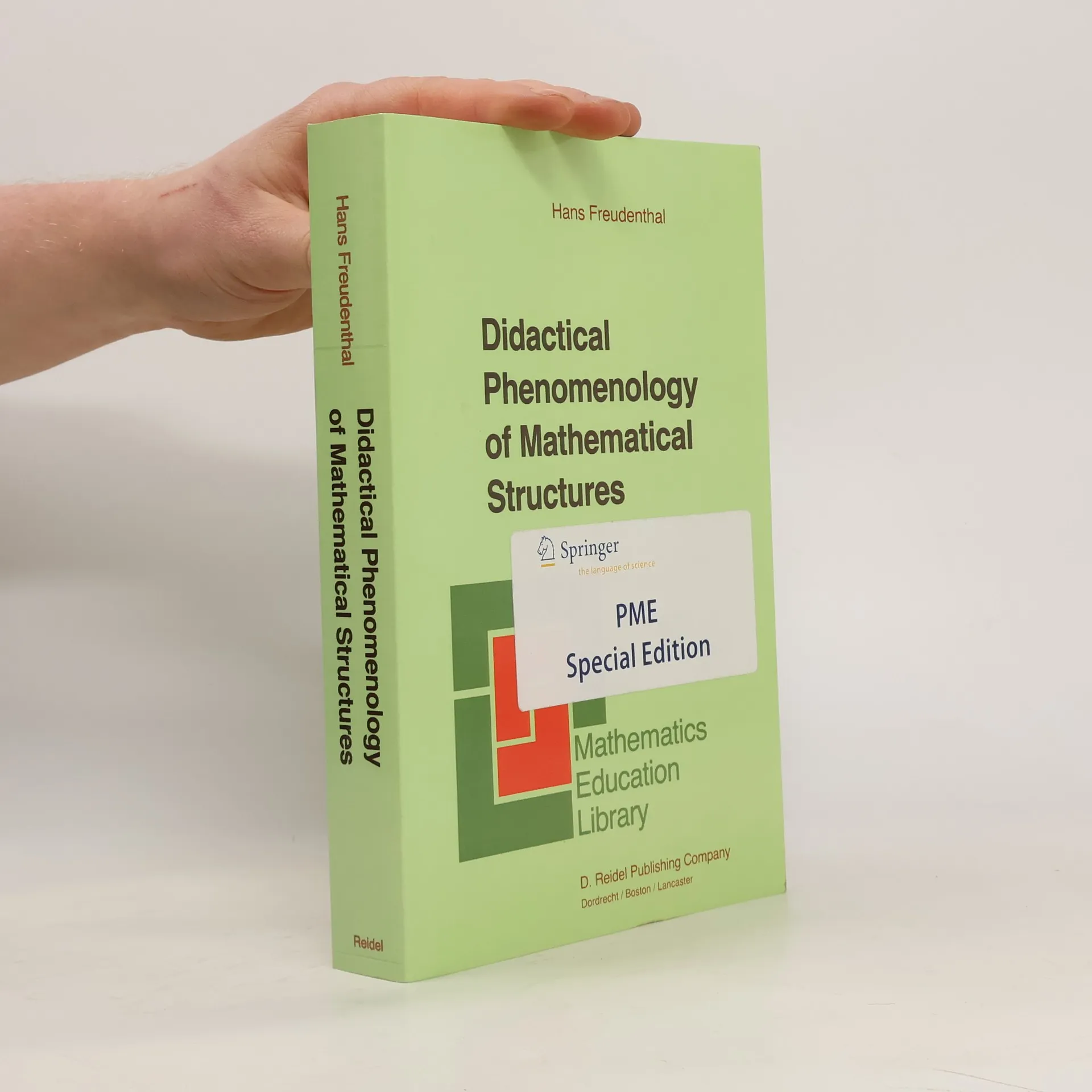
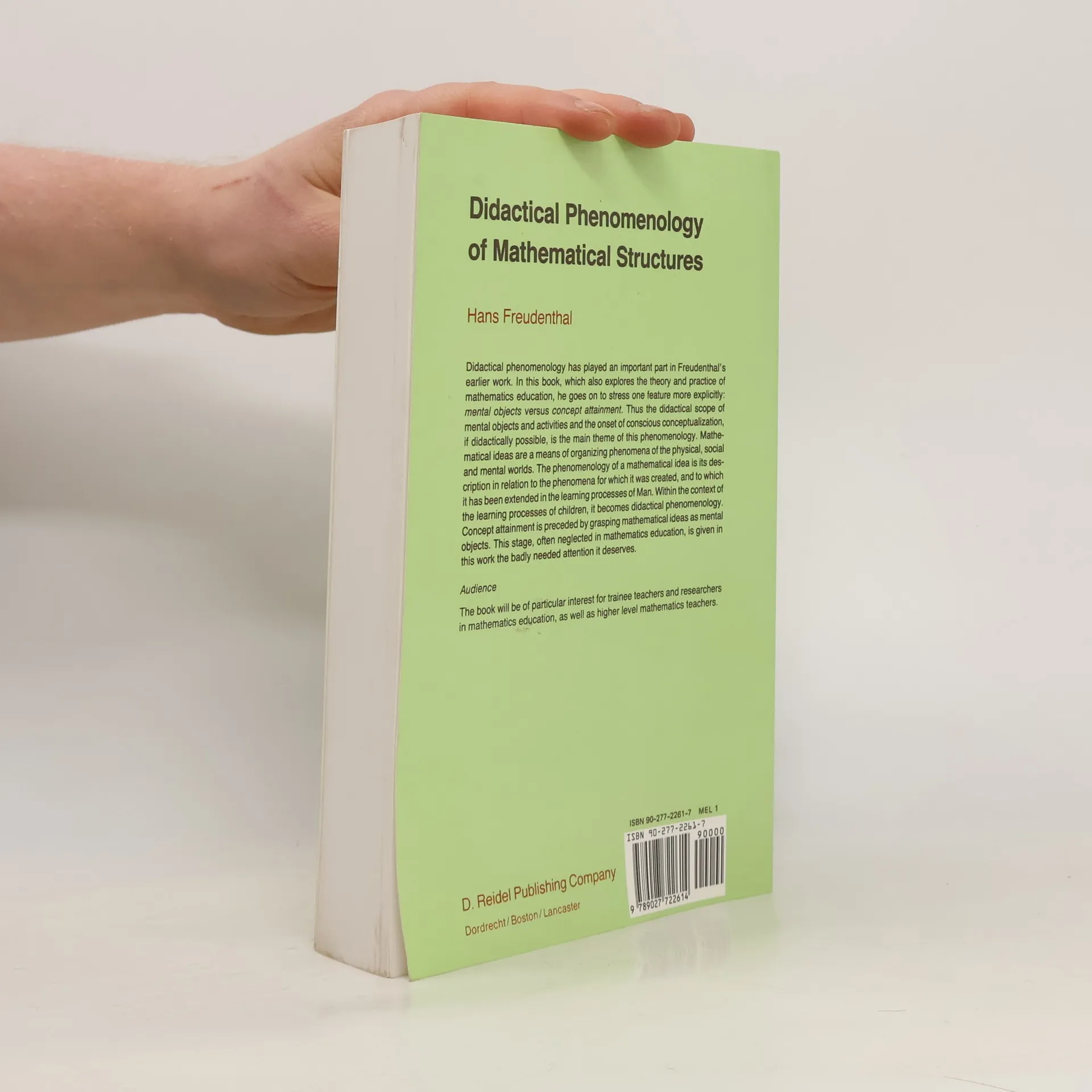
Didactical Phenomenology of Mathematical Structures, Hans Freudenthal
- Język

- Rok wydania
- 1986
- Oprawa
- (miękka)
Metody płatności
Nikt jeszcze nie ocenił.
- Tytuł
- Didactical Phenomenology of Mathematical Structures
- Język
- angielski
- Autorzy
- Hans Freudenthal
- Wydawca
- Reidel
- Rok wydania
- 1986
- Oprawa
- miękka
- Liczba stron
- 606
- ISBN10
- 9027722617
- ISBN13
- 9789027722614
- Seria
- Tagi
- Opis
- The launch ofa new book series is always a challenging eventn ot only for the Editorial Board and the Publisher, but also, and more particularly, for the first author. Both the Editorial Board and the Publisher are delightedt hat the first author in this series isw ell able to meet the challenge. Professor Freudenthal needs no introduction toanyone in the Mathematics Education field and it is particularly fitting that his book should be the first in this new series because it was in 1968 that he, and Reidel, produced the first issue oft he journal Edu cational Studies in Mathematics. Breakingfresh ground is therefore nothing new to Professor Freudenthal and this book illustrates well his pleasure at such a task. To be strictly correct the ‘ground’ which he has broken here is not new, but aswith Mathematics as an Educational Task and Weeding and Sowing, it is rather the novelty oft he manner in which he has carried out his analysis which provides us with so many fresh perspectives. It is our intention that this new book series should provide those who work int he emerging discipline of mathematicseducation with an essential resource, and at a time of considerable concern about the whole mathematics cu rriculum this book represents just such resource. ALAN J. BISHOP Managing Editor vii A LOOK BACKWARD AND A LOOK FORWARD Men die, systems last.