



Seria
Więcej o książce
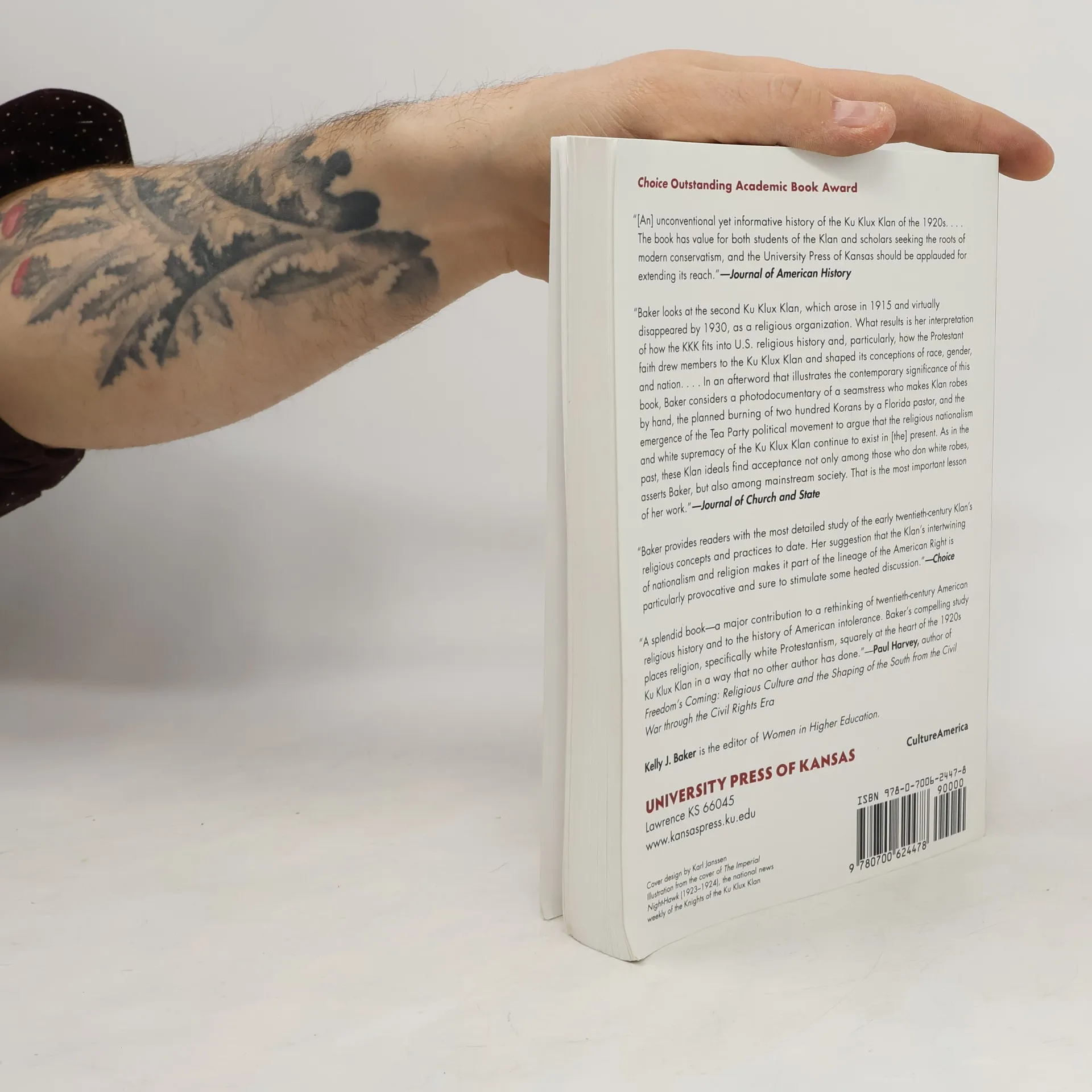
Modern marches by the Ku Klux Klan may appear as relics of the past or mere acts of bigotry to many Americans. However, Kelly Baker argues that the Klan is deeply entrenched in American mainstream Protestant culture. While most studies view the KKK as a racist organization using religion superficially, Baker asserts that its justifications for hatred stem from a specific brand of Protestantism that resonated with many Americans, employing symbols like burning crosses to exclude Jews and Catholics. Focusing on the Klan's "second incarnation" in the 1920s, Baker illustrates how it rebranded itself as a "fraternal Protestant organization" advocating white supremacy, successfully establishing chapters nationwide. Through extensive research of Klan publications from that era, she uncovers how its leaders manipulated religion, nationalism, gender, and race to adapt their hate-filled ideology to changing times. This analysis reveals the Klan's views on Protestantism, church-state relations, gender roles, and its notorious 1924 anti-Catholic riot at Notre Dame University. Baker draws unsettling parallels between the Klan's rhetoric and contemporary movements, demonstrating that the Klan's message was more adeptly crafted than historians have acknowledged. This perspective highlights ongoing intolerance among some citizens who seek to uphold a mythical white Protestant nation.
Zakup książki
The Gospel according to the Klan. The KKK's Appeal to Protestant America, 1915-1930, Kelly Baker
- Język

- Rok wydania
- 2011
- Oprawa
- (miękka)
Metody płatności
Nikt jeszcze nie ocenił.
- Tytuł
- The Gospel according to the Klan. The KKK's Appeal to Protestant America, 1915-1930
- Język
- angielski
- Autorzy
- Kelly Baker
- Wydawca
- University Press of Kansas
- Rok wydania
- 2011
- Oprawa
- miękka
- Liczba stron
- 340
- ISBN10
- 0700624562
- ISBN13
- 9780700624560
- Seria
- CultureAmerica
- Opis
- Modern marches by the Ku Klux Klan may appear as relics of the past or mere acts of bigotry to many Americans. However, Kelly Baker argues that the Klan is deeply entrenched in American mainstream Protestant culture. While most studies view the KKK as a racist organization using religion superficially, Baker asserts that its justifications for hatred stem from a specific brand of Protestantism that resonated with many Americans, employing symbols like burning crosses to exclude Jews and Catholics. Focusing on the Klan's "second incarnation" in the 1920s, Baker illustrates how it rebranded itself as a "fraternal Protestant organization" advocating white supremacy, successfully establishing chapters nationwide. Through extensive research of Klan publications from that era, she uncovers how its leaders manipulated religion, nationalism, gender, and race to adapt their hate-filled ideology to changing times. This analysis reveals the Klan's views on Protestantism, church-state relations, gender roles, and its notorious 1924 anti-Catholic riot at Notre Dame University. Baker draws unsettling parallels between the Klan's rhetoric and contemporary movements, demonstrating that the Klan's message was more adeptly crafted than historians have acknowledged. This perspective highlights ongoing intolerance among some citizens who seek to uphold a mythical white Protestant nation.