




Więcej o książce
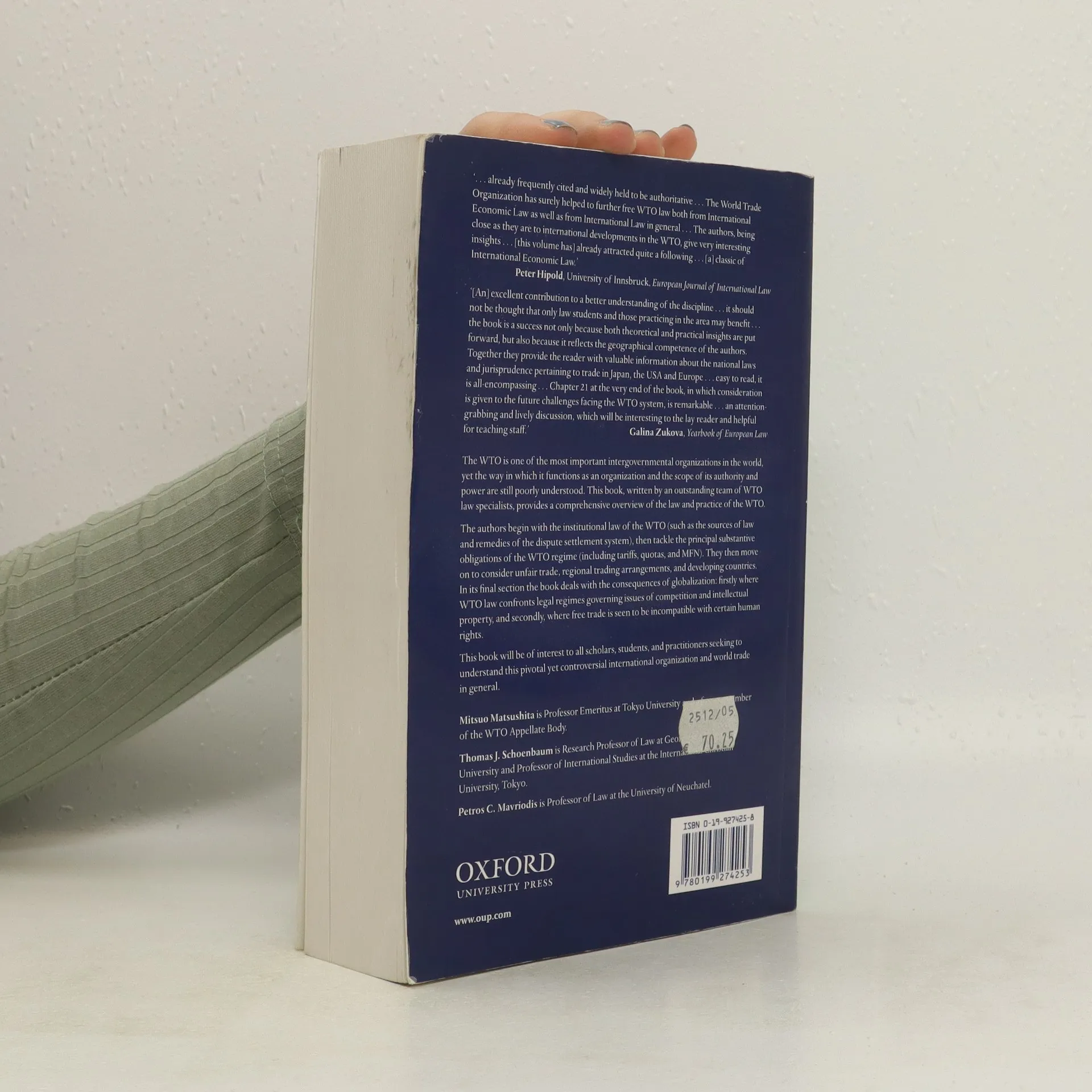
The WTO is one of the most important intergovernmental organizations in the world, yet the way in which it functions as an organization and the scope of its authority and power are still poorly understood. This book, written by an outstanding team of WTO law specialists, provides a comprehensive overview of the law and practice of the WTO. The authors begin with the institutional law of the WTO (such as the sources of law and remedies of the dispute settlement system), then tackle theprincipal substantive obligations of the WTO regime (including tariffs, quotas, and MFN). They then move on to consider unfair trade, regional trading arrangements, and developing countries. In its final section the book deals with the consequences of globalization: firstly where WTO law confronts legal regimes governing issues of competition and intellectual property, and secondly, where free trade is seen to be incompatible with certain human rights. This book will be of interest to allscholars, students, and practitioners seeking to understand this pivotal yet controversial international organization and world trade in general.
Zakup książki
The World Trade Organization : Law, Practice, and Policy, Mitsuo Matsushita, Thomas J. Schoenbaum, Petros C. Mavroidis
- Język

- Rok wydania
- 2004
- Oprawa
- (miękka)
Metody płatności
Nikt jeszcze nie ocenił.
- Tytuł
- The World Trade Organization : Law, Practice, and Policy
- Język
- angielski
- Wydawca
- Oxford University Press
- Rok wydania
- 2004
- Oprawa
- miękka
- Liczba stron
- 770
- ISBN10
- 0199274258
- ISBN13
- 9780199274253
- Seria
- Kolekcja
- Oxford international law library
- Tagi
- Opis
- The WTO is one of the most important intergovernmental organizations in the world, yet the way in which it functions as an organization and the scope of its authority and power are still poorly understood. This book, written by an outstanding team of WTO law specialists, provides a comprehensive overview of the law and practice of the WTO. The authors begin with the institutional law of the WTO (such as the sources of law and remedies of the dispute settlement system), then tackle theprincipal substantive obligations of the WTO regime (including tariffs, quotas, and MFN). They then move on to consider unfair trade, regional trading arrangements, and developing countries. In its final section the book deals with the consequences of globalization: firstly where WTO law confronts legal regimes governing issues of competition and intellectual property, and secondly, where free trade is seen to be incompatible with certain human rights. This book will be of interest to allscholars, students, and practitioners seeking to understand this pivotal yet controversial international organization and world trade in general.