

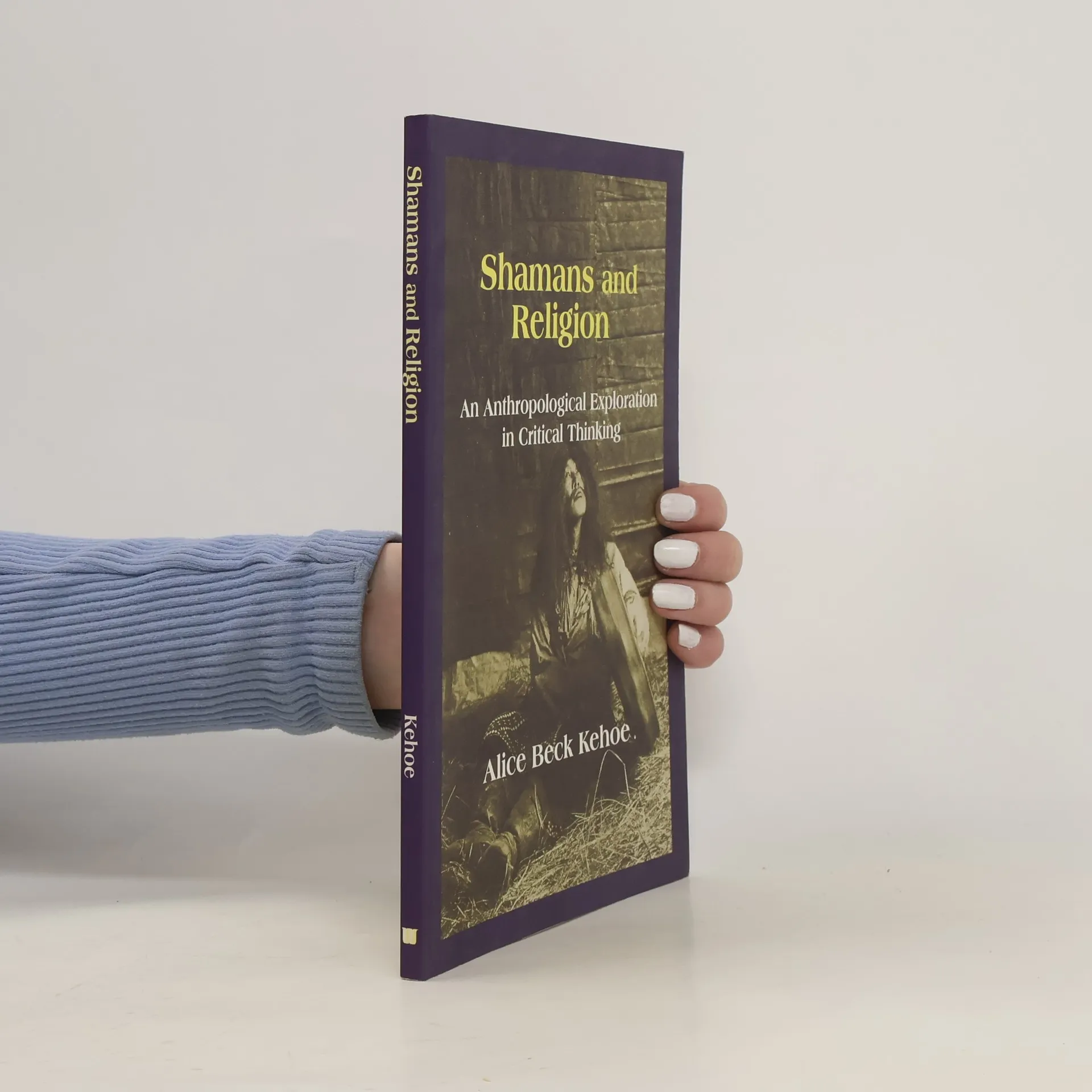
Więcej o książce
The word "shaman" has been used throughout the history of anthropology to describe indigenous healers around the world. In this outstanding text, Kehoe argues compellingly that the term is misused when applied to practitioners other than those from Siberia, where the term originated. Applying critical thinking techniques as a way of examining assumptions presented as fact, she deconstructs many commonly held notions of what shamanism is and isn't, closely critiquing widely cited articles and books on the subject. The problems discussed bring up important anthropological questions not limited to the anthropology of religion. How does the ethnographer distance his or her own (usually Western) socialization when describing the empirical reality of a culture? How does the reader of the anthropological literature do the same when analyzing others' writings? Kehoe maintains that critical thinking, long the fundamental method guiding both academic scholarship and pedagogy, helps answer these questions.
Zakup książki
Shamans and Religion, Alice Beck Kehoe
- Język

- Rok wydania
- 2000
- Oprawa
- (miękka)
Metody płatności
Brakuje nam tutaj Twojej recenzji.
- Tytuł
- Shamans and Religion
- Podtytuł
- An Anthropological Exploration in Critical Thinking
- Język
- angielski
- Autorzy
- Alice Beck Kehoe
- Wydawca
- Waveland Press
- Rok wydania
- 2000
- Oprawa
- miękka
- Liczba stron
- 125
- ISBN10
- 1577661621
- ISBN13
- 9781577661627
- Seria
- Kategorie
- Ocena
- 3,85 z 5
- Opis
- The word "shaman" has been used throughout the history of anthropology to describe indigenous healers around the world. In this outstanding text, Kehoe argues compellingly that the term is misused when applied to practitioners other than those from Siberia, where the term originated. Applying critical thinking techniques as a way of examining assumptions presented as fact, she deconstructs many commonly held notions of what shamanism is and isn't, closely critiquing widely cited articles and books on the subject. The problems discussed bring up important anthropological questions not limited to the anthropology of religion. How does the ethnographer distance his or her own (usually Western) socialization when describing the empirical reality of a culture? How does the reader of the anthropological literature do the same when analyzing others' writings? Kehoe maintains that critical thinking, long the fundamental method guiding both academic scholarship and pedagogy, helps answer these questions.