



Parametry
Więcej o książce
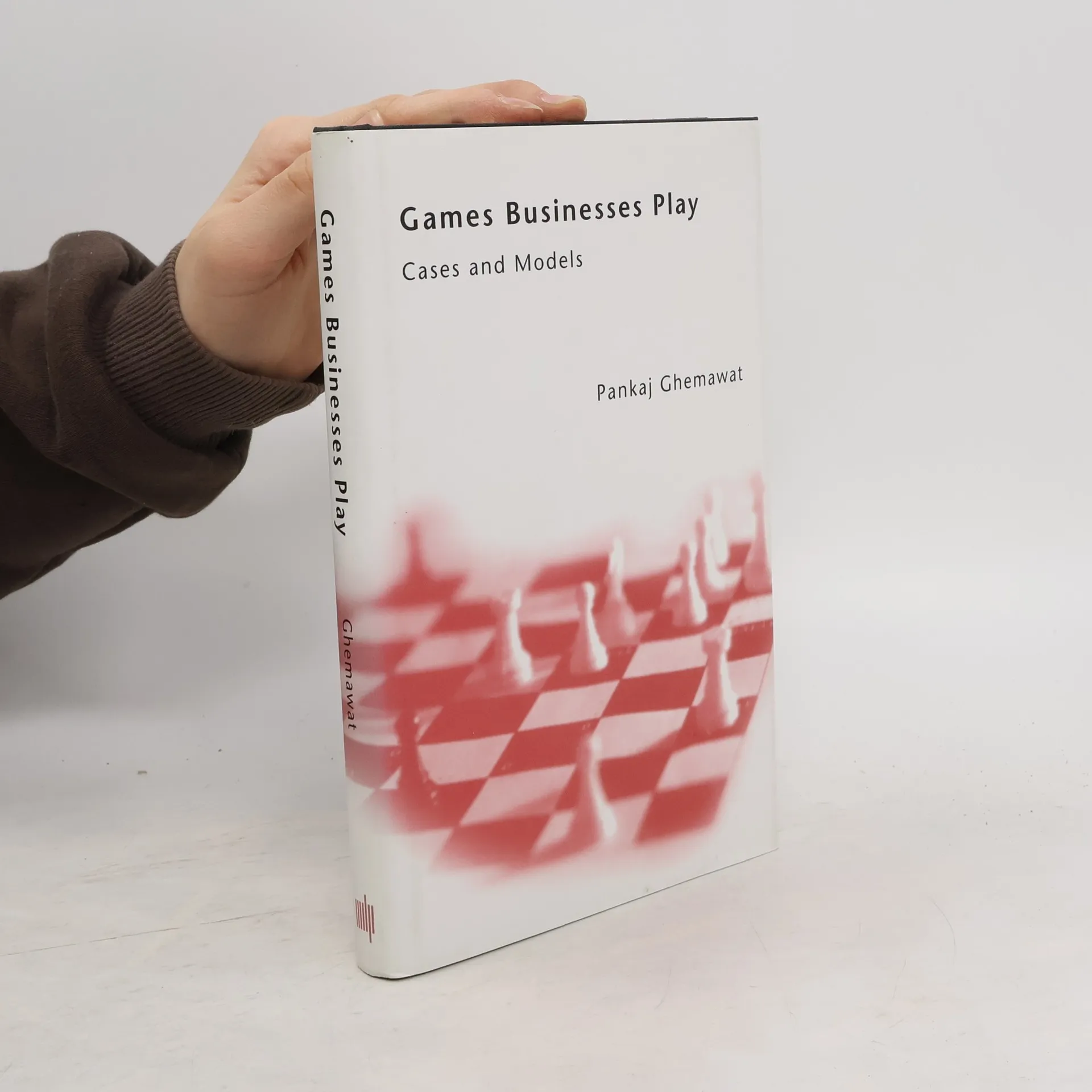
Game theory has come to dominate industrial organization economics, but business strategists continue to debate its usefulness. So far, empirical work on the application of game theory to business strategy has been too limited to force a consensus. As a (partial) remedy, Games Businesses Play uses detailed case studies of competitive interaction to explore the uses and limits of game theory as a tool for business strategists.Because they are analytical rather than descriptive, the case studies are not typical teaching cases. The cases are paired with customized game-theoretic models that cover a wide range of commitment decisions, from short-run commitments such as price to longer-run commitments such as capacity expansion and reduction, product and process innovation, and battles for market share. A variety of quantitative and qualitative techniques are used to test the models' predictions on case data. In addition the book sheds light on a number of other issues important to strategic management, including the resource-based view of the firm and the emergent theory of dynamic capabilities.
Zakup książki
Games Businesses Play, Pankaj Ghemawat
- Język

- Rok wydania
- 1997
- Oprawa
- (twarda)
Metody płatności
Brakuje nam tutaj Twojej recenzji.
- Tytuł
- Games Businesses Play
- Język
- angielski
- Autorzy
- Pankaj Ghemawat
- Wydawca
- MIT Press
- Rok wydania
- 1997
- Oprawa
- twarda
- ISBN10
- 0262071827
- ISBN13
- 9780262071826
- Seria
- Tagi
- Biznes
- Ocena
- 3,65 z 5
- Opis
- Game theory has come to dominate industrial organization economics, but business strategists continue to debate its usefulness. So far, empirical work on the application of game theory to business strategy has been too limited to force a consensus. As a (partial) remedy, Games Businesses Play uses detailed case studies of competitive interaction to explore the uses and limits of game theory as a tool for business strategists.Because they are analytical rather than descriptive, the case studies are not typical teaching cases. The cases are paired with customized game-theoretic models that cover a wide range of commitment decisions, from short-run commitments such as price to longer-run commitments such as capacity expansion and reduction, product and process innovation, and battles for market share. A variety of quantitative and qualitative techniques are used to test the models' predictions on case data. In addition the book sheds light on a number of other issues important to strategic management, including the resource-based view of the firm and the emergent theory of dynamic capabilities.