


Więcej o książce
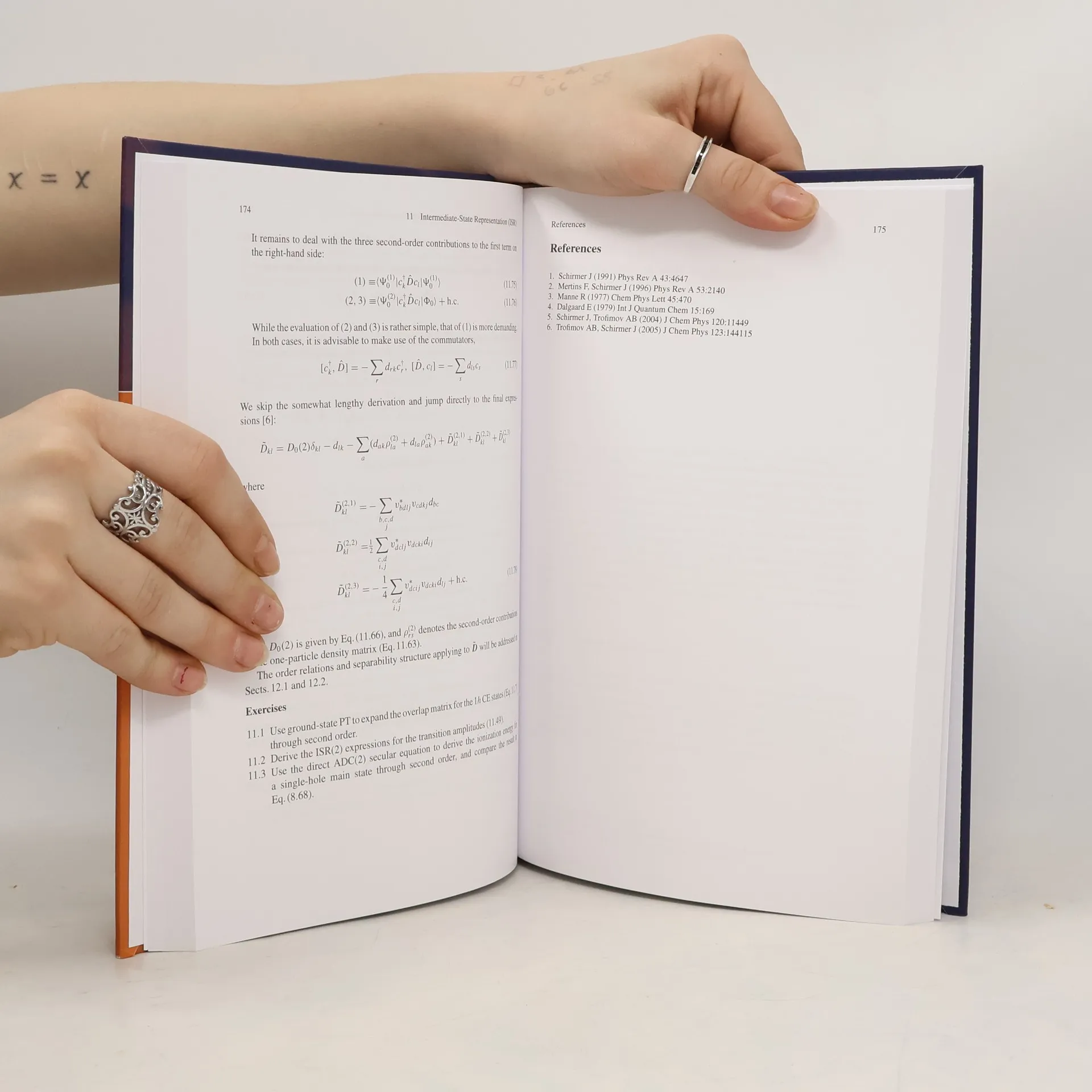
This book provides an introduction to many-body methods for applications in quantum chemistry. These methods, originating in field-theory, offer an alternative to conventional quantum-chemical approaches to the treatment of the many-electron problem in molecules. Starting with a general introduction to the atomic and molecular many-electron problem, the book then develops a stringent formalism of field-theoretical many-body theory, culminating in the diagrammatic perturbation expansions of many-body Green's functions or propagators in terms of Feynman diagrams. It also introduces and analyzes practical computational methods, such as the field-tested algebraic-diagrammatic construction (ADC) schemes. The ADC concept can also be established via a wave-function based procedure, referred to as intermediate state representation (ISR), which bridges the gap between propagator and wave-function formulations. Based on the current rapid increase in computer power and the development of efficient computational methods, quantum chemistry has emerged as a potent theoretical tool for treating ever-larger molecules and problems of chemical and physical interest. Offering an introduction to many-body methods, this book appeals to advanced students interested in an alternative approach to the many-electron problem in molecules, and is suitable for any courses dealing with computational methods in quantum chemistry.
Zakup książki
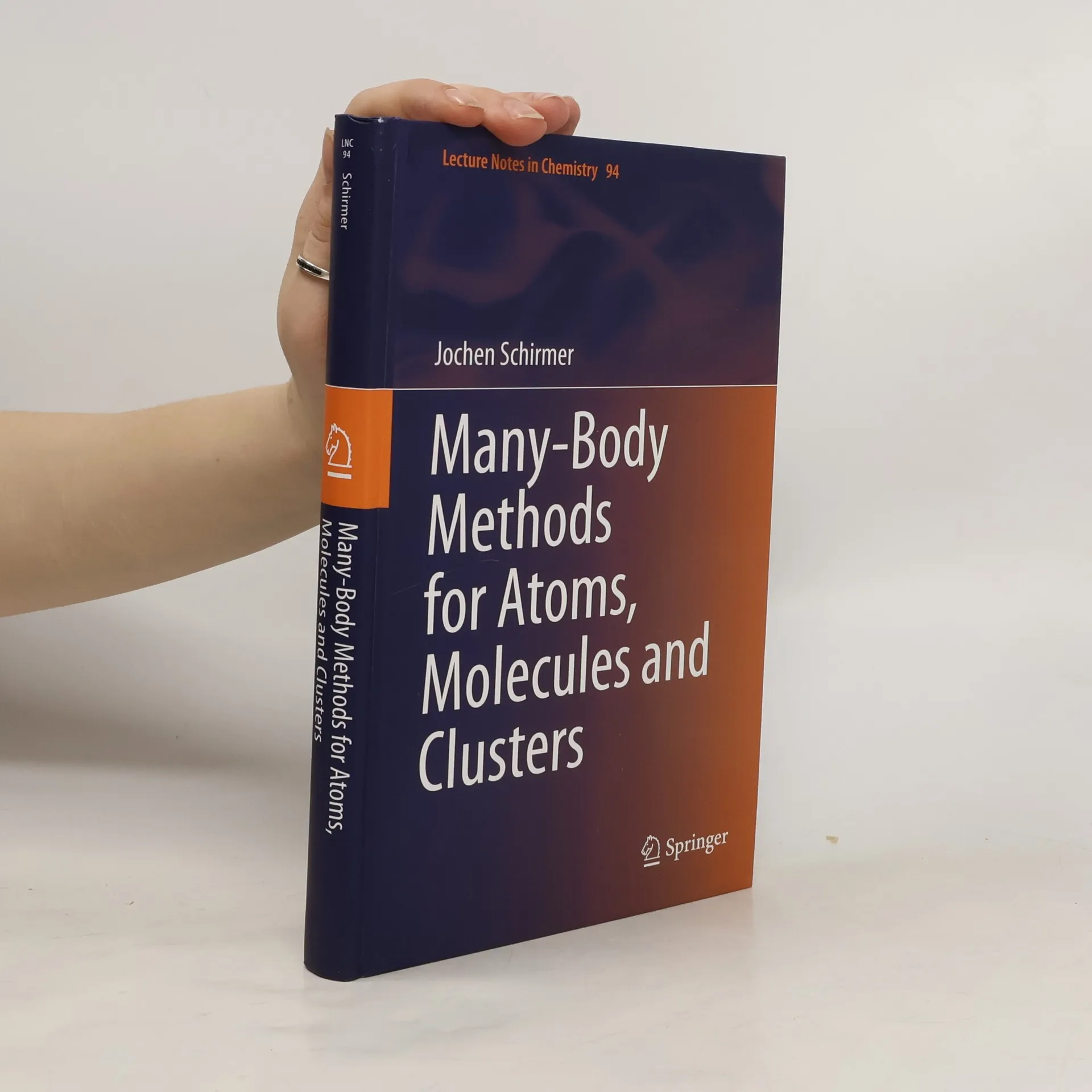
Many-Body Methods for Atoms, Molecules and Clusters, Jochen Schirmer
- Język

- Rok wydania
- 2018
- Oprawa
- (twarda)
Metody płatności
Nikt jeszcze nie ocenił.
- Tytuł
- Many-Body Methods for Atoms, Molecules and Clusters
- Język
- angielski
- Autorzy
- Jochen Schirmer
- Wydawca
- Springer
- Rok wydania
- 2018
- Oprawa
- twarda
- Liczba stron
- 344
- ISBN10
- 3319936018
- ISBN13
- 9783319936017
- Seria
- Opis
- This book provides an introduction to many-body methods for applications in quantum chemistry. These methods, originating in field-theory, offer an alternative to conventional quantum-chemical approaches to the treatment of the many-electron problem in molecules. Starting with a general introduction to the atomic and molecular many-electron problem, the book then develops a stringent formalism of field-theoretical many-body theory, culminating in the diagrammatic perturbation expansions of many-body Green's functions or propagators in terms of Feynman diagrams. It also introduces and analyzes practical computational methods, such as the field-tested algebraic-diagrammatic construction (ADC) schemes. The ADC concept can also be established via a wave-function based procedure, referred to as intermediate state representation (ISR), which bridges the gap between propagator and wave-function formulations. Based on the current rapid increase in computer power and the development of efficient computational methods, quantum chemistry has emerged as a potent theoretical tool for treating ever-larger molecules and problems of chemical and physical interest. Offering an introduction to many-body methods, this book appeals to advanced students interested in an alternative approach to the many-electron problem in molecules, and is suitable for any courses dealing with computational methods in quantum chemistry.