

Więcej o książce
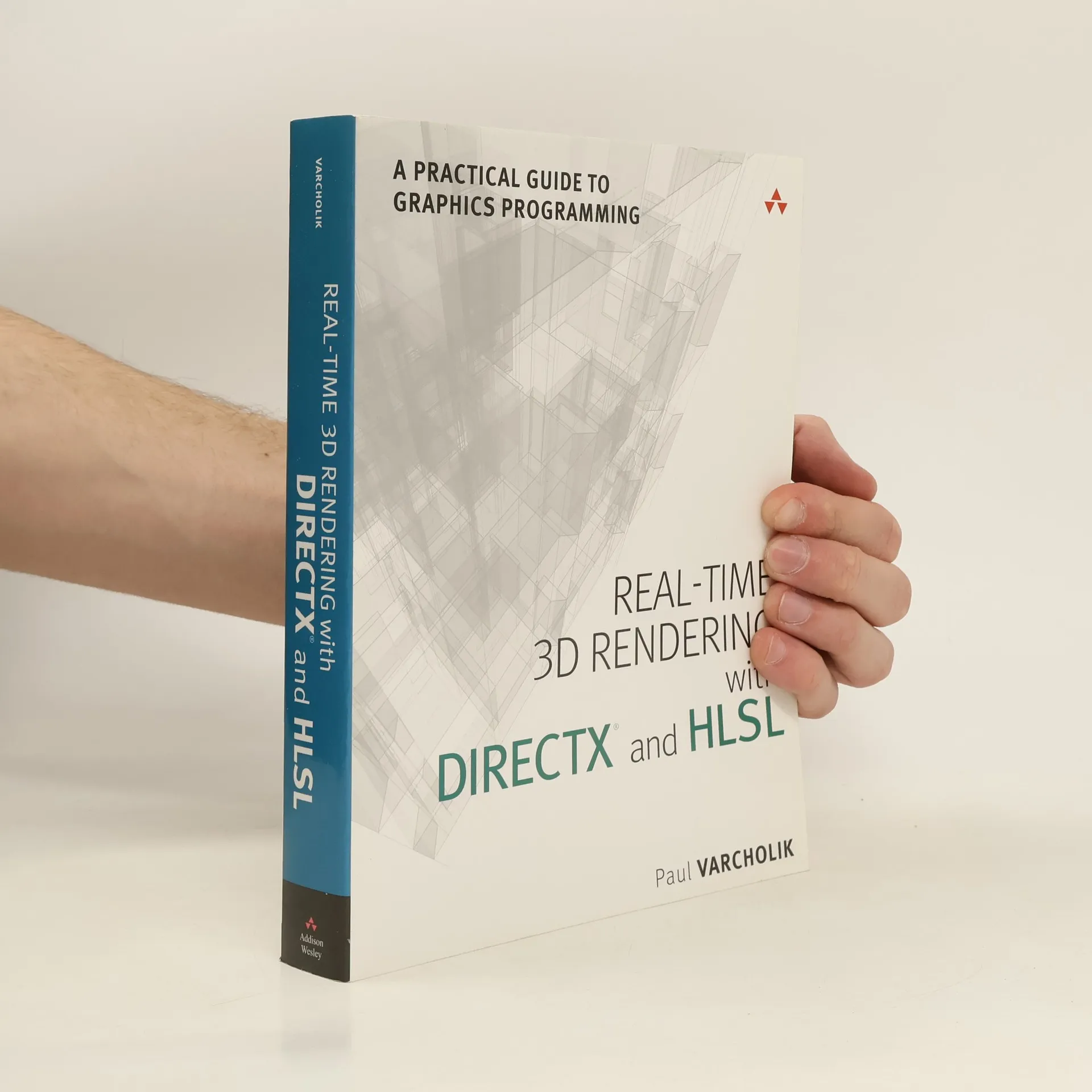
"This step-by-step text demystifies modern graphics programming so you can quickly start writing professional code with DirectX and HLSL. Expert graphics instructor Paul Varcholik starts with the basics: a tour of the Direct3D graphics pipeline, a 3D math primer, and an introduction to the best tools and support libraries. Next, you'll discover shader authoring with HLSL. You'll implement basic lighting models, including ambient lighting, diffuse lighting, and specular highlighting. You'll write shaders to support point lights, spotlights, environment mapping, fog, color blending, normal mapping, and more. Then you'll employ C++ and the Direct3D API to develop a robust, extensible rendering engine. You'll learn about virtual cameras, loading and rendering 3D models, mouse and keyboard input, and you'll create a flexible effect and material system to integrate your shaders. Finally, you'll extend your graphics knowledge with more advanced material, including post-processing techniques for color filtering, Gaussian blurring, bloom, and distortion mapping. You'll develop shaders for casting shadows, work with geometry and tessellation shaders, and implement a complete skeletal animation system for importing and rendering animated models."--Publisher
Zakup książki
Real-Time 3D Rendering with DirectX and HLSL, Paul Varcholik
- Język

- Rok wydania
- 2014
- Oprawa
- (miękka)
Metody płatności
Nikt jeszcze nie ocenił.
- Tytuł
- Real-Time 3D Rendering with DirectX and HLSL
- Język
- angielski
- Autorzy
- Paul Varcholik
- Wydawca
- Addison-Wesley
- Rok wydania
- 2014
- Oprawa
- miękka
- Liczba stron
- 592
- ISBN10
- 0321962729
- ISBN13
- 9780321962720
- Seria
- Tagi
- Opis
- "This step-by-step text demystifies modern graphics programming so you can quickly start writing professional code with DirectX and HLSL. Expert graphics instructor Paul Varcholik starts with the basics: a tour of the Direct3D graphics pipeline, a 3D math primer, and an introduction to the best tools and support libraries. Next, you'll discover shader authoring with HLSL. You'll implement basic lighting models, including ambient lighting, diffuse lighting, and specular highlighting. You'll write shaders to support point lights, spotlights, environment mapping, fog, color blending, normal mapping, and more. Then you'll employ C++ and the Direct3D API to develop a robust, extensible rendering engine. You'll learn about virtual cameras, loading and rendering 3D models, mouse and keyboard input, and you'll create a flexible effect and material system to integrate your shaders. Finally, you'll extend your graphics knowledge with more advanced material, including post-processing techniques for color filtering, Gaussian blurring, bloom, and distortion mapping. You'll develop shaders for casting shadows, work with geometry and tessellation shaders, and implement a complete skeletal animation system for importing and rendering animated models."--Publisher