

Więcej o książce
Dr Chessick uses the metaphor of a television set in order to illustrate Freud's notion of the therapist's unconscious as a receptive organ for the transmitting unconscious of the patient. The therapist listens to the patient's transmissions on five different channels, represented by five orientations, stances, modes, or models, among which the therapist must switch back and forth on the patient's initiative. Furthermore, Dr. Chessick shows how to validate interventions in order to be sure that the therapist has indeed heard correctly. The five channels are: Freud's drive/conflict/defence orientation, still primary and preferred; the object relations approach of Klein and Bion and others; the phenomenological or sociocultural approach of Fromm, Sartre, Lacan, Foucault and others; Kohut's self psychology and the works of Fairbairn, Winnicott, Gedo, R.D. Laing and others; and the interactional school, exemplified by the work of Sullivan and Gill.
Zakup książki
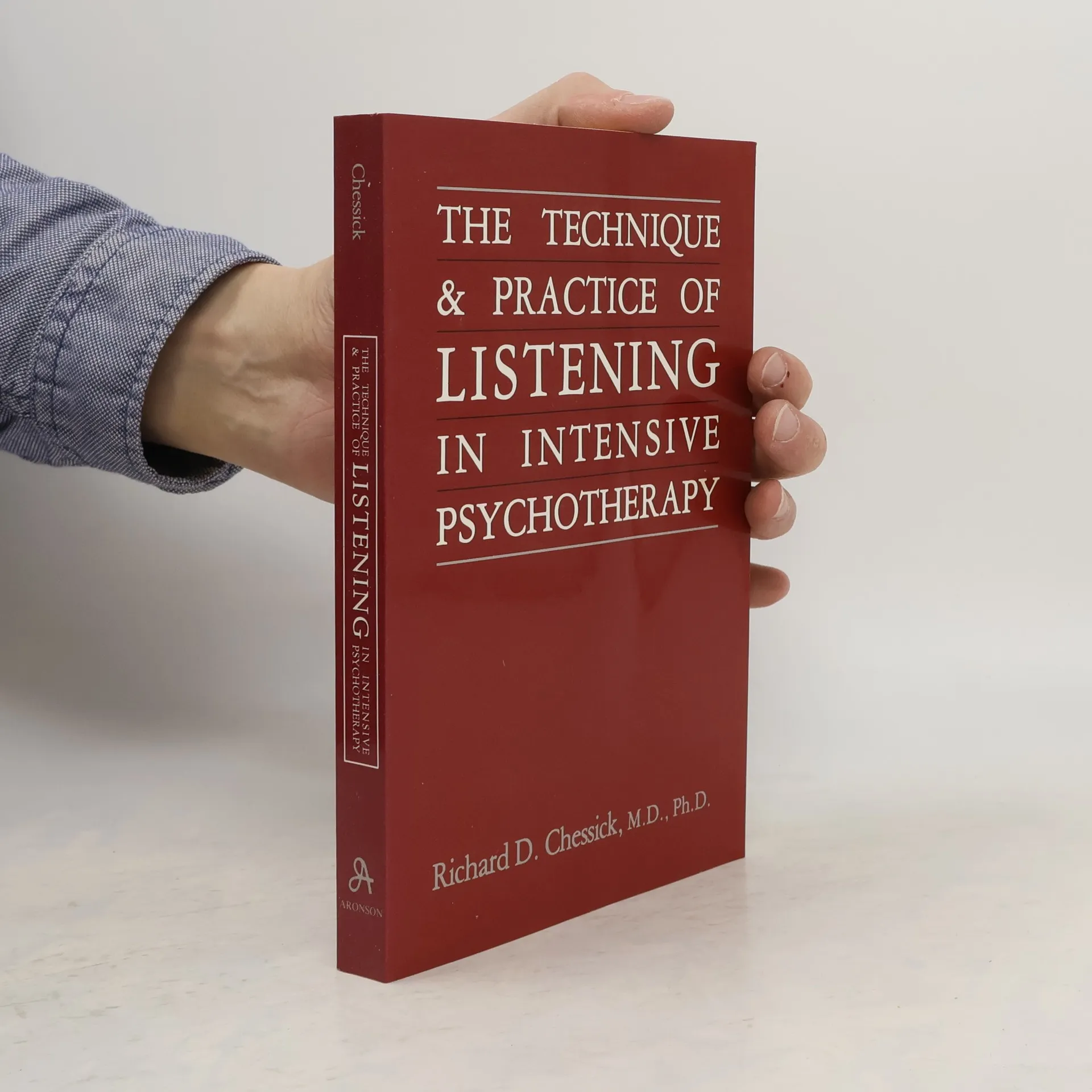
The Technique & Practice of Listening in Intensive Psychotherapy, Richard D. Chessick
- Język

- Rok wydania
- 1992
- Oprawa
- (miękka)
Metody płatności
Nikt jeszcze nie ocenił.
- Tytuł
- The Technique & Practice of Listening in Intensive Psychotherapy
- Język
- angielski
- Autorzy
- Richard D. Chessick
- Wydawca
- Aronson
- Rok wydania
- 1992
- Oprawa
- miękka
- Liczba stron
- 296
- ISBN10
- 0876683006
- ISBN13
- 9780876683002
- Seria
- Opis
- Dr Chessick uses the metaphor of a television set in order to illustrate Freud's notion of the therapist's unconscious as a receptive organ for the transmitting unconscious of the patient. The therapist listens to the patient's transmissions on five different channels, represented by five orientations, stances, modes, or models, among which the therapist must switch back and forth on the patient's initiative. Furthermore, Dr. Chessick shows how to validate interventions in order to be sure that the therapist has indeed heard correctly. The five channels are: Freud's drive/conflict/defence orientation, still primary and preferred; the object relations approach of Klein and Bion and others; the phenomenological or sociocultural approach of Fromm, Sartre, Lacan, Foucault and others; Kohut's self psychology and the works of Fairbairn, Winnicott, Gedo, R.D. Laing and others; and the interactional school, exemplified by the work of Sullivan and Gill.