

Parametry
Więcej o książce
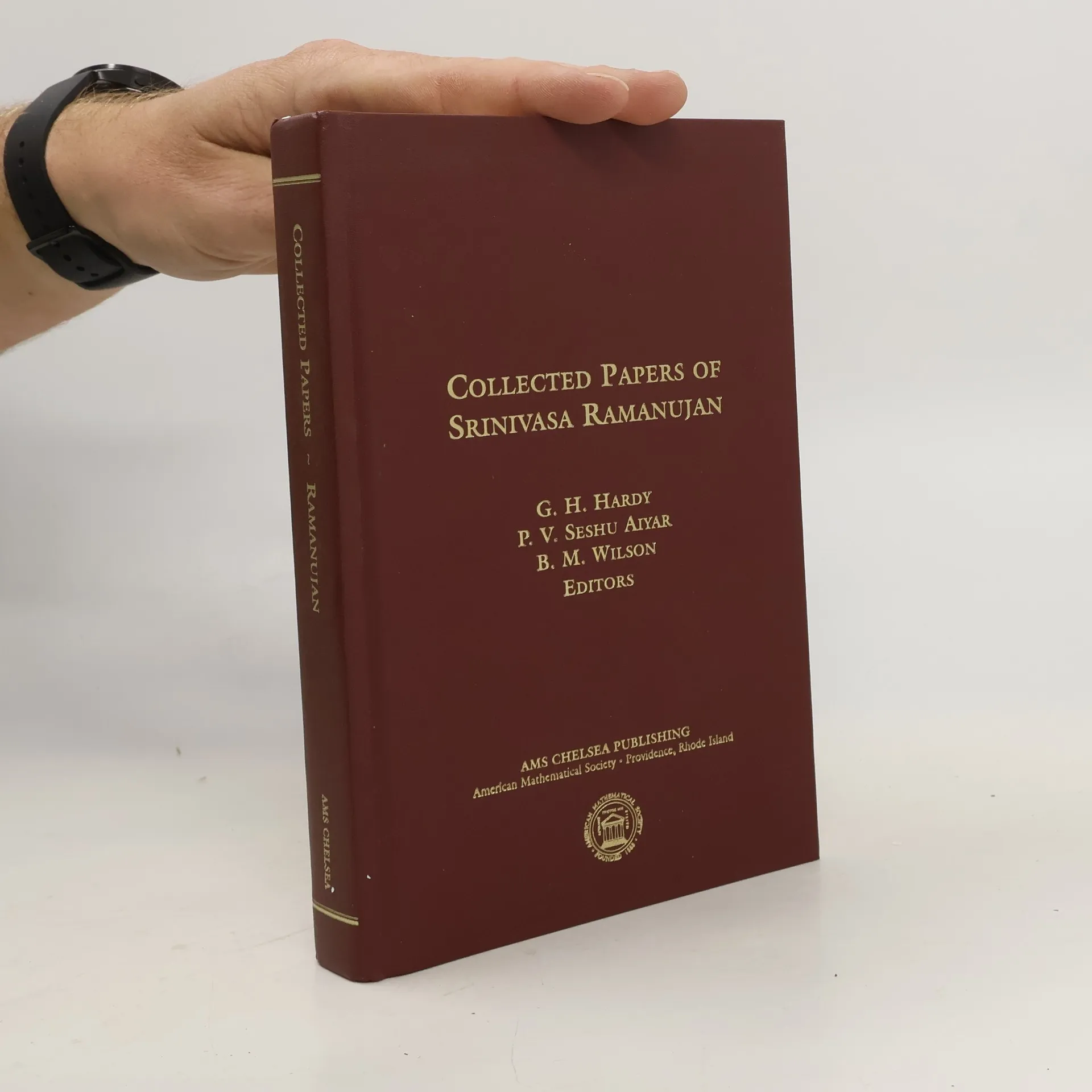
The influence of Ramanujan on number theory is without parallel in mathematics. His papers, problems and letters have spawned a remarkable number of later results by many different mathematicians. Here, his 37 published papers, most of his first two and last letters to Hardy, the famous 58 problems submitted to the Journal of the Indian Mathematical Society, and the commentary of the original editors (Hardy, Seshu Aiyar and Wilson) are reprinted again, after having been unavailable for some time. In this, the third printing of Ramanujan's collected papers, Bruce Berndt provides an annotated guide to Ramanujan's work and to the mathematics it inspired over the last three-quarters of a century. The historical development of ideas is traced in the commentary and by citations to the copious references. The editor has done the mathematical world a tremendous service that few others would be qualified to do.
Zakup książki
Collected Papers of Srinivasa Ramanujan, Srinivasa Ramanujan Aiyangar
- Język

- Rok wydania
- 2000
- Oprawa
- (twarda)
Metody płatności
Brakuje nam tutaj Twojej recenzji.
- Tytuł
- Collected Papers of Srinivasa Ramanujan
- Język
- angielski
- Autorzy
- Srinivasa Ramanujan Aiyangar
- Wydawca
- AMS Chelsea Publishing
- Rok wydania
- 2000
- Oprawa
- twarda
- ISBN10
- 0821820761
- ISBN13
- 9780821820766
- Seria
- Tagi
- Ocena
- 4,5 z 5
- Opis
- The influence of Ramanujan on number theory is without parallel in mathematics. His papers, problems and letters have spawned a remarkable number of later results by many different mathematicians. Here, his 37 published papers, most of his first two and last letters to Hardy, the famous 58 problems submitted to the Journal of the Indian Mathematical Society, and the commentary of the original editors (Hardy, Seshu Aiyar and Wilson) are reprinted again, after having been unavailable for some time. In this, the third printing of Ramanujan's collected papers, Bruce Berndt provides an annotated guide to Ramanujan's work and to the mathematics it inspired over the last three-quarters of a century. The historical development of ideas is traced in the commentary and by citations to the copious references. The editor has done the mathematical world a tremendous service that few others would be qualified to do.