

Parametry
Więcej o książce
This work offers a social history of small landholders and users of commons in English villages during the eighteenth and early nineteenth centuries, while also reassessing the broader trajectory of English rural history. During this period, many occupiers of common-field land and cottagers shared grazing rights over common fields and wastes. In various manors, even the landless could access pasture and gather resources like fuel and food, thanks to common rights that supported a peasantry reliant on shared land until parliamentary enclosure. The text explores village dynamics regarding entitlement to commons, cooperative management of common fields, and the harvests from uncultivated lands. It examines why common rights persisted until enclosure and engages with contemporary debates about the social implications of these rights and the public policy challenges of enclosure. The narrative highlights the vigorous opposition to enclosure and the decline of small landholders as common lands were privatized. Ultimately, this study uses shared land-use as a lens to analyze the economies and social relations within common-field villages, challenging the notion that England lacked a peasantry or that it had vanished before industrialization. It argues that common rights and small landholding significantly influenced social relations, and their loss during enclosure intensified social tensions and left a lasting imprint on popular cul
Zakup książki
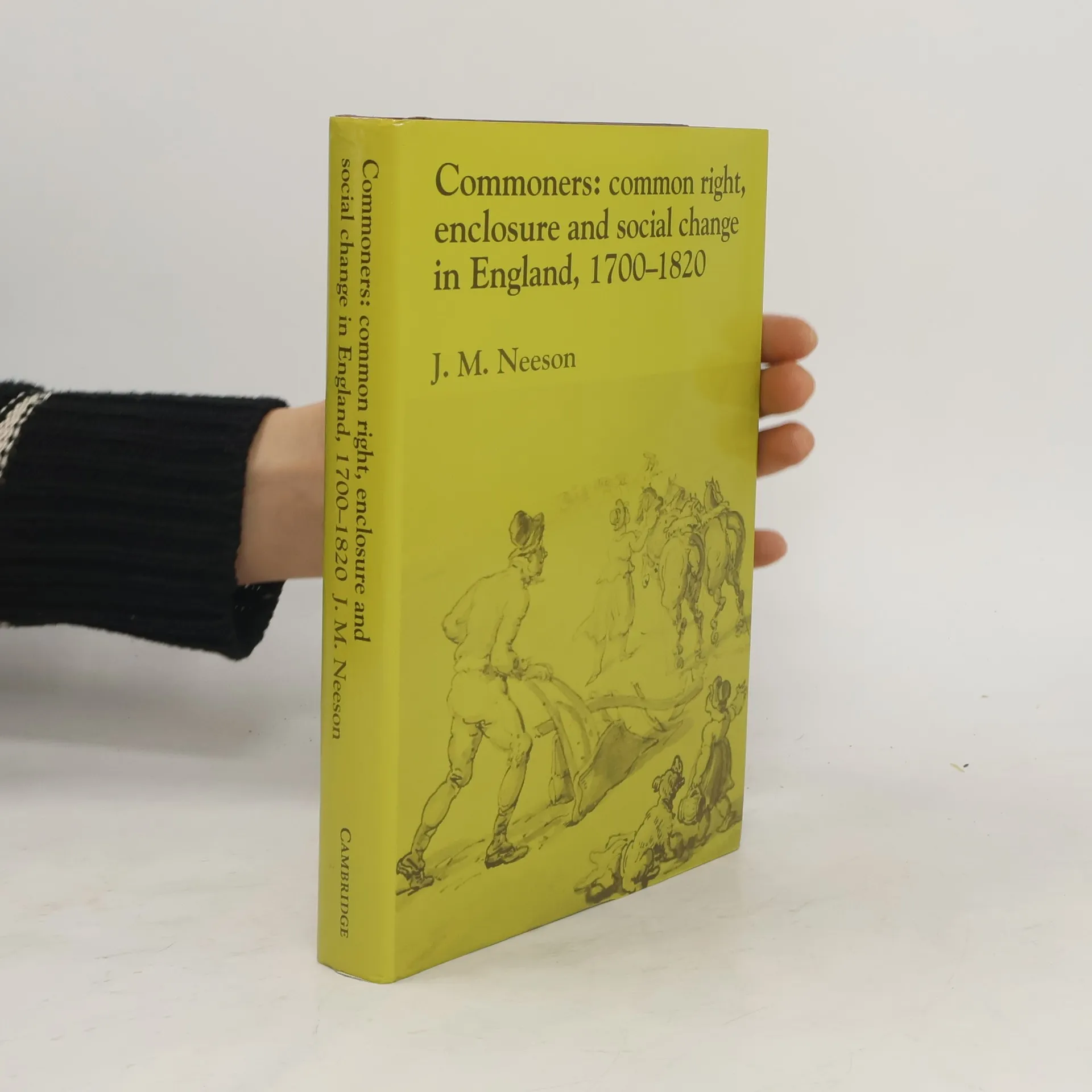
Commoners: Common Right, Enclosure and Social Change in England, 1700-1820, J. M. Neeson
- Język

- Rok wydania
- 1993
- Oprawa
- (twarda)
Metody płatności
Brakuje nam tutaj Twojej recenzji.
- Tytuł
- Commoners: Common Right, Enclosure and Social Change in England, 1700-1820
- Język
- angielski
- Autorzy
- J. M. Neeson
- Wydawca
- Cambridge University Press
- Rok wydania
- 1993
- Oprawa
- twarda
- ISBN10
- 0521440548
- ISBN13
- 9780521440547
- Seria
- Kategorie
- Tagi
- Ocena
- 1 z 5
- Opis
- This work offers a social history of small landholders and users of commons in English villages during the eighteenth and early nineteenth centuries, while also reassessing the broader trajectory of English rural history. During this period, many occupiers of common-field land and cottagers shared grazing rights over common fields and wastes. In various manors, even the landless could access pasture and gather resources like fuel and food, thanks to common rights that supported a peasantry reliant on shared land until parliamentary enclosure. The text explores village dynamics regarding entitlement to commons, cooperative management of common fields, and the harvests from uncultivated lands. It examines why common rights persisted until enclosure and engages with contemporary debates about the social implications of these rights and the public policy challenges of enclosure. The narrative highlights the vigorous opposition to enclosure and the decline of small landholders as common lands were privatized. Ultimately, this study uses shared land-use as a lens to analyze the economies and social relations within common-field villages, challenging the notion that England lacked a peasantry or that it had vanished before industrialization. It argues that common rights and small landholding significantly influenced social relations, and their loss during enclosure intensified social tensions and left a lasting imprint on popular cul