

Ocena książki
Więcej o książce
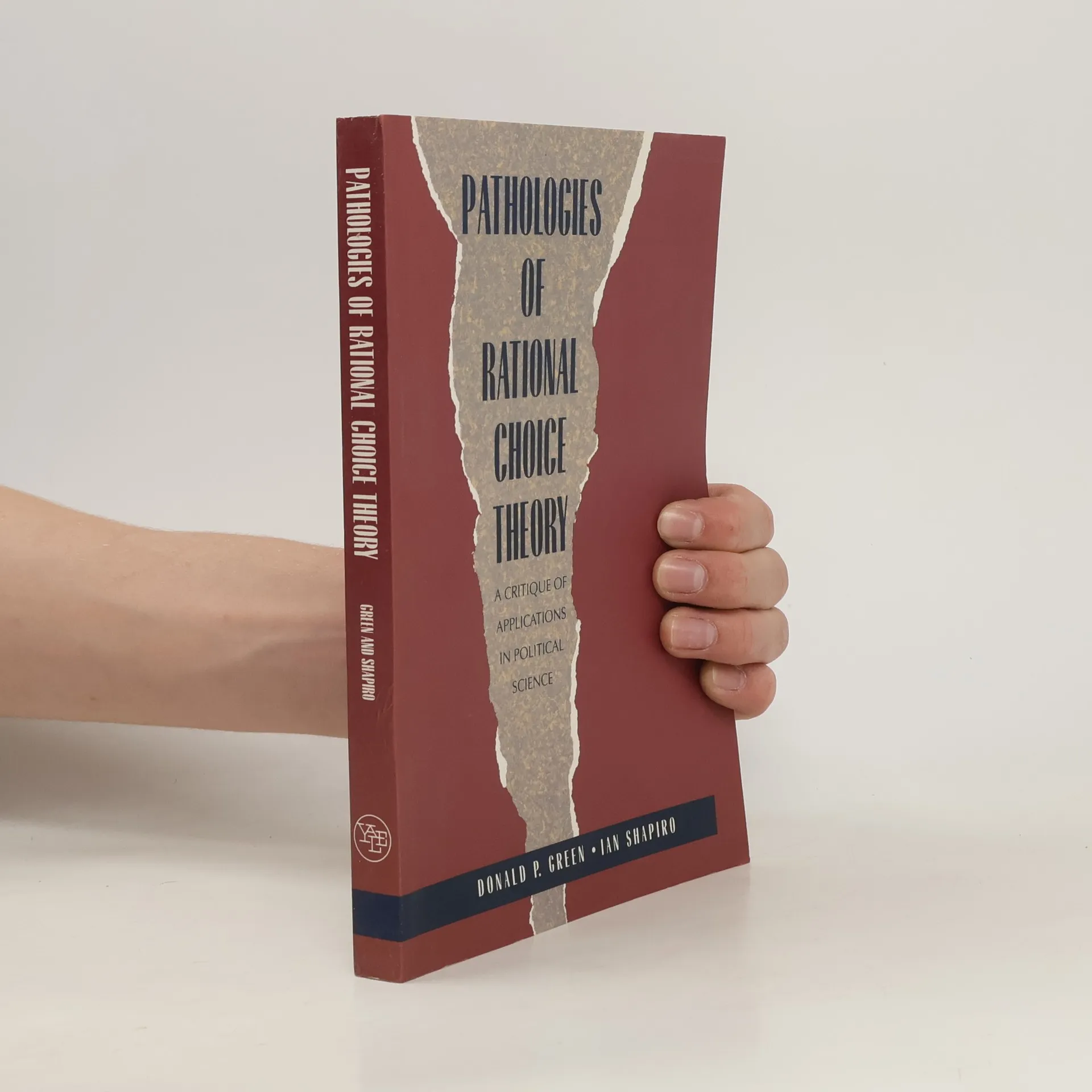
This comprehensive critical evaluation examines the use of rational choice explanations in political science. In an accessible style, the authors assess rational choice theory's effectiveness in studying collective action, political party behavior, and phenomena like voting cycles and Prisoner's Dilemmas. Their critique reveals that the celebrated successes of rational choice theory are questionable and that a fundamental rethinking is necessary for meaningful contributions to political understanding. They highlight methodological defects in empirical tests of rational choice theories, stemming from the theory's tendency to defend universal political models. Consequently, many tests are poorly executed and irrelevant for evaluating these models. Properly conducted tests often undermine rational choice theories or support trivial propositions. The authors suggest ways to reformulate rational choice propositions into testable hypotheses for political study. In the concluding chapter, they address various counterarguments from rational choice theorists, initiating a dialogue that is likely to persist.
Zakup książki
Pathologies of Rational Choice Theory, Donald P. Green, Ian Shapiro
- Język

- Rok wydania
- 1994
- Oprawa
- (miękka)
Metody płatności
Brakuje nam tutaj Twojej recenzji.
- Tytuł
- Pathologies of Rational Choice Theory
- Podtytuł
- A Critique of Applications in Political Science
- Język
- angielski
- Autorzy
- Donald P. Green, Ian Shapiro
- Wydawca
- Yale University Press
- Rok wydania
- 1994
- Oprawa
- miękka
- Liczba stron
- 254
- ISBN10
- 0300187084
- ISBN13
- 9780300187083
- Seria
- Kategorie
- Ocena
- 2 z 5
- Opis
- This comprehensive critical evaluation examines the use of rational choice explanations in political science. In an accessible style, the authors assess rational choice theory's effectiveness in studying collective action, political party behavior, and phenomena like voting cycles and Prisoner's Dilemmas. Their critique reveals that the celebrated successes of rational choice theory are questionable and that a fundamental rethinking is necessary for meaningful contributions to political understanding. They highlight methodological defects in empirical tests of rational choice theories, stemming from the theory's tendency to defend universal political models. Consequently, many tests are poorly executed and irrelevant for evaluating these models. Properly conducted tests often undermine rational choice theories or support trivial propositions. The authors suggest ways to reformulate rational choice propositions into testable hypotheses for political study. In the concluding chapter, they address various counterarguments from rational choice theorists, initiating a dialogue that is likely to persist.