

Parametry
Więcej o książce
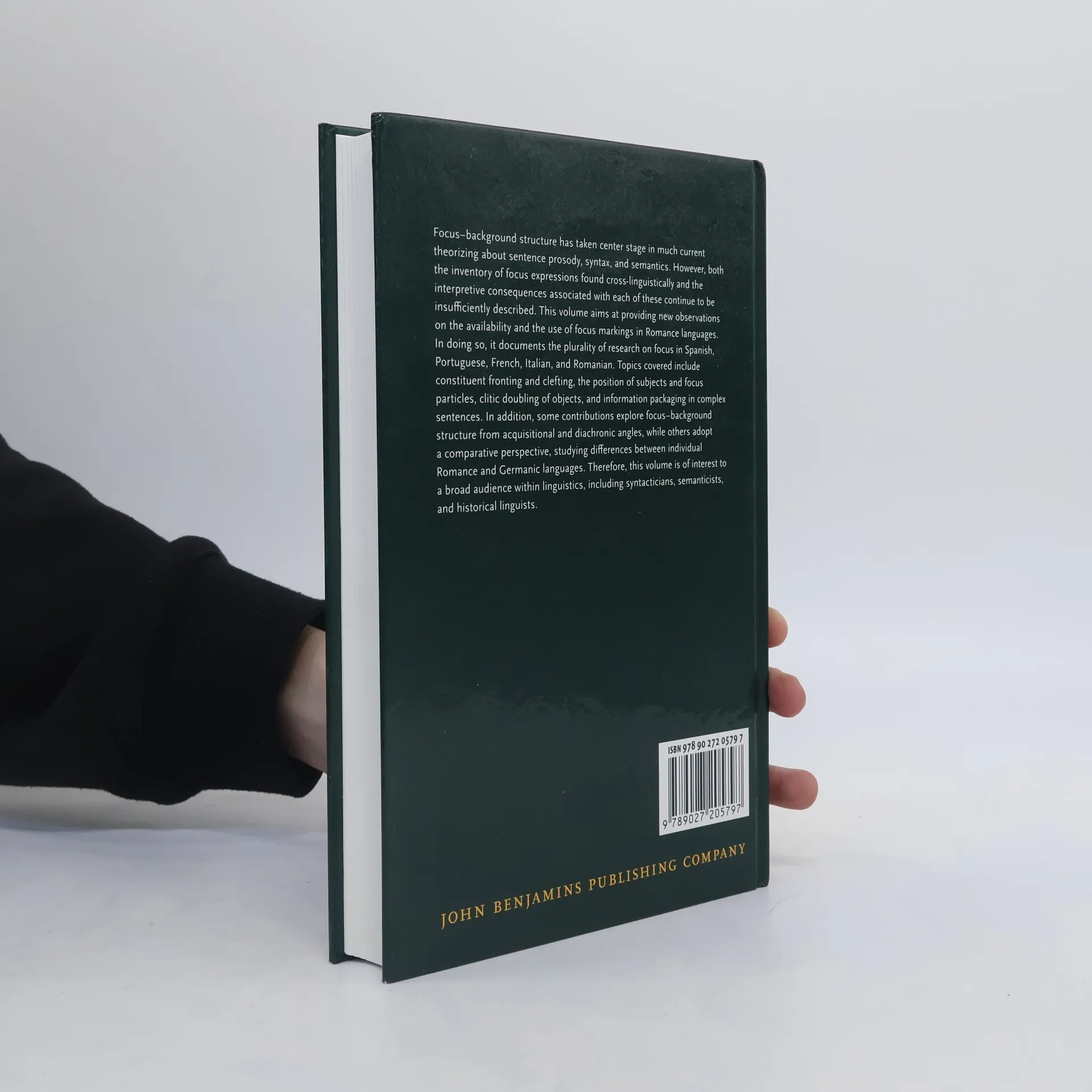
Focus–background structure has taken center stage in much current theorizing about sentence prosody, syntax, and semantics. However, both the inventory of focus expressions found cross-linguistically and the interpretive consequences associated with each of these continue to be insufficiently described. This volume aims at providing new observations on the availability and the use of focus markings in Romance languages. In doing so, it documents the plurality of research on focus in Spanish, Portuguese, French, Italian, and Romanian. Topics covered include constituent fronting and clefting, the position of subjects and focus particles, clitic doubling of objects, and information packaging in complex sentences. In addition, some contributions explore focus–background structure from acquisitional and diachronic angles, while others adopt a comparative perspective, studying differences between individual Romance and Germanic languages. Therefore, this volume is of interest to a broad audience within linguistics, including syntacticians, semanticists, and historical linguists.
Zakup książki
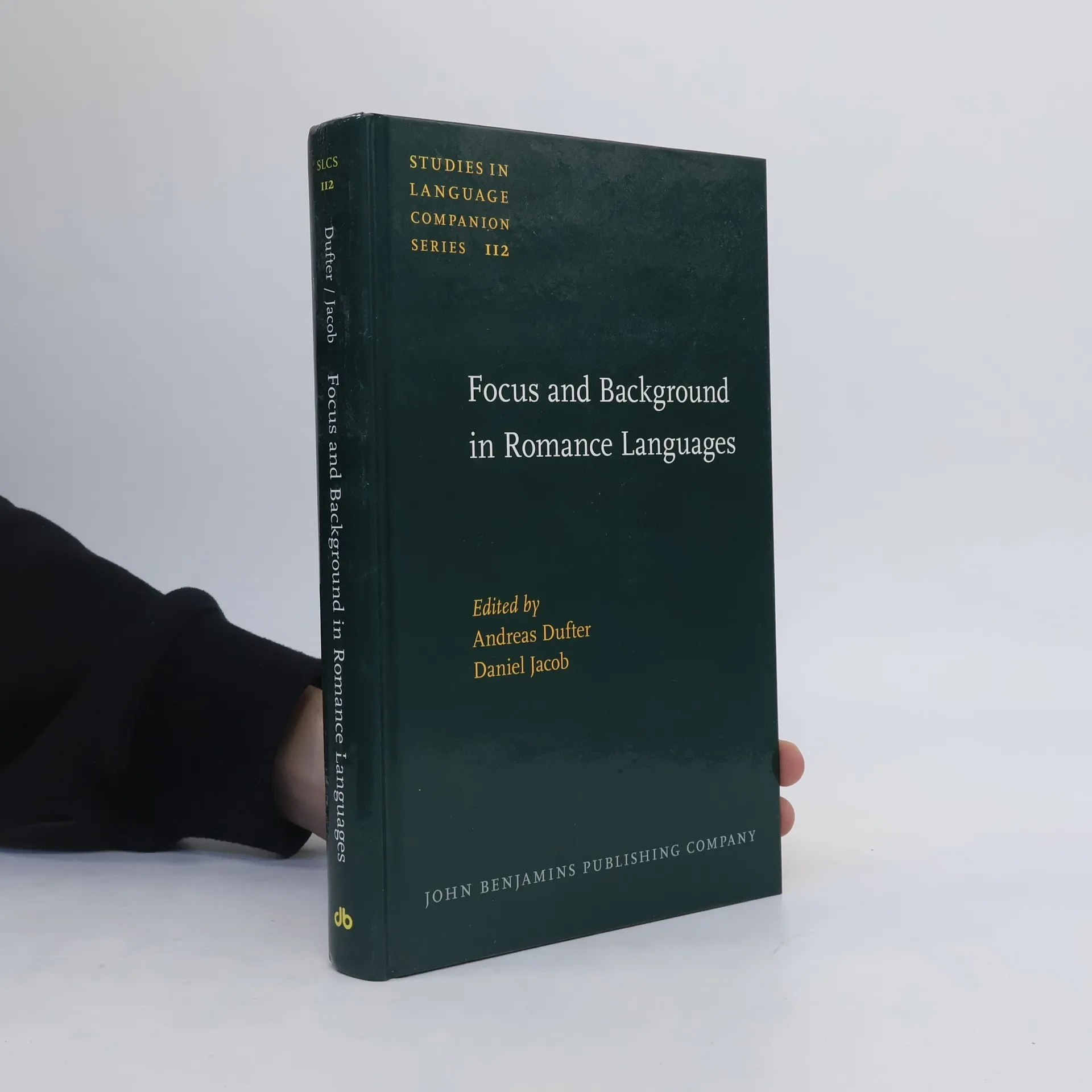
Focus and Background in Romance Languages, Andreas Dufter, Daniel Jacob
- Język

- Rok wydania
- 2009
- Oprawa
- (twarda)
Metody płatności
Nikt jeszcze nie ocenił.
- Tytuł
- Focus and Background in Romance Languages
- Język
- angielski
- Autorzy
- Andreas Dufter, Daniel Jacob
- Rok wydania
- 2009
- Oprawa
- twarda
- ISBN10
- 9027205795
- ISBN13
- 9789027205797
- Seria
- Kategorie
- Opis
- Focus–background structure has taken center stage in much current theorizing about sentence prosody, syntax, and semantics. However, both the inventory of focus expressions found cross-linguistically and the interpretive consequences associated with each of these continue to be insufficiently described. This volume aims at providing new observations on the availability and the use of focus markings in Romance languages. In doing so, it documents the plurality of research on focus in Spanish, Portuguese, French, Italian, and Romanian. Topics covered include constituent fronting and clefting, the position of subjects and focus particles, clitic doubling of objects, and information packaging in complex sentences. In addition, some contributions explore focus–background structure from acquisitional and diachronic angles, while others adopt a comparative perspective, studying differences between individual Romance and Germanic languages. Therefore, this volume is of interest to a broad audience within linguistics, including syntacticians, semanticists, and historical linguists.