

Więcej o książce
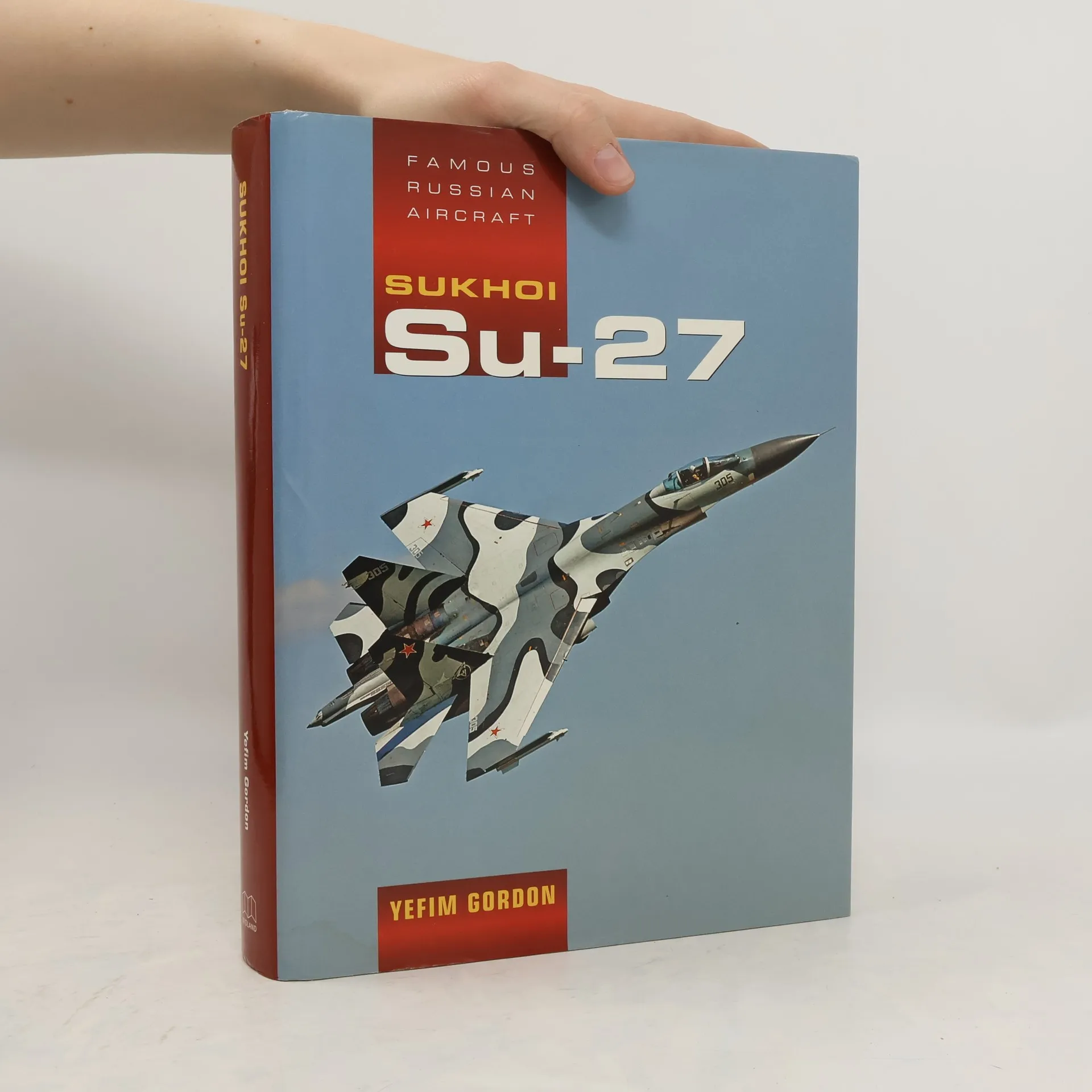
In the late 1960s, the Soviet Union became aware that the U.S. was developing a new generation of jet fighters that had an exceptional range, heavy armor, and great agility in the air. These U.S. aircraft, the F-14 Tomcat, F-15 Eagle, F-16 Fighting Hornet, and F/A-18 Hornet dominated U.S. air power for three decades. In the context of the Cold War, the Soviets could not be seen to be lagging behind the Americans. Their response to these new U.S. aircraft was the Sukhoi Su-27 Flanker, which was designed as a long-range air superiority aircraft and interceptor. The first of the modified pre-production aircraft appeared in 1981, but it was not until 1984 that significant numbers of the Su-27 started to enter service. Eventually some 680 Su-27 were built for the Soviets, of which 400 remain in service with the Russian Tactical Air Force today. Outside of Russia, the Su-27 is also in service with the Chinese, and on the inventories of the air forces of Vietnam, Malaysia, Ethiopia, Indonesia, Syria, and Angola. This book describes in depth the development, operational career, history, and variants within the Su-27 family. The book incorporates color and black and white photos to portray some of the various camouflage schemes carried by the type in Soviet, Russian, and other air forces over the past two decades.
Zakup książki
Sukhoi Su-27, Jefim Gordon
- Język

- Rok wydania
- 2007
- Oprawa
- (twarda)
Metody płatności
Brakuje nam tutaj Twojej recenzji.
- Tytuł
- Sukhoi Su-27
- Język
- angielski
- Autorzy
- Jefim Gordon
- Wydawca
- Midland Counties Publ.
- Rok wydania
- 2007
- Oprawa
- twarda
- Liczba stron
- 544
- ISBN10
- 1857802470
- ISBN13
- 9781857802474
- Seria
- Tagi
- Lotnictwo
- Ocena
- 4,5 z 5
- Opis
- In the late 1960s, the Soviet Union became aware that the U.S. was developing a new generation of jet fighters that had an exceptional range, heavy armor, and great agility in the air. These U.S. aircraft, the F-14 Tomcat, F-15 Eagle, F-16 Fighting Hornet, and F/A-18 Hornet dominated U.S. air power for three decades. In the context of the Cold War, the Soviets could not be seen to be lagging behind the Americans. Their response to these new U.S. aircraft was the Sukhoi Su-27 Flanker, which was designed as a long-range air superiority aircraft and interceptor. The first of the modified pre-production aircraft appeared in 1981, but it was not until 1984 that significant numbers of the Su-27 started to enter service. Eventually some 680 Su-27 were built for the Soviets, of which 400 remain in service with the Russian Tactical Air Force today. Outside of Russia, the Su-27 is also in service with the Chinese, and on the inventories of the air forces of Vietnam, Malaysia, Ethiopia, Indonesia, Syria, and Angola. This book describes in depth the development, operational career, history, and variants within the Su-27 family. The book incorporates color and black and white photos to portray some of the various camouflage schemes carried by the type in Soviet, Russian, and other air forces over the past two decades.