

Więcej o książce
Society, Culture, and the State in Germany, 1870-1930 draws together important new work on the Kaiserreich - the period between Bismarck's unification of Germany and the First World War. During the 1970s and 1980s, a series of inspiring but divisive controversies called into question the ways in which German historical development in the nineteenth and twentieth centuries was mainly understood. These discussions focused on issues of continuity between Bismarck and Hitler and the peculiar strength of authoritarianism in German political culture, raising important questions about the deep origins of Nazism and about Germany's alleged differences from the West. This collection purposefully brings certain issues and approaches into the foreground. These include the value of taking gender seriously as a priority of historical work; the emergence of social policy and welfare during the early twentieth century; religious belief and affiliation as a neglected dimension in modern German history; the tremendous importance of the First World War as a climacteric; and the exciting potentials of cultural studies and the new cultural history.
Zakup książki
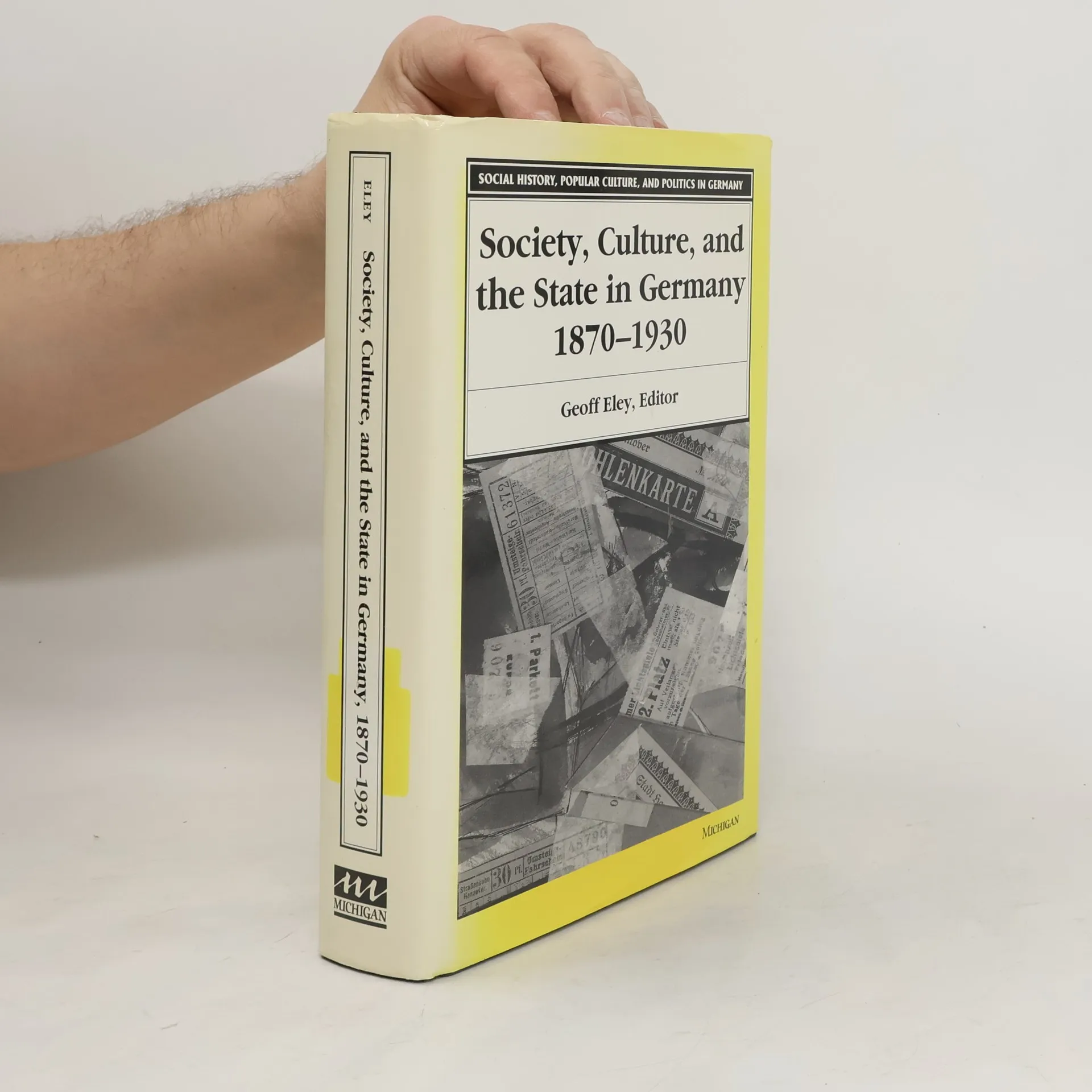
Society, Culture, and the State in Germany 1870-1930, Geoff Eley
- Język

- Rok wydania
- 1996
- Oprawa
- (twarda)
Metody płatności
Nikt jeszcze nie ocenił.
- Tytuł
- Society, Culture, and the State in Germany 1870-1930
- Język
- angielski
- Autorzy
- Geoff Eley
- Rok wydania
- 1996
- Oprawa
- twarda
- Liczba stron
- 522
- ISBN10
- 0472106279
- ISBN13
- 9780472106271
- Seria
- Opis
- Society, Culture, and the State in Germany, 1870-1930 draws together important new work on the Kaiserreich - the period between Bismarck's unification of Germany and the First World War. During the 1970s and 1980s, a series of inspiring but divisive controversies called into question the ways in which German historical development in the nineteenth and twentieth centuries was mainly understood. These discussions focused on issues of continuity between Bismarck and Hitler and the peculiar strength of authoritarianism in German political culture, raising important questions about the deep origins of Nazism and about Germany's alleged differences from the West. This collection purposefully brings certain issues and approaches into the foreground. These include the value of taking gender seriously as a priority of historical work; the emergence of social policy and welfare during the early twentieth century; religious belief and affiliation as a neglected dimension in modern German history; the tremendous importance of the First World War as a climacteric; and the exciting potentials of cultural studies and the new cultural history.