



Więcej o książce
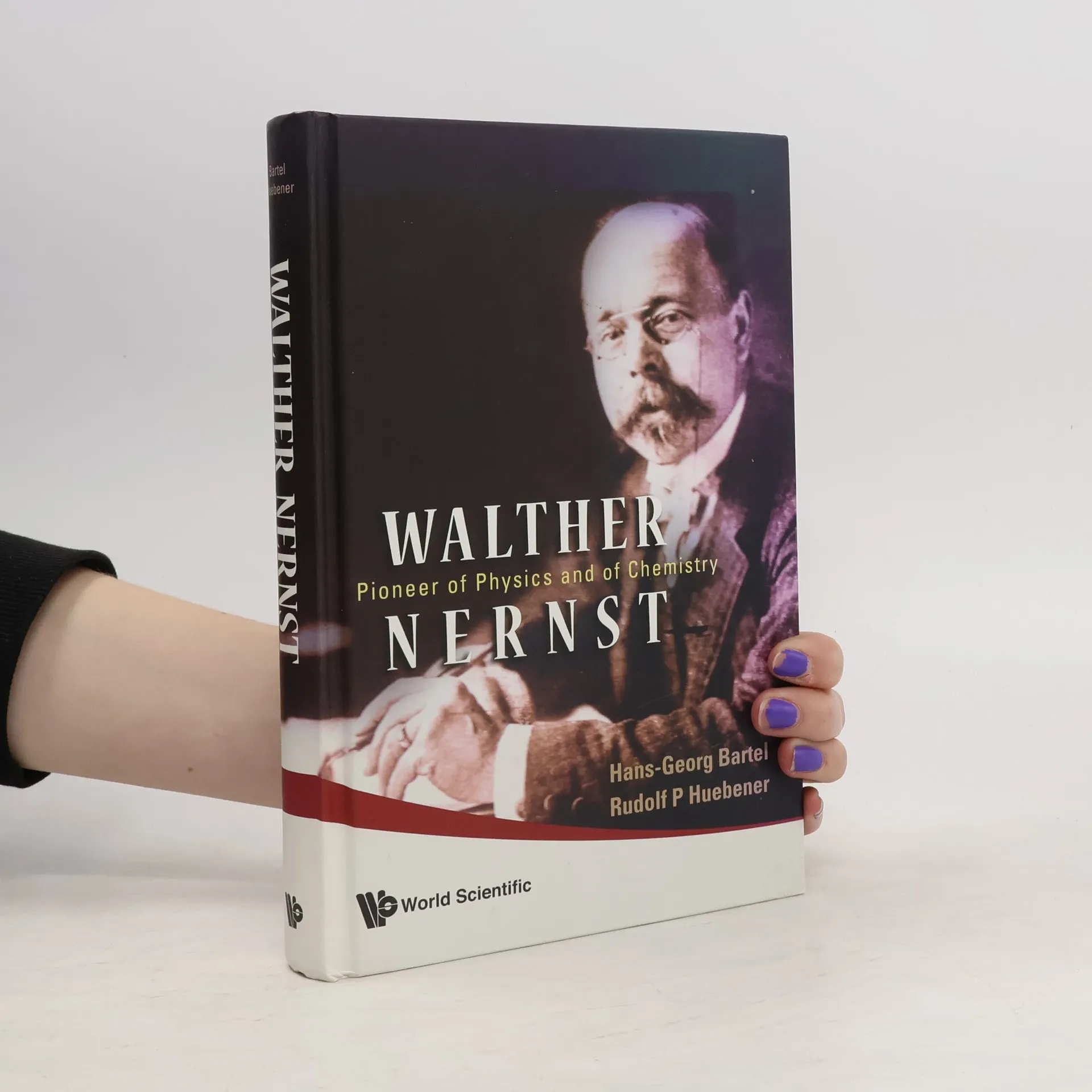
More than 100 years ago, in 1905, Walther Nernst discovered the Third Law of Thermodynamics, thus completing this fundamental theory. In 1920 he was awarded the Nobel Prize in Chemistry. The book describes the life of this pioneer of science, his major stations being Graz, then Göttingen, and finally Berlin. Also presented is a lively account of the development of low temperature physics by Nernst during the early days of quantum theory, when he was in Berlin, closely associated with Albert Einstein, Max Planck, and Max von Laue. The book outlines the specific advances achieved by Nernst in the thermodynamic concepts of theoretical chemistry. Written for a general readership, it can also serve as a supplement for courses in physics and chemistry. In addition to the role of science in the life of Nernst, the impact of the political turmoil in Germany before and after the advent of the 20th century is also told.
Zakup książki
Walther Nernst, Hans Georg Bartel
- Język

- Rok wydania
- 2007
- Oprawa
- (twarda)
Metody płatności
Nikt jeszcze nie ocenił.
- Tytuł
- Walther Nernst
- Język
- angielski
- Autorzy
- Hans Georg Bartel
- Wydawca
- World Scientific
- Rok wydania
- 2007
- Oprawa
- twarda
- Liczba stron
- 320
- ISBN10
- 9812565604
- ISBN13
- 9789812565600
- Seria
- Opis
- More than 100 years ago, in 1905, Walther Nernst discovered the Third Law of Thermodynamics, thus completing this fundamental theory. In 1920 he was awarded the Nobel Prize in Chemistry. The book describes the life of this pioneer of science, his major stations being Graz, then Göttingen, and finally Berlin. Also presented is a lively account of the development of low temperature physics by Nernst during the early days of quantum theory, when he was in Berlin, closely associated with Albert Einstein, Max Planck, and Max von Laue. The book outlines the specific advances achieved by Nernst in the thermodynamic concepts of theoretical chemistry. Written for a general readership, it can also serve as a supplement for courses in physics and chemistry. In addition to the role of science in the life of Nernst, the impact of the political turmoil in Germany before and after the advent of the 20th century is also told.