

Więcej o książce
This well-constructed collection fills a gap in scholarship by providing a nuanced picture of the Court's role in Europe, engaging with the complexity of law while maintaining a focus on the broader political context. It features well-contextualized discussions on rights, economics, science, and institutions, making it essential for those interested in the political role of the Court of Justice of the EU. The book explores the rationale, components, and responses to claims of judicial activism at the European Court of Justice. Contributions from academics, practitioners, and stakeholders present diverse perspectives on factors influencing the Court's political role, including access rules, institutional design, and substantive functions. Each author encourages readers to view the Court's role as a dynamic interplay among the EU judiciary, European and national political spheres, and various actors with competing legitimacy claims. This volume critically examines the Court's political role while highlighting the opportunities and responsibilities its case law presents to observers, political institutions, and civil society organizations. It will appeal to researchers, graduate students, and EU and national officials alike.
Zakup książki
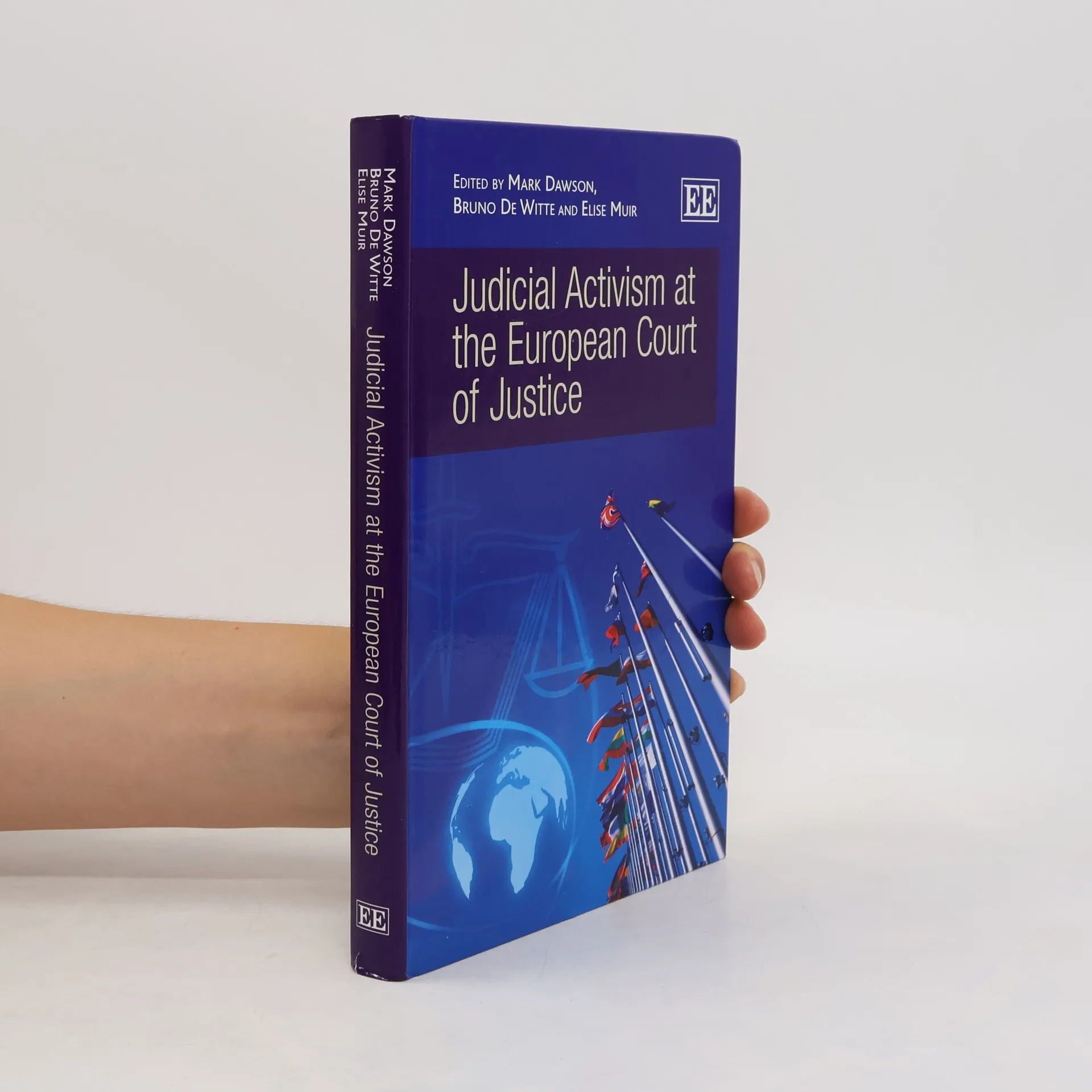
Judicial Activism at the European Court of Justice, Mark Dawson, Bruno de Witte, Elise Muir
- Język

- Rok wydania
- 2013
- Oprawa
- (twarda)
Metody płatności
Nikt jeszcze nie ocenił.
- Tytuł
- Judicial Activism at the European Court of Justice
- Język
- angielski
- Autorzy
- Mark Dawson, Bruno de Witte, Elise Muir
- Wydawca
- Edward Elgar Publishing
- Rok wydania
- 2013
- Oprawa
- twarda
- Liczba stron
- 292
- ISBN10
- 0857939394
- ISBN13
- 9780857939395
- Seria
- Opis
- This well-constructed collection fills a gap in scholarship by providing a nuanced picture of the Court's role in Europe, engaging with the complexity of law while maintaining a focus on the broader political context. It features well-contextualized discussions on rights, economics, science, and institutions, making it essential for those interested in the political role of the Court of Justice of the EU. The book explores the rationale, components, and responses to claims of judicial activism at the European Court of Justice. Contributions from academics, practitioners, and stakeholders present diverse perspectives on factors influencing the Court's political role, including access rules, institutional design, and substantive functions. Each author encourages readers to view the Court's role as a dynamic interplay among the EU judiciary, European and national political spheres, and various actors with competing legitimacy claims. This volume critically examines the Court's political role while highlighting the opportunities and responsibilities its case law presents to observers, political institutions, and civil society organizations. It will appeal to researchers, graduate students, and EU and national officials alike.