



Więcej o książce
Egypt is primarily a land of deserts and mountains, the habitable Nile Valley and Delta occupying less than 5 percent of the country. Although the ancient Egyptians lived on only a small fraction of the land, they made extensive use of resources from the less hospitable areas, exploiting the opportunities and adjusting to the constraints of their physical environment. This updated and expanded edition of The Geology of Egypt: A Traveler's Handbook describes these features and more, providing a guide for the visitor to Egypt interested in learning about its history from a different perspective. The author presumes no background in geology or related fields and provides an introduction to the relevant geological concepts, presenting examples to illustrate how the country's geological features influenced Egyptian civilization. Most examples are selected from the pharaonic period and Greco-Roman period, though many cases also illustrate how geological factors continue to have an impact on modern Egyptian society. The text is organized as a trip on the Nile from Lake Nasser downstream to the Delta, with chapters devoted to such popular sites as Aswan, Luxor, and Giza. Also covered are the Eastern and Western Deserts, as well as the Sinai Peninsula. Maps, illustrations, fifty color photographs, and an extensive glossary help make a complex but intriguing subject accessible to everyone.
Zakup książki
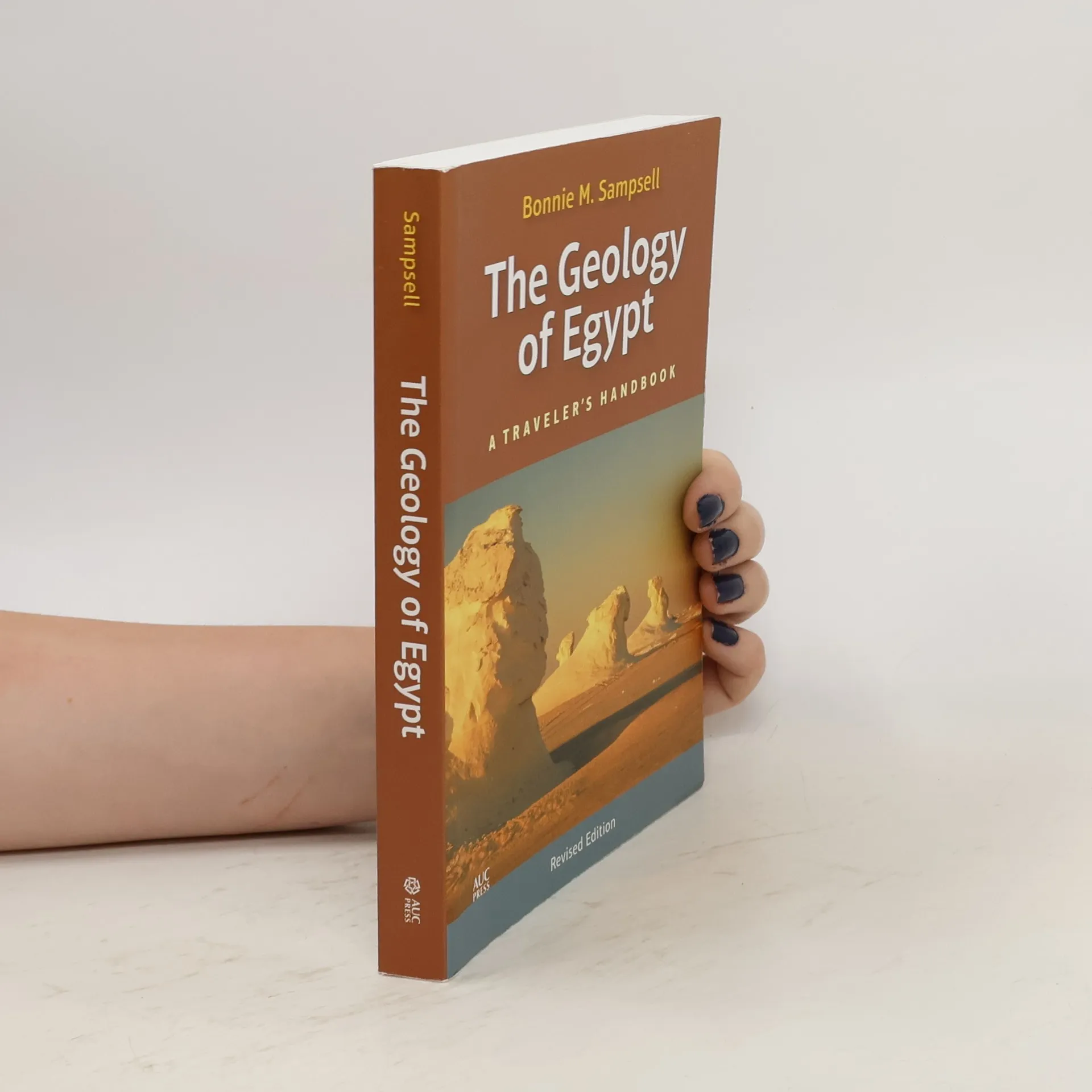
The Geology of Egypt, Bonnie M. Sampsell
- Język

- Rok wydania
- 2014
- Oprawa
- (miękka)
Metody płatności
Brakuje nam tutaj Twojej recenzji.
- Tytuł
- The Geology of Egypt
- Podtytuł
- A Traveler's Handbook
- Język
- angielski
- Autorzy
- Bonnie M. Sampsell
- Rok wydania
- 2014
- Oprawa
- miękka
- Liczba stron
- 272
- ISBN10
- 9774166329
- ISBN13
- 9789774166327
- Seria
- Ocena
- 4,5 z 5
- Opis
- Egypt is primarily a land of deserts and mountains, the habitable Nile Valley and Delta occupying less than 5 percent of the country. Although the ancient Egyptians lived on only a small fraction of the land, they made extensive use of resources from the less hospitable areas, exploiting the opportunities and adjusting to the constraints of their physical environment. This updated and expanded edition of The Geology of Egypt: A Traveler's Handbook describes these features and more, providing a guide for the visitor to Egypt interested in learning about its history from a different perspective. The author presumes no background in geology or related fields and provides an introduction to the relevant geological concepts, presenting examples to illustrate how the country's geological features influenced Egyptian civilization. Most examples are selected from the pharaonic period and Greco-Roman period, though many cases also illustrate how geological factors continue to have an impact on modern Egyptian society. The text is organized as a trip on the Nile from Lake Nasser downstream to the Delta, with chapters devoted to such popular sites as Aswan, Luxor, and Giza. Also covered are the Eastern and Western Deserts, as well as the Sinai Peninsula. Maps, illustrations, fifty color photographs, and an extensive glossary help make a complex but intriguing subject accessible to everyone.