

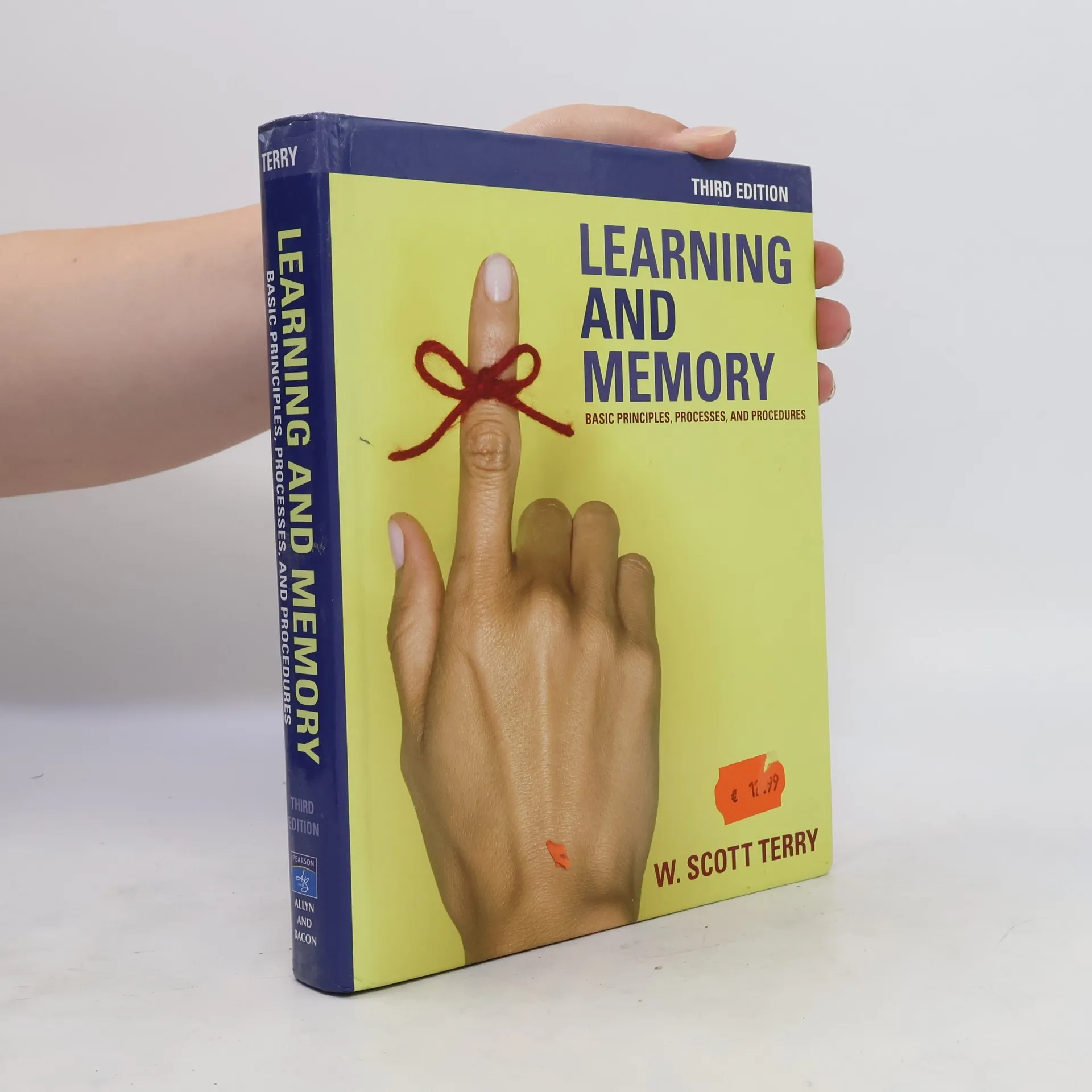
Więcej o książce
This text explores the core principles of learning and memory in a clear, reader-friendly style, covering animal learning and human memory in a balanced fashion. A strong emphasis on practical applications to the college student's everyday life is evident in examples throughout, such as the correlation between caffeine consumption and grade point average (Chapter 1), the importance of taking practice tests over additional studying (Chapter 9), approach/avoidance coping for upcoming and completed exams (Chapter 5), and misremembering what your professor said in class (Chapter 10). The relationship between the fields of neuropsychology and learning and memory is also stressed throughout. The fourth edition has been thoroughly updated to reflect the latest research and has been freshened throughout with more relevant examples and better graphics. There are new sections on the adaptive-evolutionary approach, potentiated startle, behavior medicine, breaking habits, behavioral economics, testing effect, consolidation theory, an expanded section on working memory, and new applications in animal training, self behavior modification, neuroethics and artificial memory enhancement, and acting and memory.
Zakup książki
Learning and Memory, W. Scott Terry
- Język

- Rok wydania
- 2006
- Oprawa
- (twarda)
Metody płatności
Brakuje nam tutaj Twojej recenzji.
- Tytuł
- Learning and Memory
- Podtytuł
- Basic Principles, Processes, and Procedures
- Język
- angielski
- Autorzy
- W. Scott Terry
- Wydawca
- Allyn & Bacon
- Rok wydania
- 2006
- Oprawa
- twarda
- Liczba stron
- 480
- ISBN10
- 032127377X
- ISBN13
- 9780321273772
- Seria
- Ocena
- 3,65 z 5
- Opis
- This text explores the core principles of learning and memory in a clear, reader-friendly style, covering animal learning and human memory in a balanced fashion. A strong emphasis on practical applications to the college student's everyday life is evident in examples throughout, such as the correlation between caffeine consumption and grade point average (Chapter 1), the importance of taking practice tests over additional studying (Chapter 9), approach/avoidance coping for upcoming and completed exams (Chapter 5), and misremembering what your professor said in class (Chapter 10). The relationship between the fields of neuropsychology and learning and memory is also stressed throughout. The fourth edition has been thoroughly updated to reflect the latest research and has been freshened throughout with more relevant examples and better graphics. There are new sections on the adaptive-evolutionary approach, potentiated startle, behavior medicine, breaking habits, behavioral economics, testing effect, consolidation theory, an expanded section on working memory, and new applications in animal training, self behavior modification, neuroethics and artificial memory enhancement, and acting and memory.