

Więcej o książce
Time is a "thing" that cannot be grasped, yet which undoubtedly exists. It is a "thing" which everybody speaks of but no one has seen. We see, hear, feel, taste IN time, but not time itself. We are sure we are grounded in physical reality, but it is Chronos — the Greek god of time, said to have ruled the world before Zeus — whose strange principles shape our existence. To confront time, we must approach it carefully, "peeling away" its mysteries one by one, distinguishing it from its various duration, memory, movement, speed, repetition. Clocks do not necessarily measure time, for time continues even when we think it is running out. Time may carry us along in its flow, but it is a constant. It exists independently of we who observe it, who live through it, who grow old and die in it.Today, the boldest look at time, and perhaps the most disconcerting, is provided by physicists. Scientists from Galileo to Einstein, and now in the era of anti-matter and superstrings, wrestle with the mind-blowing questions which time Did time precede the universe? How did it start? Can we reverse its flow? Do several "times" exist in time?
Zakup książki
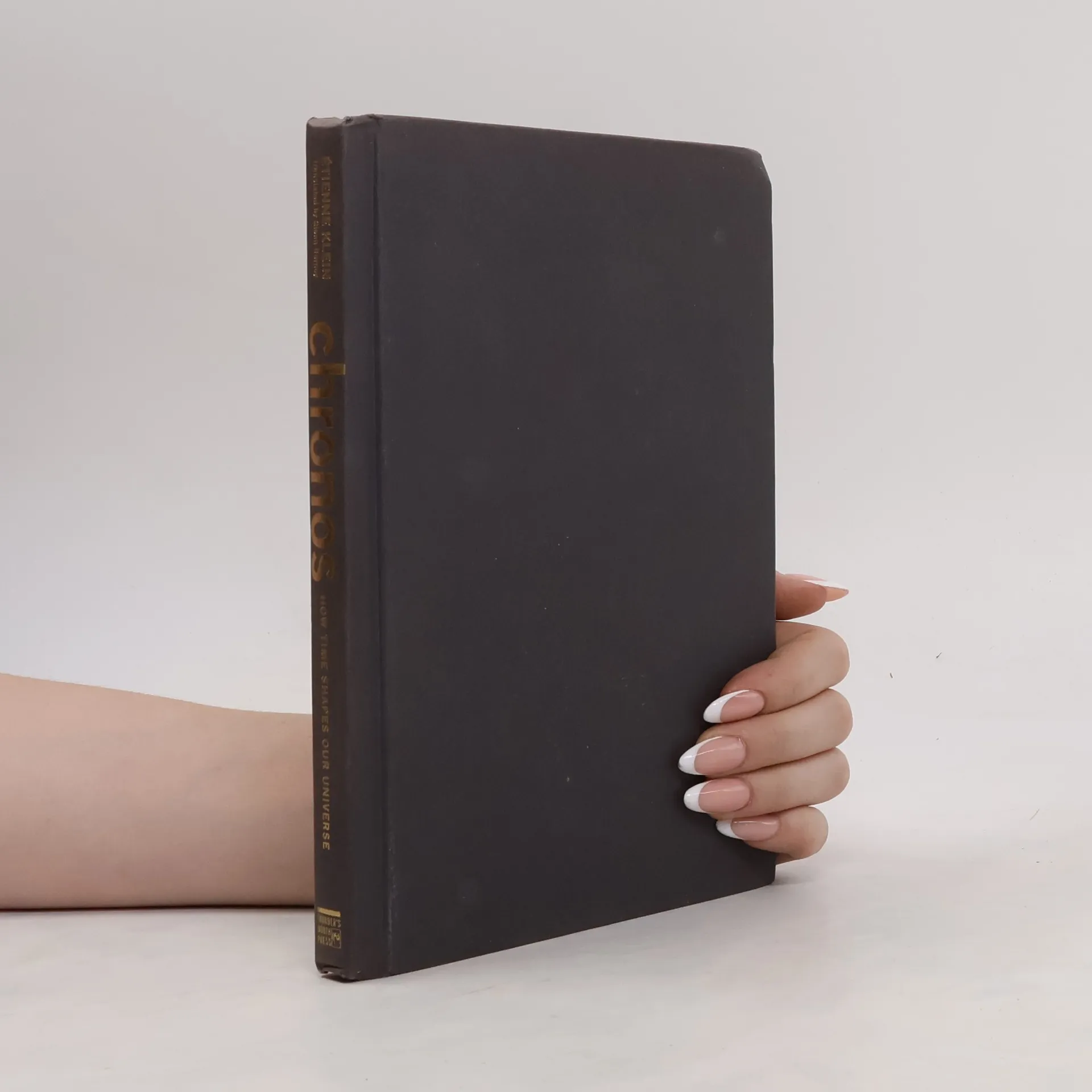
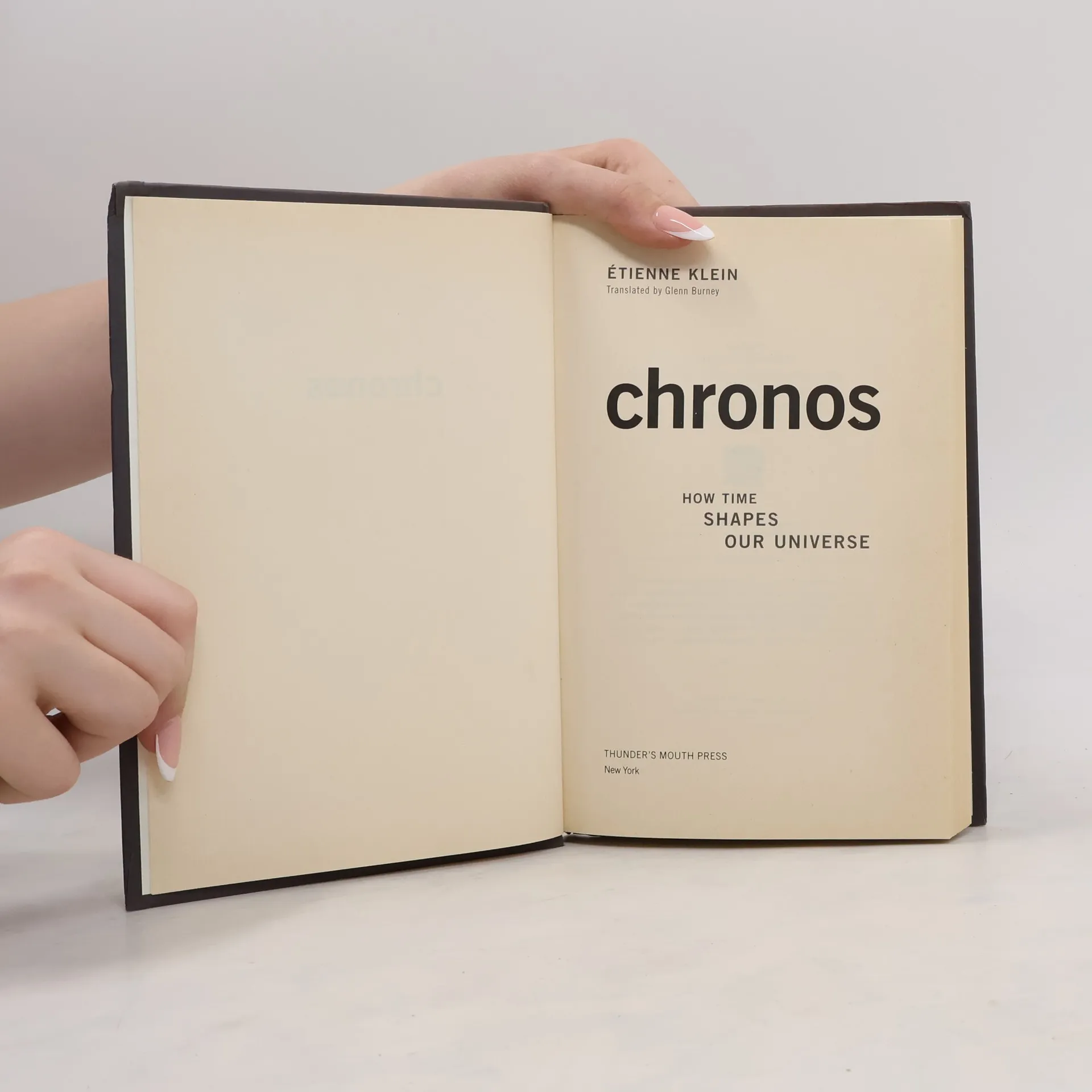
Chronos. How Time Shapes Our Universe, E. tienne Klein
- Język

- Rok wydania
- 2005
- Oprawa
- (twarda)
Metody płatności
Brakuje nam tutaj Twojej recenzji.
- Tytuł
- Chronos. How Time Shapes Our Universe
- Język
- angielski
- Autorzy
- E. tienne Klein
- Wydawca
- Thunder's Mouth Press
- Rok wydania
- 2005
- Oprawa
- twarda
- Liczba stron
- 208
- ISBN10
- 1560257083
- ISBN13
- 9781560257080
- Seria
- Ocena
- 3,9 z 5
- Opis
- Time is a "thing" that cannot be grasped, yet which undoubtedly exists. It is a "thing" which everybody speaks of but no one has seen. We see, hear, feel, taste IN time, but not time itself. We are sure we are grounded in physical reality, but it is Chronos — the Greek god of time, said to have ruled the world before Zeus — whose strange principles shape our existence. To confront time, we must approach it carefully, "peeling away" its mysteries one by one, distinguishing it from its various duration, memory, movement, speed, repetition. Clocks do not necessarily measure time, for time continues even when we think it is running out. Time may carry us along in its flow, but it is a constant. It exists independently of we who observe it, who live through it, who grow old and die in it.Today, the boldest look at time, and perhaps the most disconcerting, is provided by physicists. Scientists from Galileo to Einstein, and now in the era of anti-matter and superstrings, wrestle with the mind-blowing questions which time Did time precede the universe? How did it start? Can we reverse its flow? Do several "times" exist in time?