



Więcej o książce
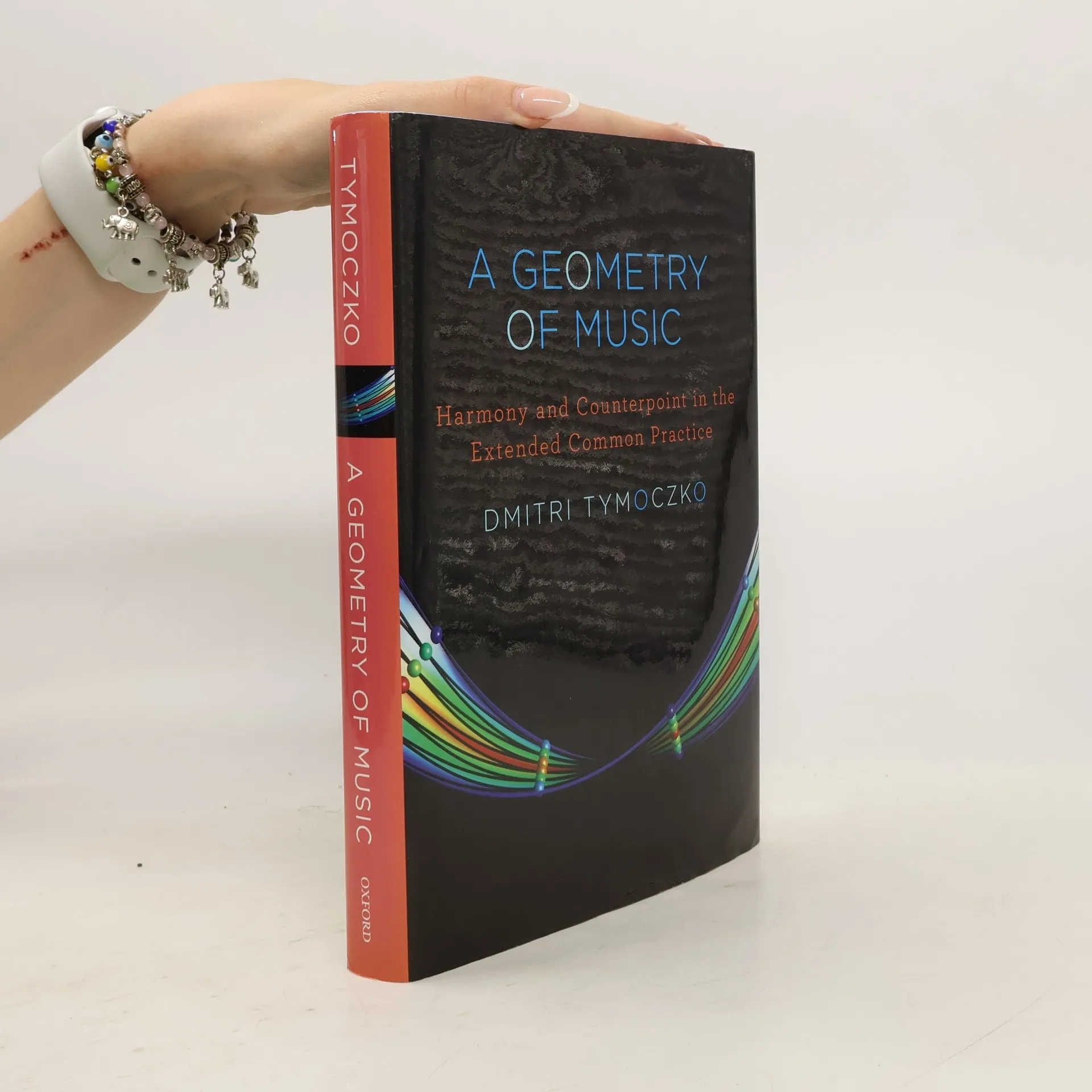
How is the Beatles' "Help!" similar to Stravinsky's "Dance of the Adolescents"? How does Radiohead's "Just" relate to Bill Evans' improvisations? In this groundbreaking work, author Dmitri Tymoczko presents a new framework for understanding music, highlighting commonalities across styles from medieval polyphony to contemporary rock. He identifies five fundamental musical features that contribute to tonality and illustrates their recurrence throughout Western music history, addressing the age-old question of what makes music sound good. This book offers an accessible introduction to Tymoczko's innovative geometrical approach to music theory, teaching readers how to create simple diagrams that represent relationships among familiar chords and scales. This method allows for a translation between musical and visual realms, revealing surprising structures in complex pieces. Tymoczko retells the history of Western music from the eleventh century to the present, arguing that traditional narratives overly focus on the "common practice" period from 1680-1850. Instead, he posits an extended common practice that spans from the late Middle Ages to today, discussing works by composers from Bach to the Beatles and beyond. Aimed at a diverse audience, including undergraduate music majors and those with a scientific or mathematical interest in music, the book requires no special mathematical background and only basic familiarity with West
Zakup książki
A Geometry of Music, Dmitri Tymoczko
- Język

- Rok wydania
- 2011
- Oprawa
- (twarda)
Metody płatności
Brakuje nam tutaj Twojej recenzji.
- Tytuł
- A Geometry of Music
- Język
- angielski
- Autorzy
- Dmitri Tymoczko
- Wydawca
- Oxford University Press
- Rok wydania
- 2011
- Oprawa
- twarda
- Liczba stron
- 450
- ISBN10
- 0195336674
- ISBN13
- 9780195336672
- Seria
- Ocena
- 4,15 z 5
- Opis
- How is the Beatles' "Help!" similar to Stravinsky's "Dance of the Adolescents"? How does Radiohead's "Just" relate to Bill Evans' improvisations? In this groundbreaking work, author Dmitri Tymoczko presents a new framework for understanding music, highlighting commonalities across styles from medieval polyphony to contemporary rock. He identifies five fundamental musical features that contribute to tonality and illustrates their recurrence throughout Western music history, addressing the age-old question of what makes music sound good. This book offers an accessible introduction to Tymoczko's innovative geometrical approach to music theory, teaching readers how to create simple diagrams that represent relationships among familiar chords and scales. This method allows for a translation between musical and visual realms, revealing surprising structures in complex pieces. Tymoczko retells the history of Western music from the eleventh century to the present, arguing that traditional narratives overly focus on the "common practice" period from 1680-1850. Instead, he posits an extended common practice that spans from the late Middle Ages to today, discussing works by composers from Bach to the Beatles and beyond. Aimed at a diverse audience, including undergraduate music majors and those with a scientific or mathematical interest in music, the book requires no special mathematical background and only basic familiarity with West