

Więcej o książce
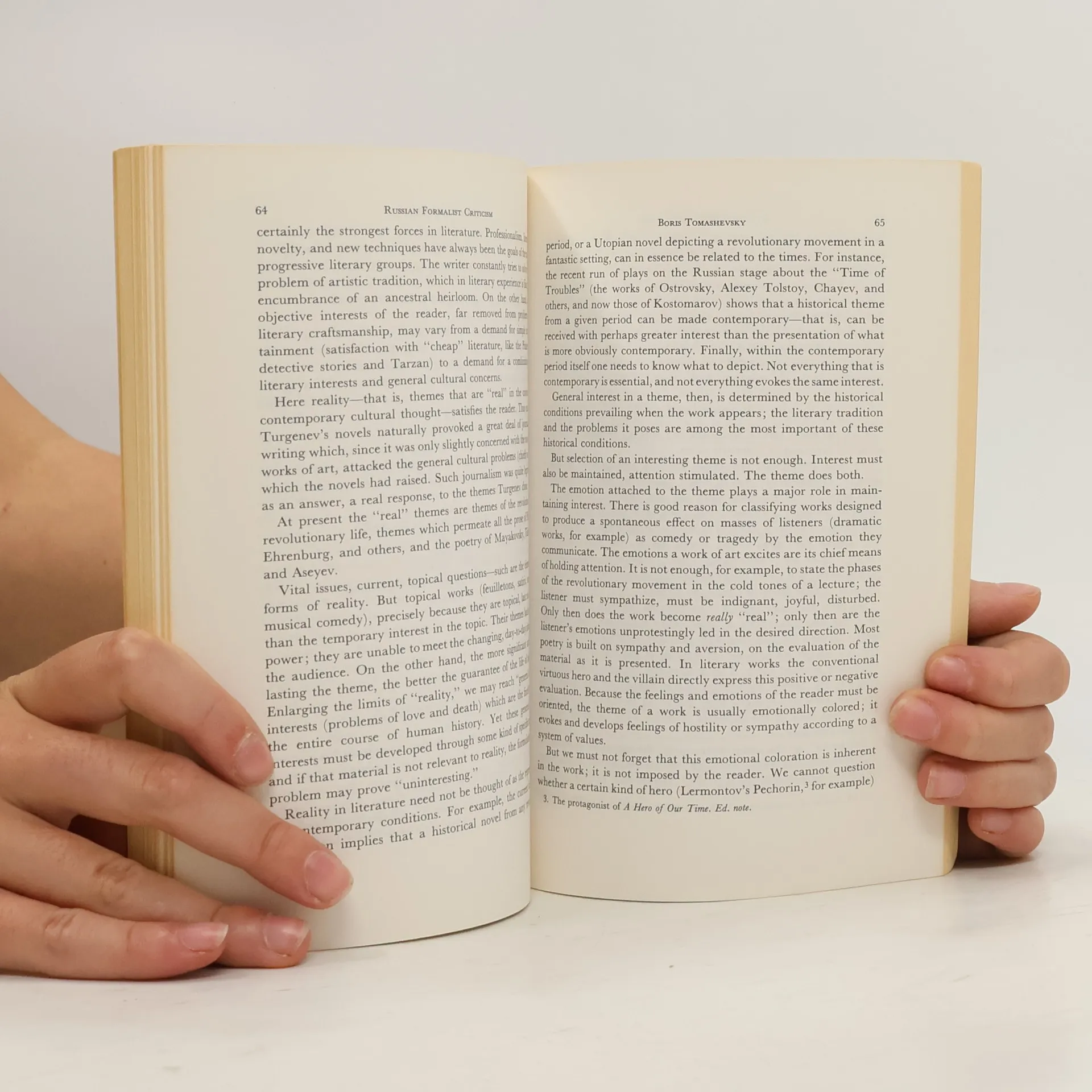
The Russian formalists emerged from the Russian Revolution with ideas about the independence of literature. They enjoyed that independence until Stalin shut them down. By then, however, they had produced essays that remain among the best defenses ever written for both literature and its theory.Included here are four essays representing key points in the formalists’ short history. Victor Shklovsky’s pioneering “Art as Technique” (1917) defines the literary as a way to make us see familiar things as if for the first time. His 1921 essay on Tristram Shandy makes that eccentric novel the centerpiece for a theory of narrative. A section from Boris Tomashevsky’s “Thematics” (1925) inventories the elements of stories. In “The Theory of the ‘Formal Method’” (1927), Boris Eichenbaum defends Russian Formalism against various attacks. An able champion, he describes Formalism’s evolution, notes its major figures and works, clears away decayed axioms, and rescues literature from “primitive historicism” and other dangers.These essays set a course for literary studies that led to Prague structuralism, French semiotics, and postmodern poetics. Russian Formalist Criticism has been honored as a Choice Outstanding Academic Book of the Year by the American Library Association.
Zakup książki
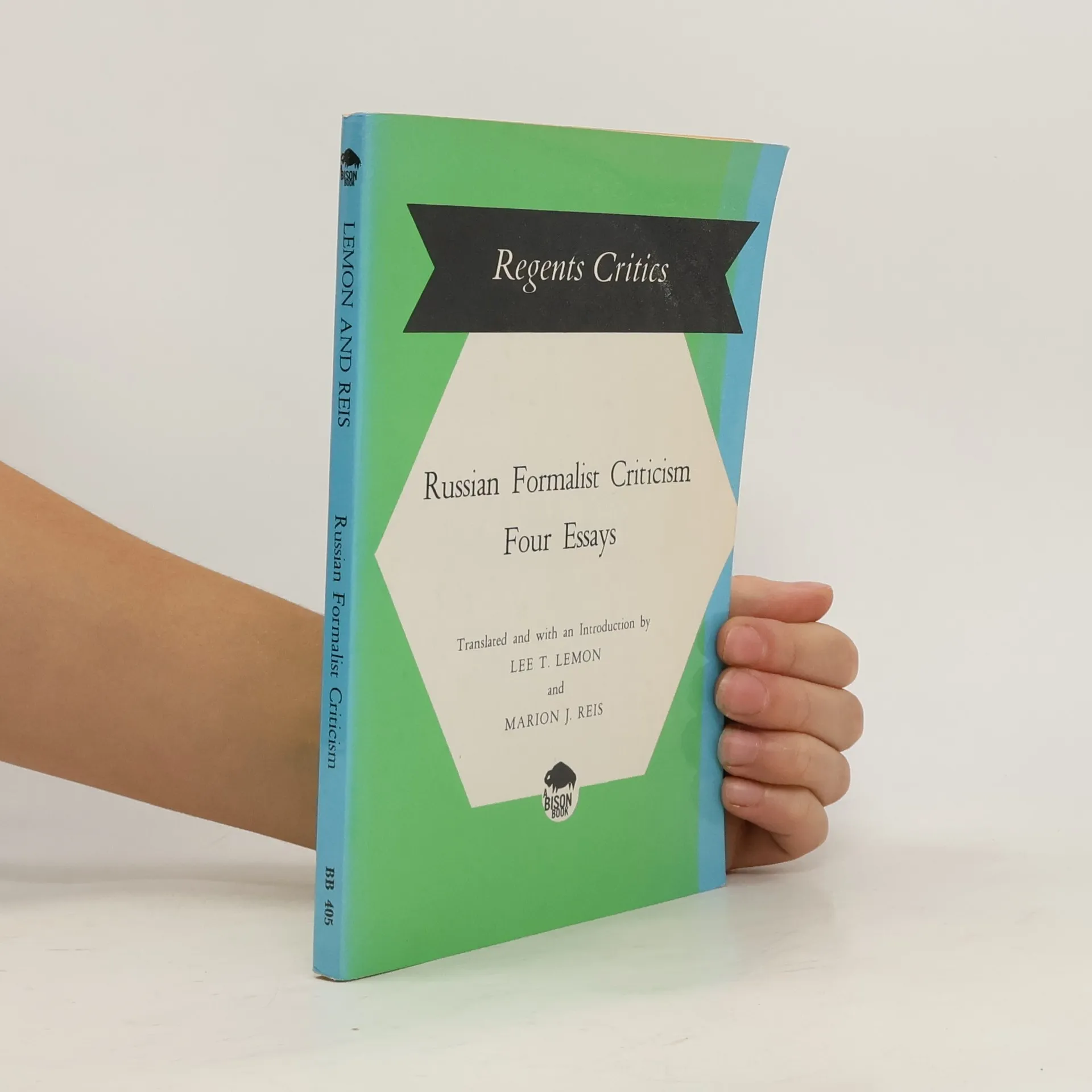
Russian Formalist Criticism, Lee T. Lemon, Marion J. Reis
- Język

- Rok wydania
- 1965
- Oprawa
- (miękka)
Metody płatności
Brakuje nam tutaj Twojej recenzji.
- Tytuł
- Russian Formalist Criticism
- Podtytuł
- Four Essays
- Język
- angielski
- Autorzy
- Lee T. Lemon, Marion J. Reis
- Wydawca
- University of Nebraska Press
- Rok wydania
- 1965
- Oprawa
- miękka
- Liczba stron
- 164
- ISBN10
- 0803254601
- ISBN13
- 9780803254602
- Seria
- Ocena
- 3,75 z 5
- Opis
- The Russian formalists emerged from the Russian Revolution with ideas about the independence of literature. They enjoyed that independence until Stalin shut them down. By then, however, they had produced essays that remain among the best defenses ever written for both literature and its theory.Included here are four essays representing key points in the formalists’ short history. Victor Shklovsky’s pioneering “Art as Technique” (1917) defines the literary as a way to make us see familiar things as if for the first time. His 1921 essay on Tristram Shandy makes that eccentric novel the centerpiece for a theory of narrative. A section from Boris Tomashevsky’s “Thematics” (1925) inventories the elements of stories. In “The Theory of the ‘Formal Method’” (1927), Boris Eichenbaum defends Russian Formalism against various attacks. An able champion, he describes Formalism’s evolution, notes its major figures and works, clears away decayed axioms, and rescues literature from “primitive historicism” and other dangers.These essays set a course for literary studies that led to Prague structuralism, French semiotics, and postmodern poetics. Russian Formalist Criticism has been honored as a Choice Outstanding Academic Book of the Year by the American Library Association.