

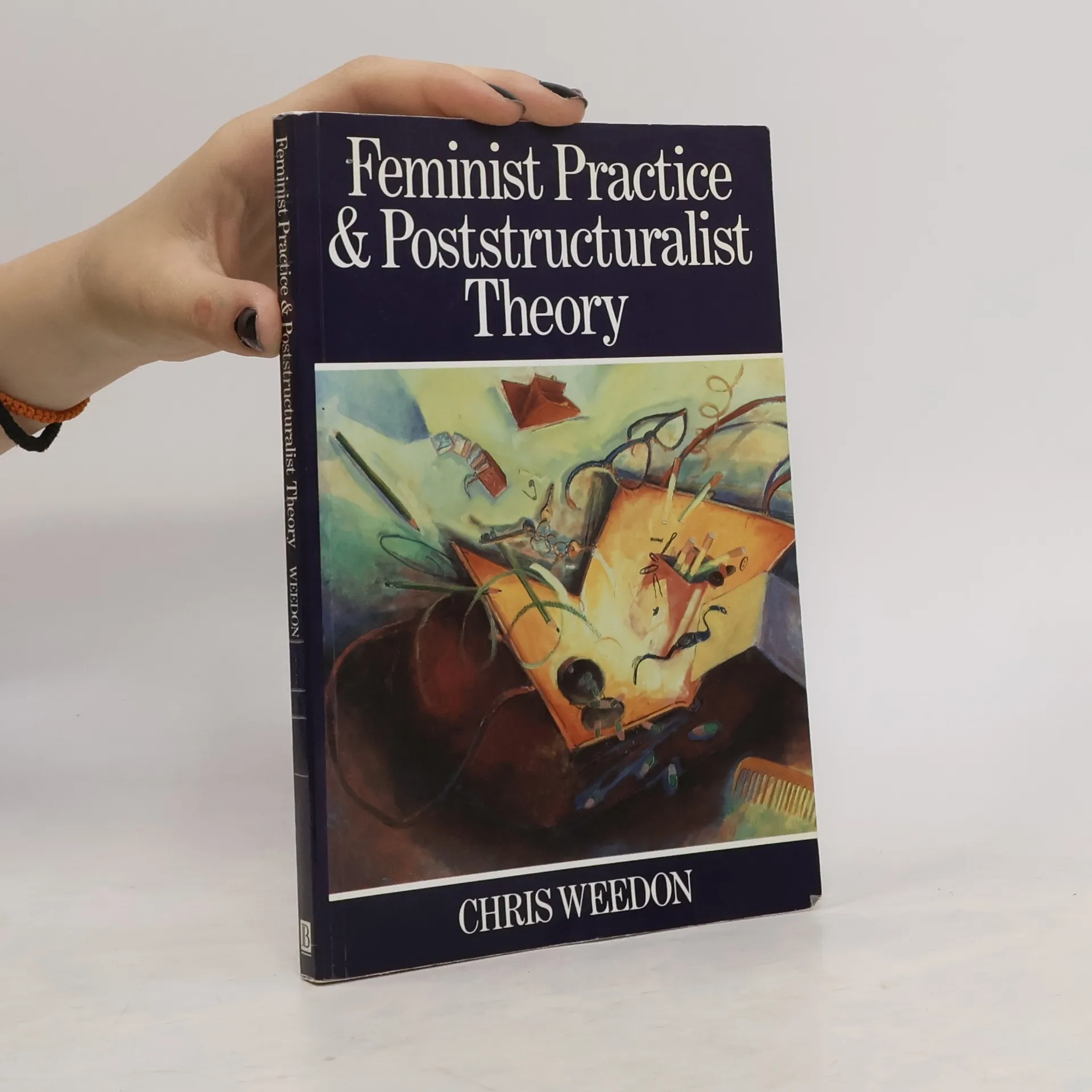
Więcej o książce
What do the theories of poststructuralism have to offer contemporary feminism? In a discussion which assumes no prior knowledge of these complex theoretical issues, Chris Weedon argues that feminism is a politics which depends for its effectiveness on an alliance of theory and practice. Making the case that poststructuralism is the theory with the most explanatory and practical relevance to feminism, she examines the possibilities for a feminist practice. In Feminist Practice and Poststructuralist Theory she suggests that patriarchal power is structural: it exists in institutions and social practices and not merely in individual intentions. It is, therefore, not a part of immutable nature but open to effective theoretical analysis and practical change. To develop this view, she mobilizes recent poststructuralist developments in the theory of language, subjectivity and power to develop a sophisticated feminist politics that takes into account not only questions of language and gender but also of class and race. Her argument, finally, is that it is through poststructuralist theory that an adequate feminist practice may emerge.
Zakup książki
Feminist Practice and Poststructuralist Theory, Chris Weedon
- Język

- Rok wydania
- 1987
- Oprawa
- (miękka)
Metody płatności
Brakuje nam tutaj Twojej recenzji.
- Tytuł
- Feminist Practice and Poststructuralist Theory
- Język
- angielski
- Autorzy
- Chris Weedon
- Wydawca
- Blackwell Pub
- Rok wydania
- 1987
- Oprawa
- miękka
- Liczba stron
- 224
- ISBN10
- 0631151885
- ISBN13
- 9780631151883
- Seria
- Tagi
- Feminizm, Teorie naukowe, Gender
- Ocena
- 3,35 z 5
- Opis
- What do the theories of poststructuralism have to offer contemporary feminism? In a discussion which assumes no prior knowledge of these complex theoretical issues, Chris Weedon argues that feminism is a politics which depends for its effectiveness on an alliance of theory and practice. Making the case that poststructuralism is the theory with the most explanatory and practical relevance to feminism, she examines the possibilities for a feminist practice. In Feminist Practice and Poststructuralist Theory she suggests that patriarchal power is structural: it exists in institutions and social practices and not merely in individual intentions. It is, therefore, not a part of immutable nature but open to effective theoretical analysis and practical change. To develop this view, she mobilizes recent poststructuralist developments in the theory of language, subjectivity and power to develop a sophisticated feminist politics that takes into account not only questions of language and gender but also of class and race. Her argument, finally, is that it is through poststructuralist theory that an adequate feminist practice may emerge.