



Więcej o książce
Kukveni—footprints—serve as a significant metaphor for the Hopi people, symbolizing their tangible heritage. According to Hopi belief, the deity Máasaw instructed their ancestors to leave footprints during their migrations as proof of their commitment to stewarding the land. Today, these footprints are interpreted as archaeological remnants—pottery sherds, stone tools, petroglyphs, and other evidence of past land use. The fourteen chapters explore these footprints through various research methods, including archaeology, ethnography, and plant genetics. The editors and contributors present innovative perspectives on Hopi archaeology and history, showcasing how the tribe has enhanced its understanding of the past through collaboration with archaeologists and cultural anthropologists. Topics include the application of cultural landscape theory, GIS in research, social identity and immigration interpretations, corn genetics analysis, youth heritage education, and oral traditions. This work emphasizes the Hopi tribe's leadership in bridging tribal goals with anthropology, paving the way for others. Contributors include E. Charles Adams, Wesley Bernardini, Joëlle Clark, and others, each bringing unique insights into the Hopi's historical narrative and cultural legacy.
Zakup książki
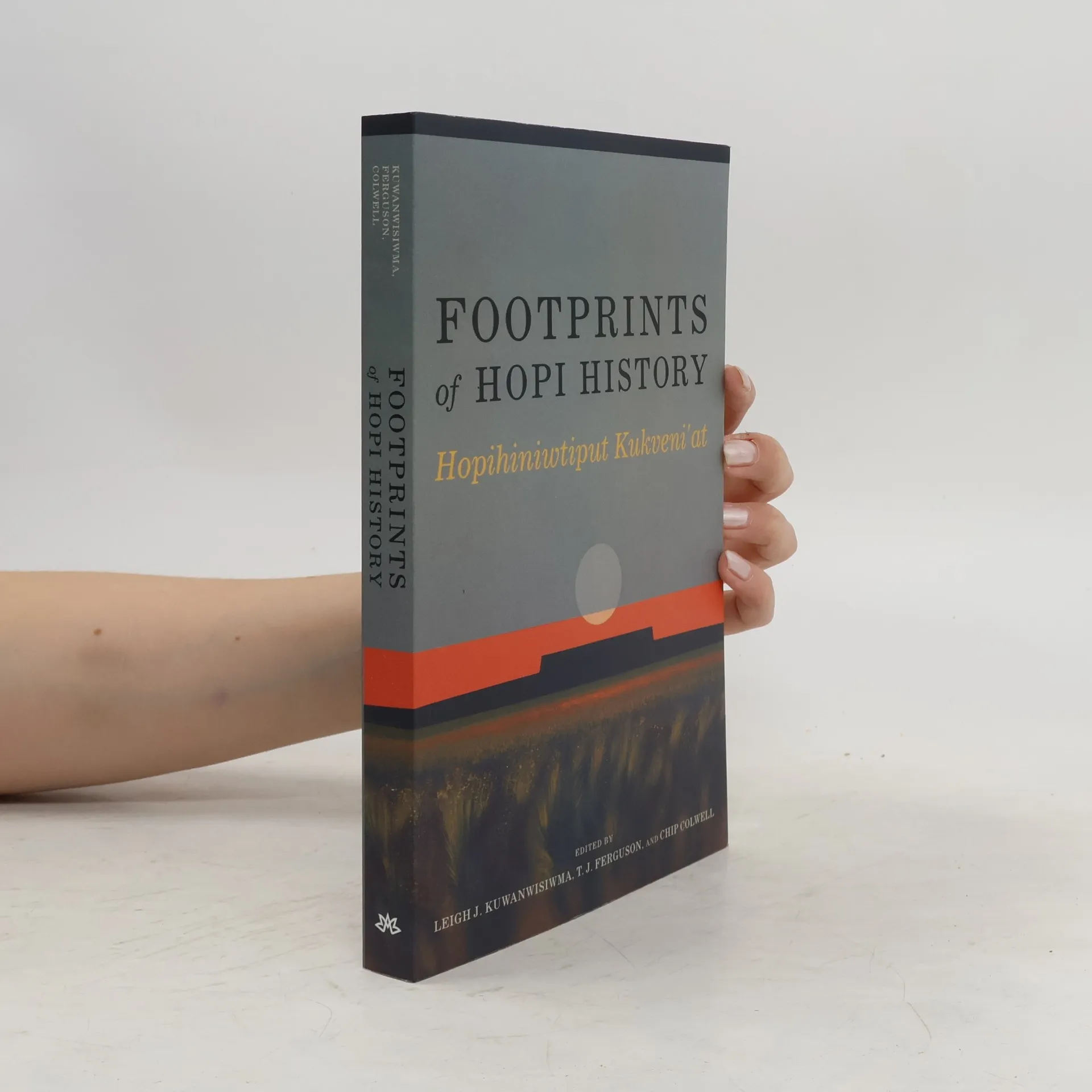
Footprints of Hopi History, Leigh J. Kuwanwisiwma, T. J. Ferguson, Chip Colwell
- Język

- Rok wydania
- 2019
- Oprawa
- (miękka)
Metody płatności
Nikt jeszcze nie ocenił.
- Tytuł
- Footprints of Hopi History
- Podtytuł
- Hopihiniwtiput Kukveni'at
- Język
- angielski
- Wydawca
- University of Arizona Press
- Rok wydania
- 2019
- Oprawa
- miękka
- Liczba stron
- 288
- ISBN10
- 0816540977
- ISBN13
- 9780816540976
- Seria
- Kategorie
- Tagi
- Opis
- Kukveni—footprints—serve as a significant metaphor for the Hopi people, symbolizing their tangible heritage. According to Hopi belief, the deity Máasaw instructed their ancestors to leave footprints during their migrations as proof of their commitment to stewarding the land. Today, these footprints are interpreted as archaeological remnants—pottery sherds, stone tools, petroglyphs, and other evidence of past land use. The fourteen chapters explore these footprints through various research methods, including archaeology, ethnography, and plant genetics. The editors and contributors present innovative perspectives on Hopi archaeology and history, showcasing how the tribe has enhanced its understanding of the past through collaboration with archaeologists and cultural anthropologists. Topics include the application of cultural landscape theory, GIS in research, social identity and immigration interpretations, corn genetics analysis, youth heritage education, and oral traditions. This work emphasizes the Hopi tribe's leadership in bridging tribal goals with anthropology, paving the way for others. Contributors include E. Charles Adams, Wesley Bernardini, Joëlle Clark, and others, each bringing unique insights into the Hopi's historical narrative and cultural legacy.