



Więcej o książce
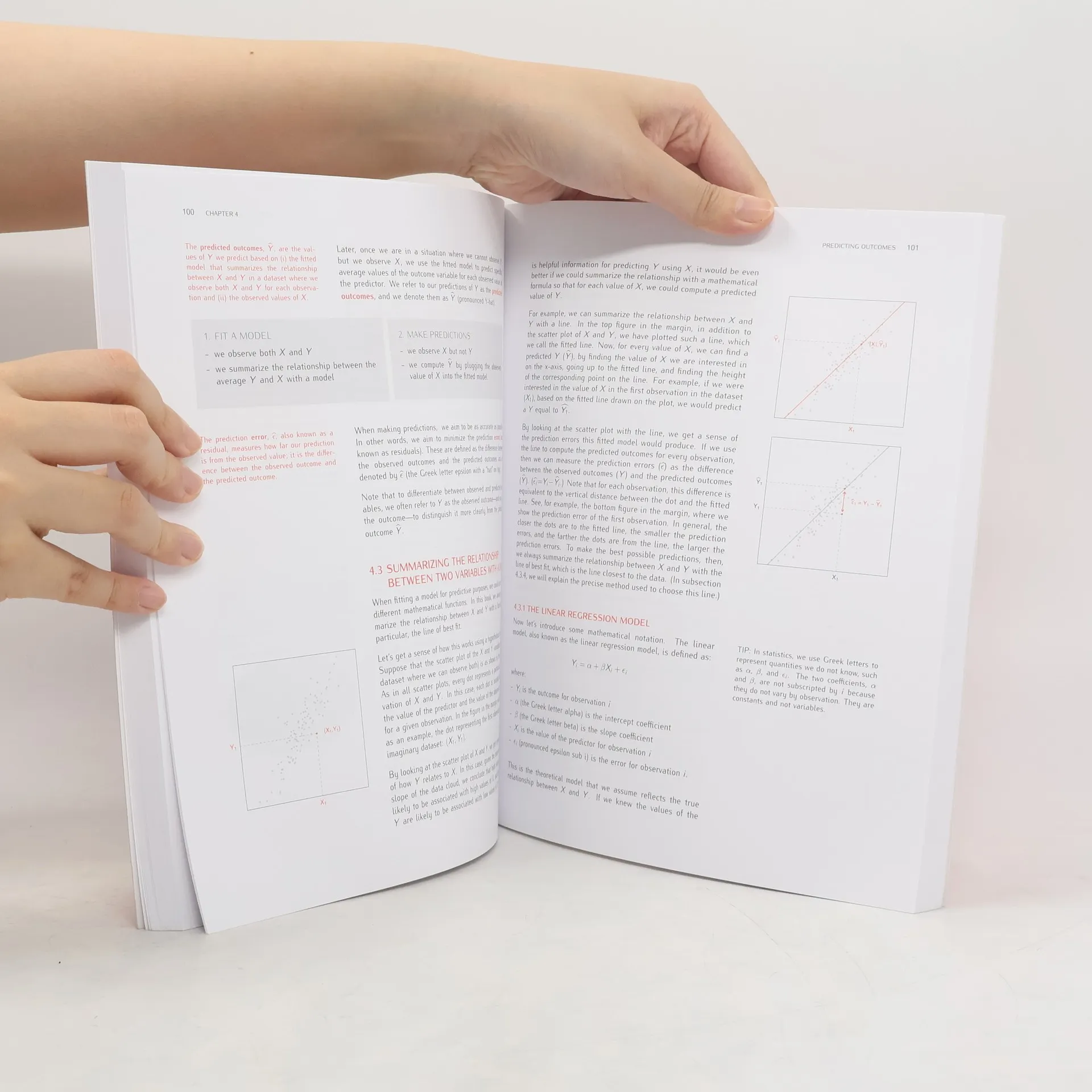
An ideal textbook for complete beginners—assumes no prior knowledge of statistics or coding and only minimal knowledge of mathData Analysis for Social Science provides a friendly introduction to the statistical concepts and programming skills needed to conduct and evaluate social scientific studies. Using plain language and assuming no prior knowledge of statistics and coding, the book teaches the fundamentals of survey research, predictive models, and causal inference while analyzing data from published studies with the statistical program R. It teaches not only how to perform the data analyses but also how to interpret the results and identify the analyses’ strengths and limitations.Looking for a more advanced introduction? Consider Quantitative Social Science by Kosuke Imai. In addition to covering the material in Data Analysis for Social Science , it teaches diffs-in-diffs models, heterogeneous effects, text analysis, and regression discontinuity designs, among other things.
Zakup książki
Data Analysis for Social Science, Elena Llaudet, Kosuke Imai
- Język

- Rok wydania
- 2023
- Oprawa
- (miękka)
Metody płatności
Brakuje nam tutaj Twojej recenzji.
- Tytuł
- Data Analysis for Social Science
- Podtytuł
- A Friendly and Practical Introduction
- Język
- angielski
- Autorzy
- Elena Llaudet, Kosuke Imai
- Wydawca
- Princeton University Press
- Rok wydania
- 2023
- Oprawa
- miękka
- Liczba stron
- 256
- ISBN10
- 0691199434
- ISBN13
- 9780691199436
- Seria
- Kategorie
- Tagi
- Ocena
- 3,95 z 5
- Opis
- An ideal textbook for complete beginners—assumes no prior knowledge of statistics or coding and only minimal knowledge of mathData Analysis for Social Science provides a friendly introduction to the statistical concepts and programming skills needed to conduct and evaluate social scientific studies. Using plain language and assuming no prior knowledge of statistics and coding, the book teaches the fundamentals of survey research, predictive models, and causal inference while analyzing data from published studies with the statistical program R. It teaches not only how to perform the data analyses but also how to interpret the results and identify the analyses’ strengths and limitations.Looking for a more advanced introduction? Consider Quantitative Social Science by Kosuke Imai. In addition to covering the material in Data Analysis for Social Science , it teaches diffs-in-diffs models, heterogeneous effects, text analysis, and regression discontinuity designs, among other things.