

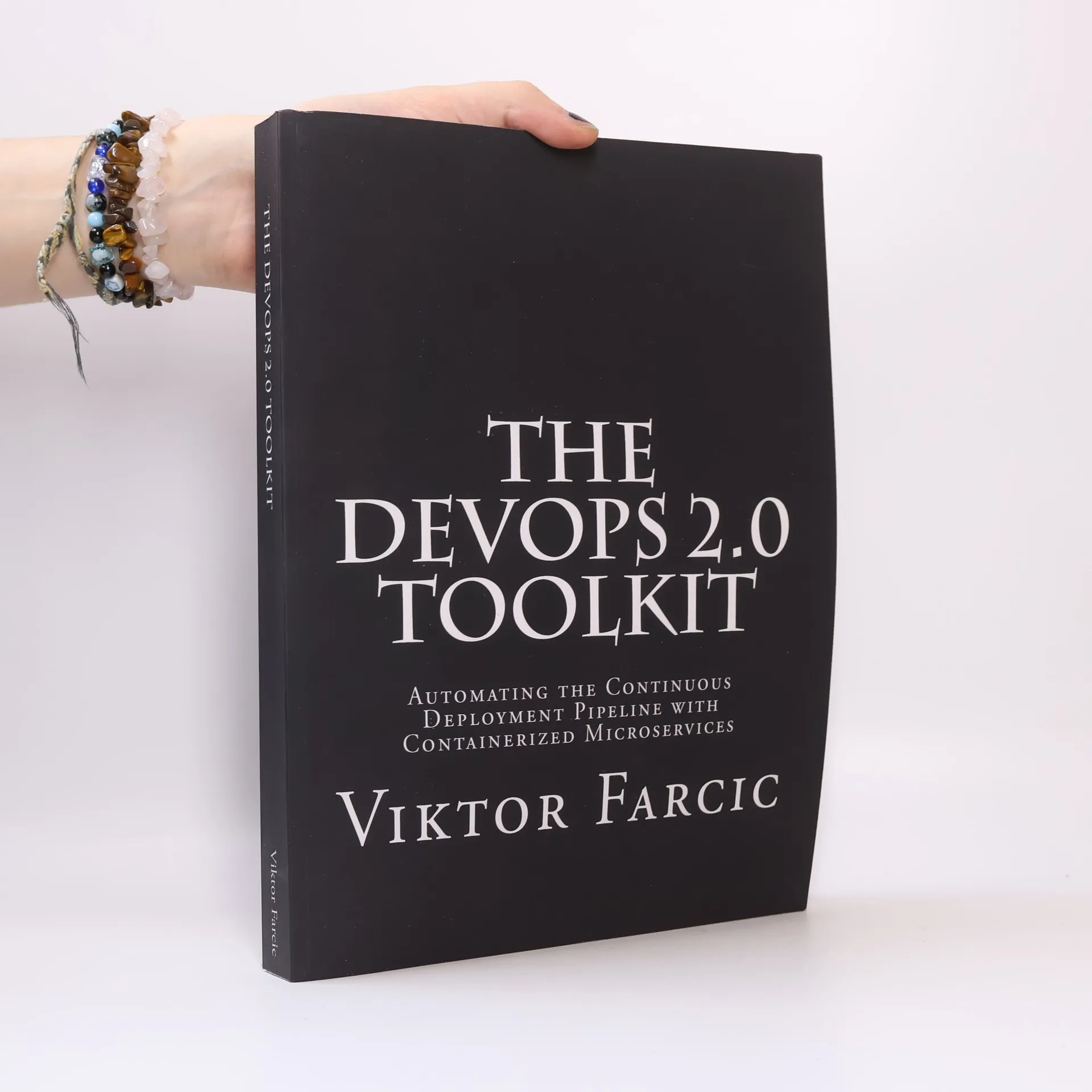


The DevOps 2.0 Toolkit
Automating the Continuous Deployment Pipeline with Containerized Microservices
Autorzy
Ocena książki
Więcej o książce
"This book is about techniques that help us architect software in a better and more efficient way: With microservices packed as immutable containers, then tested and deployed continuously to servers that are automatically provisioned with configuration management tools. It's about fast, reliable and continuous deployments with zero-downtime and the ability to roll-back. It's about scaling to any number of servers, designing self-healing systems capable of recovering from both hardware and software failures, and about centralized logging and monitoring of a cluster. We will cover some of the latest and greatest practices and a variety of tools such as: Docker, Kubernetes, Ansible, Ubuntu, Docker Swarm, Docker Compose, and Consul."--Back cover.
Zakup książki
The DevOps 2.0 Toolkit, Farcic Viktor
- Język

- Rok wydania
- 2016
- Oprawa
- (miękka)
Metody płatności
Brakuje nam tutaj Twojej recenzji.
- Tytuł
- The DevOps 2.0 Toolkit
- Podtytuł
- Automating the Continuous Deployment Pipeline with Containerized Microservices
- Język
- angielski
- Autorzy
- Farcic Viktor
- Rok wydania
- 2016
- Oprawa
- miękka
- Liczba stron
- 414
- ISBN10
- 152391744X
- ISBN13
- 9781523917440
- Seria
- Tagi
- Technologia
- Ocena
- 3,35 z 5
- Opis
- "This book is about techniques that help us architect software in a better and more efficient way: With microservices packed as immutable containers, then tested and deployed continuously to servers that are automatically provisioned with configuration management tools. It's about fast, reliable and continuous deployments with zero-downtime and the ability to roll-back. It's about scaling to any number of servers, designing self-healing systems capable of recovering from both hardware and software failures, and about centralized logging and monitoring of a cluster. We will cover some of the latest and greatest practices and a variety of tools such as: Docker, Kubernetes, Ansible, Ubuntu, Docker Swarm, Docker Compose, and Consul."--Back cover.