



Więcej o książce
The material consists of lesson plans suitable for students of English from post-beginner to advanced levels. Each section is organized according to topics, language or structure, level, and length of time and materials required. There is a wide selection of quizzes, questionnaires and games based on humanistic principles to encourage spontaneity and originality. The instructions are clear, and there are suggestions and follow-up work for each activity. The wide variety of appropriately-chosen topics gives the opportunity to develop interdisciplinary teaching as well, by involving sociology, psychology, politics, etc. Another great merit of the book is that the students are made to ask questions themselves, rather than to wait for a lead from the teacher. In fact the activities are so well organized that in most cases the teacher does not need to intervene in the work of the students. The positive role of group work is strongly confirmed. The authors give a number of variations, and suggest 'either . . . or' activities, encouraging the teacher not to view their suggestions once-and-for-always lesson plans.
Zakup książki
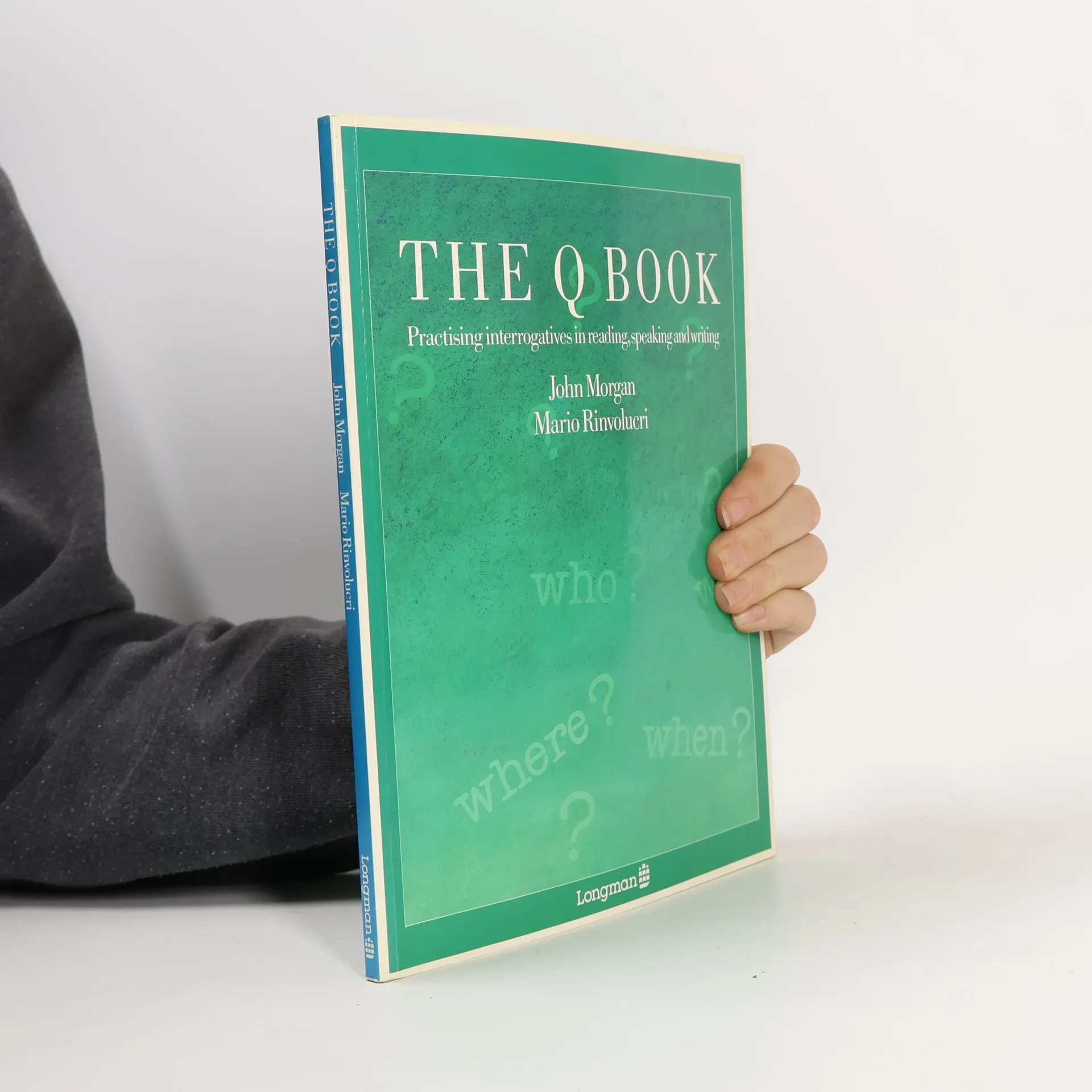
The Q Book, John Morgan, Mario Rinvolucri
- Język

- Rok wydania
- 1988
- Oprawa
- (miękka)
Metody płatności
Nikt jeszcze nie ocenił.
- Tytuł
- The Q Book
- Język
- angielski
- Autorzy
- John Morgan, Mario Rinvolucri
- Wydawca
- Longman
- Rok wydania
- 1988
- Oprawa
- miękka
- ISBN10
- 0582796067
- ISBN13
- 9780582796065
- Seria
- Opis
- The material consists of lesson plans suitable for students of English from post-beginner to advanced levels. Each section is organized according to topics, language or structure, level, and length of time and materials required. There is a wide selection of quizzes, questionnaires and games based on humanistic principles to encourage spontaneity and originality. The instructions are clear, and there are suggestions and follow-up work for each activity. The wide variety of appropriately-chosen topics gives the opportunity to develop interdisciplinary teaching as well, by involving sociology, psychology, politics, etc. Another great merit of the book is that the students are made to ask questions themselves, rather than to wait for a lead from the teacher. In fact the activities are so well organized that in most cases the teacher does not need to intervene in the work of the students. The positive role of group work is strongly confirmed. The authors give a number of variations, and suggest 'either . . . or' activities, encouraging the teacher not to view their suggestions once-and-for-always lesson plans.