

Więcej o książce
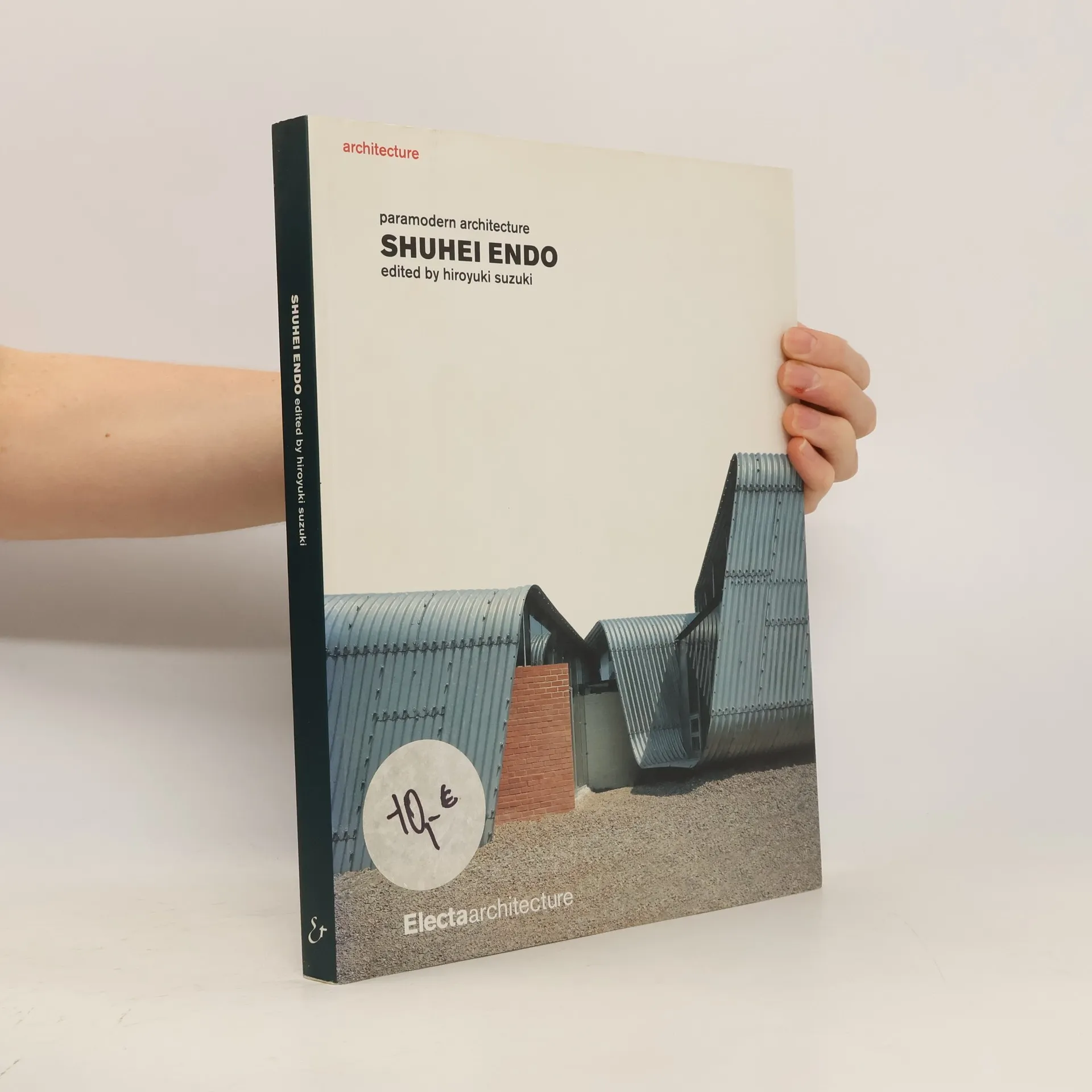
Japanese architect Shuhei Endo can be defined as an architect of steel, since he distinctly favors this material in the buildings he designs, continually experimenting with its infinite possibilities. His works are apparently weightless and communicate a sense of undulating sheets of steel are twisted into spirals and wrapped around buildings in overlapping layers, like petals of flowers, or arranged on different levels to create a membrane around open spaces. This approach is most evident in the "great roofs" that house Endo-designed offices, such as Rooftecture N (Nisinomiya, Hyogo, 1998), or spaces for relaxation and meetings, such as Rooftecture T (Fukui, 1997), as well as private homes, such as Springtecture H (Harima, 1998) and Rooftecture M (Maruoka, 2001). Born in 1960 in Shiga Prefecture, Japan, he graduated in 1986 from the Kyoto School of Art and then joined the Osamu Ishii Biken Associates architectural studio. In 1988 he founded the Shuhei Endo Institute in Osaka and began teaching at Kinki University, Kobe Design University, and the Fukui Institute of Technology.
Zakup książki
Shuhei Endo, Shuhei Endo, Hiroyuki Suzuki
- Język

- Rok wydania
- 2006
- Oprawa
- (miękka)
Metody płatności
Brakuje nam tutaj Twojej recenzji.
- Tytuł
- Shuhei Endo
- Podtytuł
- Paramodern Architecture
- Język
- angielski
- Autorzy
- Shuhei Endo, Hiroyuki Suzuki
- Wydawca
- Phaidon Press
- Rok wydania
- 2006
- Oprawa
- miękka
- Liczba stron
- 212
- ISBN10
- 1904313434
- ISBN13
- 9781904313434
- Seria
- Tagi
- Architektura
- Ocena
- 5 z 5
- Opis
- Japanese architect Shuhei Endo can be defined as an architect of steel, since he distinctly favors this material in the buildings he designs, continually experimenting with its infinite possibilities. His works are apparently weightless and communicate a sense of undulating sheets of steel are twisted into spirals and wrapped around buildings in overlapping layers, like petals of flowers, or arranged on different levels to create a membrane around open spaces. This approach is most evident in the "great roofs" that house Endo-designed offices, such as Rooftecture N (Nisinomiya, Hyogo, 1998), or spaces for relaxation and meetings, such as Rooftecture T (Fukui, 1997), as well as private homes, such as Springtecture H (Harima, 1998) and Rooftecture M (Maruoka, 2001). Born in 1960 in Shiga Prefecture, Japan, he graduated in 1986 from the Kyoto School of Art and then joined the Osamu Ishii Biken Associates architectural studio. In 1988 he founded the Shuhei Endo Institute in Osaka and began teaching at Kinki University, Kobe Design University, and the Fukui Institute of Technology.