


Parametry
Więcej o książce
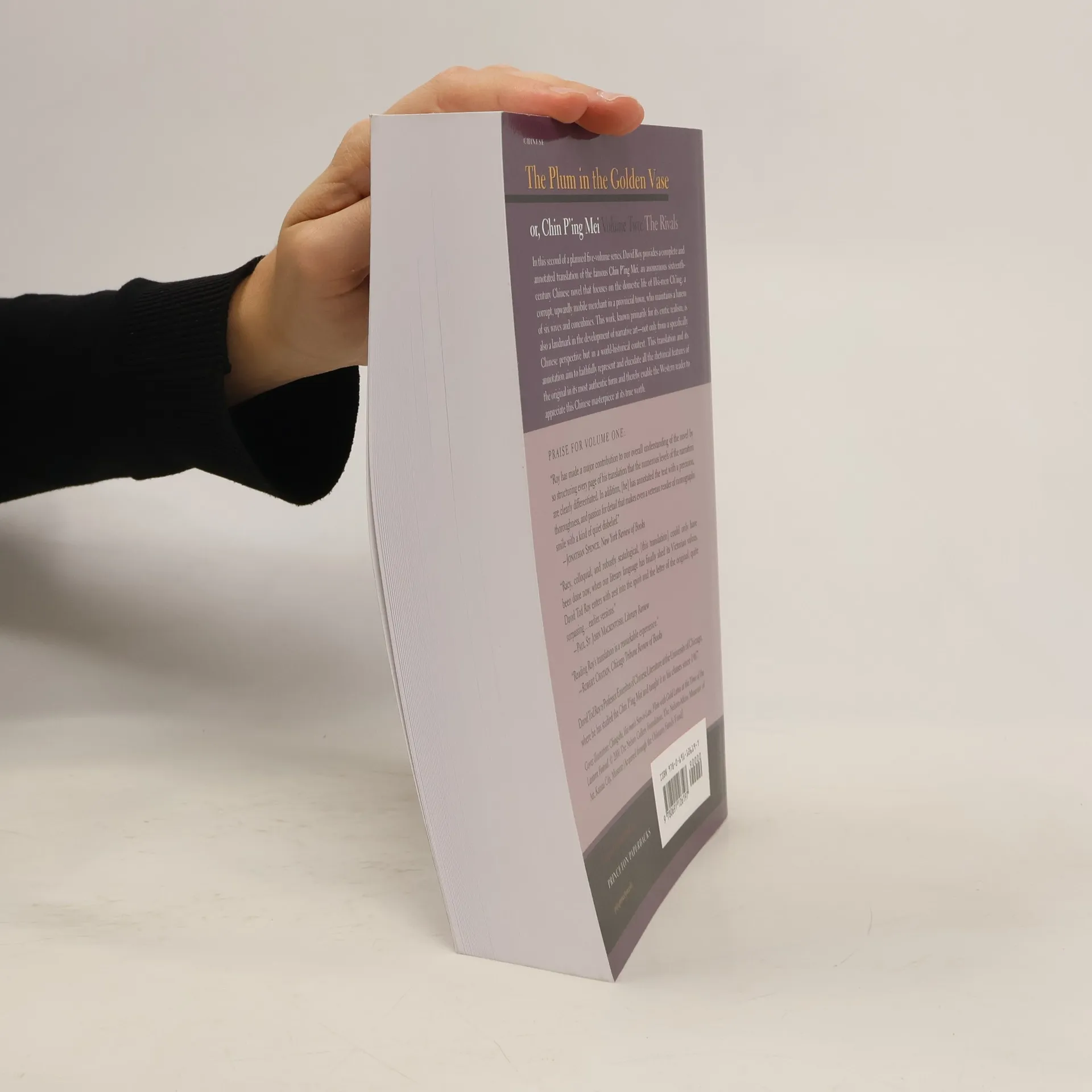
In this second of a planned five-volume series, David Roy provides a complete and annotated translation of the famous Chin P'ing Mei, an anonymous sixteenth-century Chinese novel that focuses on the domestic life of His-men Ch'ing, a corrupt, upwardly mobile merchant in a provincial town, who maintains a harem of six wives and concubines. This work, known primarily for its erotic realism, is also a landmark in the development of narrative art--not only from a specifically Chinese perspective but in a world-historical context.With the possible exception of The Tale of Genji (1010) and Don Quixote (1615), there is no earlier work of prose fiction of equal sophistication in world literature. Although its importance in the history of Chinese narrative has long been recognized, the technical virtuosity of the author, which is more reminiscent of the Dickens of Bleak House, the Joyce of Ulysses, or the Nabokov of Lolita than anything in the earlier Chinese fiction tradition, has not yet received adequate recognition. This is partly because all of the existing European translations are either abridged or based on an inferior recension of the text. This translation and its annotation aim to faithfully represent and elucidate all the rhetorical features of the original in its most authentic form and thereby enable the Western reader to appreciate this Chinese masterpiece at its true worth.
Zakup książki
The Plum in the Golden Vase 2, David Tod Roy
- Język

- Rok wydania
- 2006
- Oprawa
- (miękka)
Metody płatności
Brakuje nam tutaj Twojej recenzji.
- Tytuł
- The Plum in the Golden Vase 2
- Podtytuł
- The Rivals
- Język
- angielski
- Autorzy
- David Tod Roy
- Wydawca
- Princeton
- Rok wydania
- 2006
- Oprawa
- miękka
- ISBN10
- 0691126194
- ISBN13
- 9780691126197
- Seria
- Kategorie
- Tagi
- Ocena
- 4,05 z 5
- Opis
- In this second of a planned five-volume series, David Roy provides a complete and annotated translation of the famous Chin P'ing Mei, an anonymous sixteenth-century Chinese novel that focuses on the domestic life of His-men Ch'ing, a corrupt, upwardly mobile merchant in a provincial town, who maintains a harem of six wives and concubines. This work, known primarily for its erotic realism, is also a landmark in the development of narrative art--not only from a specifically Chinese perspective but in a world-historical context.With the possible exception of The Tale of Genji (1010) and Don Quixote (1615), there is no earlier work of prose fiction of equal sophistication in world literature. Although its importance in the history of Chinese narrative has long been recognized, the technical virtuosity of the author, which is more reminiscent of the Dickens of Bleak House, the Joyce of Ulysses, or the Nabokov of Lolita than anything in the earlier Chinese fiction tradition, has not yet received adequate recognition. This is partly because all of the existing European translations are either abridged or based on an inferior recension of the text. This translation and its annotation aim to faithfully represent and elucidate all the rhetorical features of the original in its most authentic form and thereby enable the Western reader to appreciate this Chinese masterpiece at its true worth.