

Więcej o książce
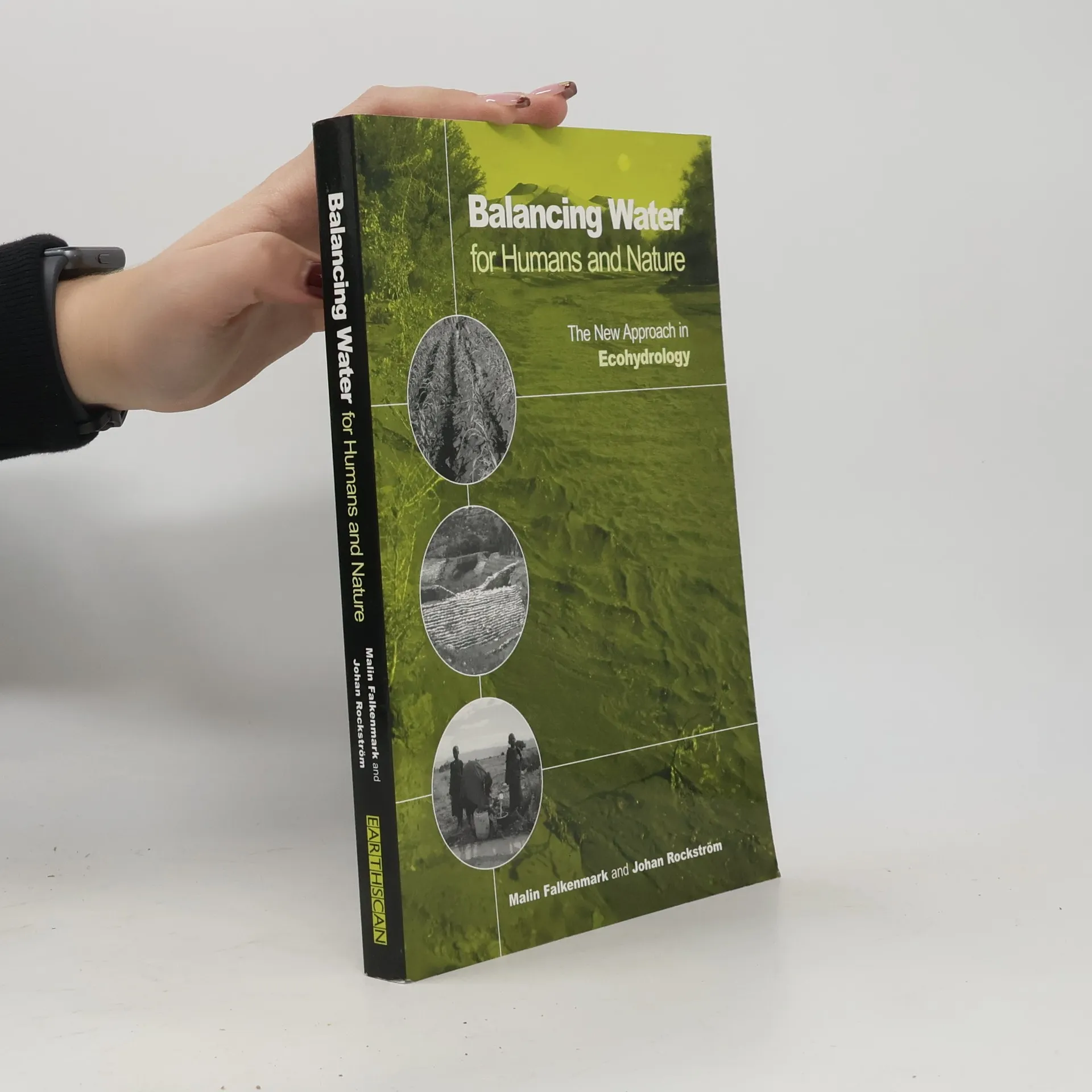
Balancing Water for Humans and Nature, authored by two of the world's leading experts on water management, examines water flows - the 'blood stream' of both nature and society - in terms of the crucial links, balances, conflicts and trade-offs between human and environmental needs. The authors argue that a sustainable future depends fundamentally on our ability to manage these trade-offs and encourage long-term resilience. They advocate an ecohydrological approach to land/water/environmental problems and advance a strong, reasoned argument for viewing precipitation as the gross fresh water resource, ultimately responsible for sustaining all terrestrial and aquatic ecosystem services. This book makes the most coherent and holistic argument to date for a new ecological approach to understanding and managing water resources for the benefit of all. Basing their analysis on per capita needs for an acceptable nutritional diet, the authors analyse predictions of the amounts of water needed for global food production by 2050 and identify potential sources. Drawing on small-scale experiences in Africa and Asia, they also cover the vulnerability of the semi-arid tropics through a simplified model of green and blue water scarcity components.
Zakup książki
Balancing Water for Humans and Nature, Malin Falkenmark, Johan Rockström
- Język

- Rok wydania
- 2004
- Oprawa
- (miękka)
Metody płatności
Nikt jeszcze nie ocenił.
- Tytuł
- Balancing Water for Humans and Nature
- Podtytuł
- The New Approach in Ecohydrology
- Język
- angielski
- Autorzy
- Malin Falkenmark, Johan Rockström
- Wydawca
- Routledge
- Rok wydania
- 2004
- Oprawa
- miękka
- Liczba stron
- 272
- ISBN10
- 1853839272
- ISBN13
- 9781853839276
- Seria
- Tagi
- Biznes
- Opis
- Balancing Water for Humans and Nature, authored by two of the world's leading experts on water management, examines water flows - the 'blood stream' of both nature and society - in terms of the crucial links, balances, conflicts and trade-offs between human and environmental needs. The authors argue that a sustainable future depends fundamentally on our ability to manage these trade-offs and encourage long-term resilience. They advocate an ecohydrological approach to land/water/environmental problems and advance a strong, reasoned argument for viewing precipitation as the gross fresh water resource, ultimately responsible for sustaining all terrestrial and aquatic ecosystem services. This book makes the most coherent and holistic argument to date for a new ecological approach to understanding and managing water resources for the benefit of all. Basing their analysis on per capita needs for an acceptable nutritional diet, the authors analyse predictions of the amounts of water needed for global food production by 2050 and identify potential sources. Drawing on small-scale experiences in Africa and Asia, they also cover the vulnerability of the semi-arid tropics through a simplified model of green and blue water scarcity components.