

Więcej o książce
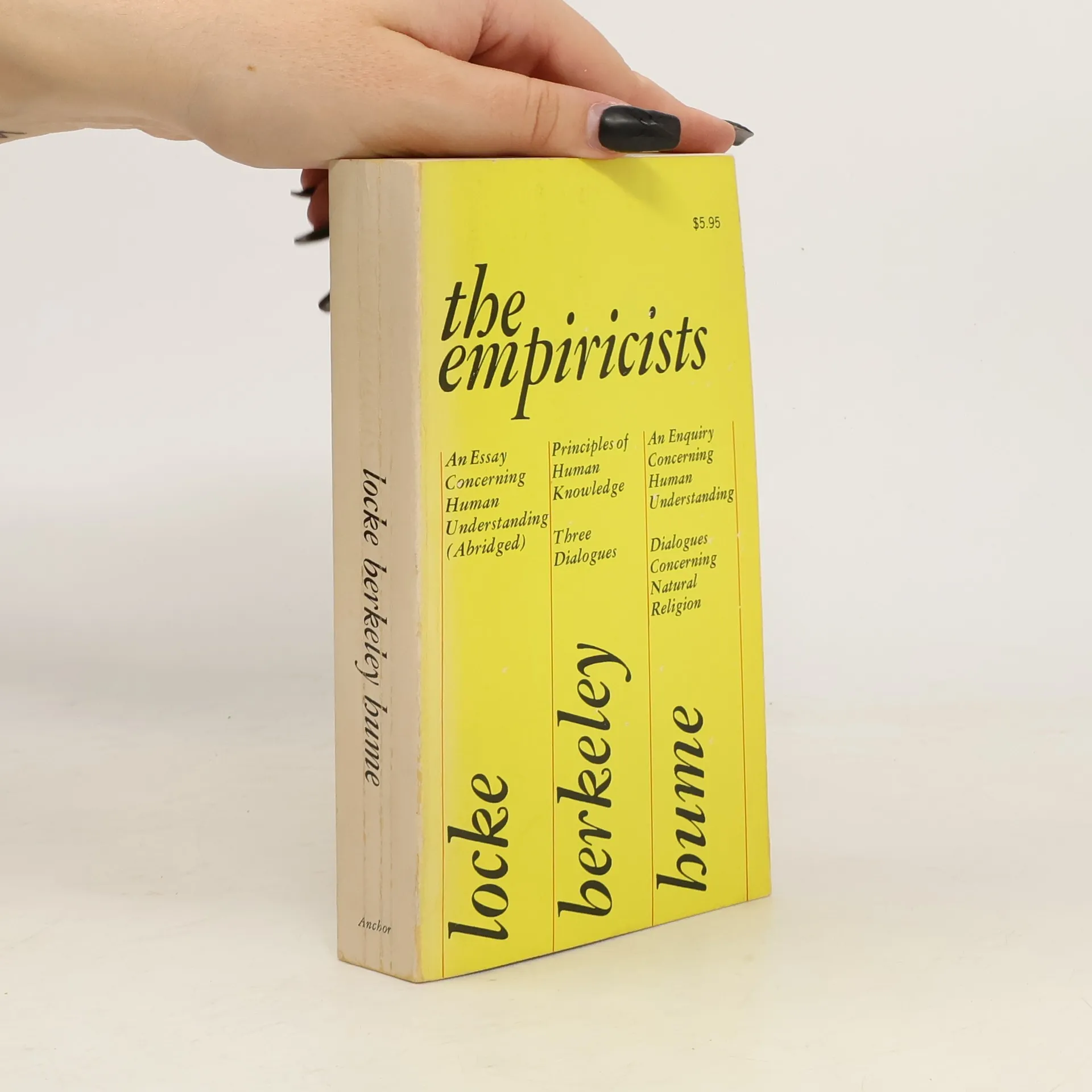
The rise and fall of British Empiricism is probably philosophy's most dramatic example of pushing premises to their most logical and fatal conclusions. Empiricism was born in 1690 with the appearance of Locke's Essay, and it flourished as the reigning school until 1739 when Hume's Treatise strangled it with its own cinctures. What started as "common sense" dualism in Locke dwindled into the optimistic idealism of Berkeley, and then into the disintegrating skepticism of Hume. In just fifty years the men who claimed that all knowledge derives from experience, from the testimony of the senses, had shown that if this is really so we lose not only the material world, the "law" of cause and effect, and other people, but also our own selves: the "I" becomes no more than a succession of sensations. Thus, while Empiricism annihilated the "innate ideas" of Rationalism and set the stage for Immanuel Kant, to many thinkers it also meant the irrevocable end of philosophic certainty.All the essays in this volume are complete except that of Locke, for which even he advised abridgment.
Zakup książki
The Empiricists, kolektiv
- Język

- Rok wydania
- Oprawa
- (miękka)
Metody płatności
Brakuje nam tutaj Twojej recenzji.
- Tytuł
- The Empiricists
- Język
- angielski
- Autorzy
- kolektiv
- Wydawca
- Anchor
- Oprawa
- miękka
- ISBN10
- 0385096224
- ISBN13
- 9780385096225
- Seria
- Ocena
- 3,6 z 5
- Opis
- The rise and fall of British Empiricism is probably philosophy's most dramatic example of pushing premises to their most logical and fatal conclusions. Empiricism was born in 1690 with the appearance of Locke's Essay, and it flourished as the reigning school until 1739 when Hume's Treatise strangled it with its own cinctures. What started as "common sense" dualism in Locke dwindled into the optimistic idealism of Berkeley, and then into the disintegrating skepticism of Hume. In just fifty years the men who claimed that all knowledge derives from experience, from the testimony of the senses, had shown that if this is really so we lose not only the material world, the "law" of cause and effect, and other people, but also our own selves: the "I" becomes no more than a succession of sensations. Thus, while Empiricism annihilated the "innate ideas" of Rationalism and set the stage for Immanuel Kant, to many thinkers it also meant the irrevocable end of philosophic certainty.All the essays in this volume are complete except that of Locke, for which even he advised abridgment.