



Więcej o książce
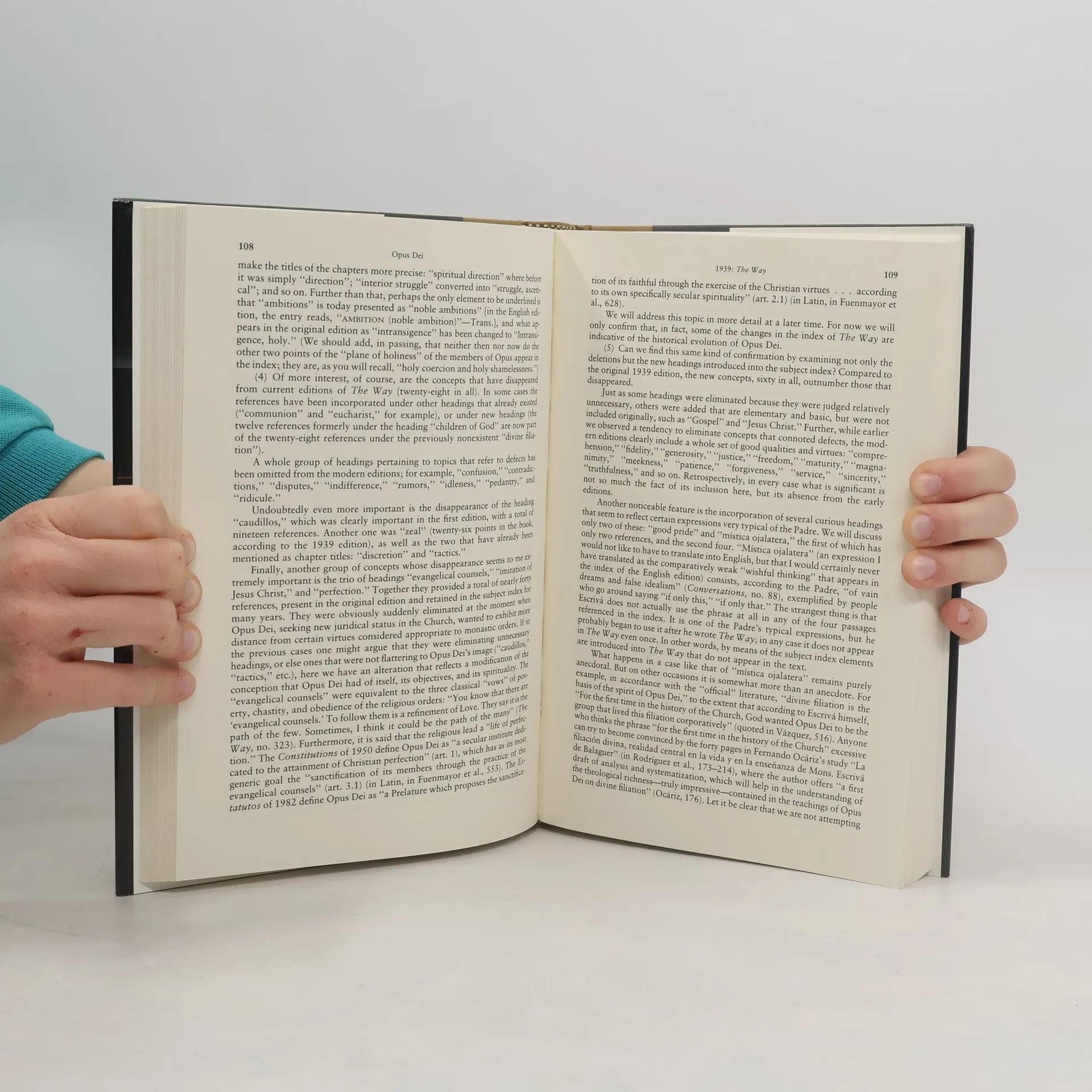
The Roman Catholic organization Opus Dei has sparked intense debate, facing accusations of being a "secret society," a "cult," and an "ecclesiastical mafia" that employs mind-control tactics and intimidates critics. Despite this, it enjoys powerful support, notably from Pope John Paul II, who championed its founder, Monsignor Escriva de Balaguer, whose beatification drew 200,000 followers in 1992. Joan Estruch, through extensive interviews and Opus Dei's literature, crafts an authoritative portrait of this enigmatic group. He delves into Escriva's life, revealing details often omitted from official biographies, such as his reaction to Vatican II, his desire for aristocratic status, and his complex character—ambitious yet sincere. Estruch also clarifies that Opus Dei was founded in 1939, not 1928, and its origins are intertwined with Franco's regime. He argues that the Jesuits, often seen as rivals, initially inspired Escriva, suggesting that their conflicts stem from shared traits. This exploration tracks Opus Dei's transformation from a local movement in Madrid to a global entity with 75,000 disciplined members wielding significant influence. First published in Spain in 1993, this work serves as a reliable resource on Opus Dei's history, ideology, and role in the Church, appealing to those intrigued by its mystery and the Catholic Church's contemporary impact.
Zakup książki
Saints and Schemers, Elizabeth Ladd Glick, Joan Estruch Tobella
- Język

- Rok wydania
- 1995
- Oprawa
- (twarda)
Metody płatności
Brakuje nam tutaj Twojej recenzji.
- Tytuł
- Saints and Schemers
- Podtytuł
- Opus Dei and Its Paradoxes
- Język
- angielski
- Wydawca
- Oxford University Press
- Rok wydania
- 1995
- Oprawa
- twarda
- Liczba stron
- 320
- ISBN10
- 0195082516
- ISBN13
- 9780195082517
- Seria
- Kategorie
- Tagi
- Tematy religijne
- Ocena
- 3 z 5
- Opis
- The Roman Catholic organization Opus Dei has sparked intense debate, facing accusations of being a "secret society," a "cult," and an "ecclesiastical mafia" that employs mind-control tactics and intimidates critics. Despite this, it enjoys powerful support, notably from Pope John Paul II, who championed its founder, Monsignor Escriva de Balaguer, whose beatification drew 200,000 followers in 1992. Joan Estruch, through extensive interviews and Opus Dei's literature, crafts an authoritative portrait of this enigmatic group. He delves into Escriva's life, revealing details often omitted from official biographies, such as his reaction to Vatican II, his desire for aristocratic status, and his complex character—ambitious yet sincere. Estruch also clarifies that Opus Dei was founded in 1939, not 1928, and its origins are intertwined with Franco's regime. He argues that the Jesuits, often seen as rivals, initially inspired Escriva, suggesting that their conflicts stem from shared traits. This exploration tracks Opus Dei's transformation from a local movement in Madrid to a global entity with 75,000 disciplined members wielding significant influence. First published in Spain in 1993, this work serves as a reliable resource on Opus Dei's history, ideology, and role in the Church, appealing to those intrigued by its mystery and the Catholic Church's contemporary impact.