

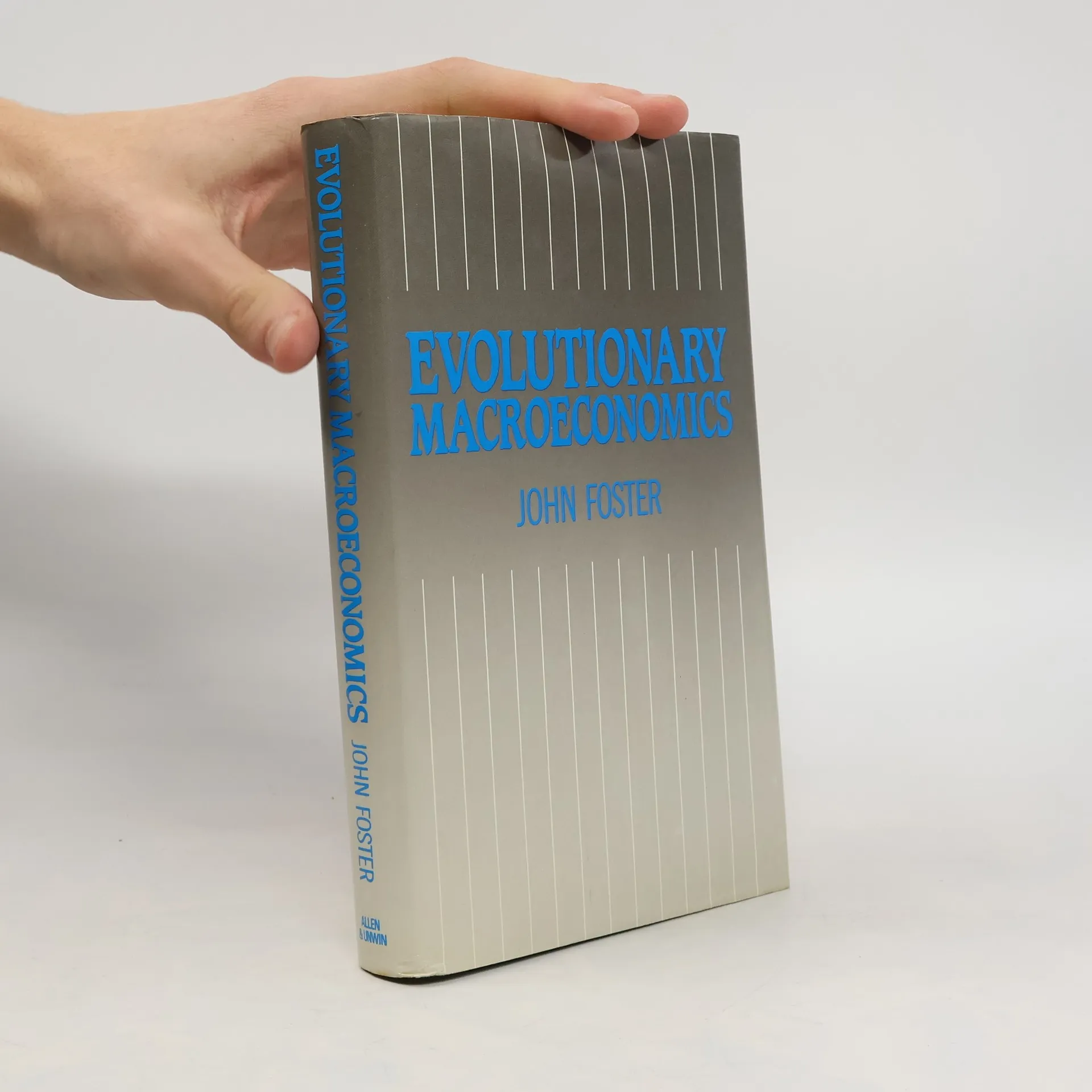
Więcej o książce
First published in 1987, Evolutionary Macroeconomics offers an evolutionary approach to macroeconomics as an alternative to contemporary new classical and Keynesian macroeconomics. In order to develop such an approach, an alternative view of the micro-foundations of macroeconomics is presented.The book begins with a commentary on the state of macroeconomics and an evaluation of attempts to redevelop its underlying vision of economic behaviour. Particular attention is paid to the treatment of expectations and anticipations. The second part of the book presents a behavioural framework which is compatible with an evolutionary perspective on economic behaviour. The third part of the book discusses the implications of adopting an evolutionary approach to macroeconomic theory, empirical methods and policy design, culminating in a specific policy proposal to cure stagflation.
Zakup książki
Evolutionary Macroeconomics, John Foster
- Język

- Rok wydania
- 1987
- Oprawa
- (twarda)
Metody płatności
Nikt jeszcze nie ocenił.
- Tytuł
- Evolutionary Macroeconomics
- Język
- angielski
- Autorzy
- John Foster
- Wydawca
- Unwin Hyman
- Rok wydania
- 1987
- Oprawa
- twarda
- Liczba stron
- 321
- ISBN10
- 0043390412
- ISBN13
- 9780043390412
- Seria
- Tagi
- Biznes
- Opis
- First published in 1987, Evolutionary Macroeconomics offers an evolutionary approach to macroeconomics as an alternative to contemporary new classical and Keynesian macroeconomics. In order to develop such an approach, an alternative view of the micro-foundations of macroeconomics is presented.The book begins with a commentary on the state of macroeconomics and an evaluation of attempts to redevelop its underlying vision of economic behaviour. Particular attention is paid to the treatment of expectations and anticipations. The second part of the book presents a behavioural framework which is compatible with an evolutionary perspective on economic behaviour. The third part of the book discusses the implications of adopting an evolutionary approach to macroeconomic theory, empirical methods and policy design, culminating in a specific policy proposal to cure stagflation.