

Ocena książki
Więcej o książce
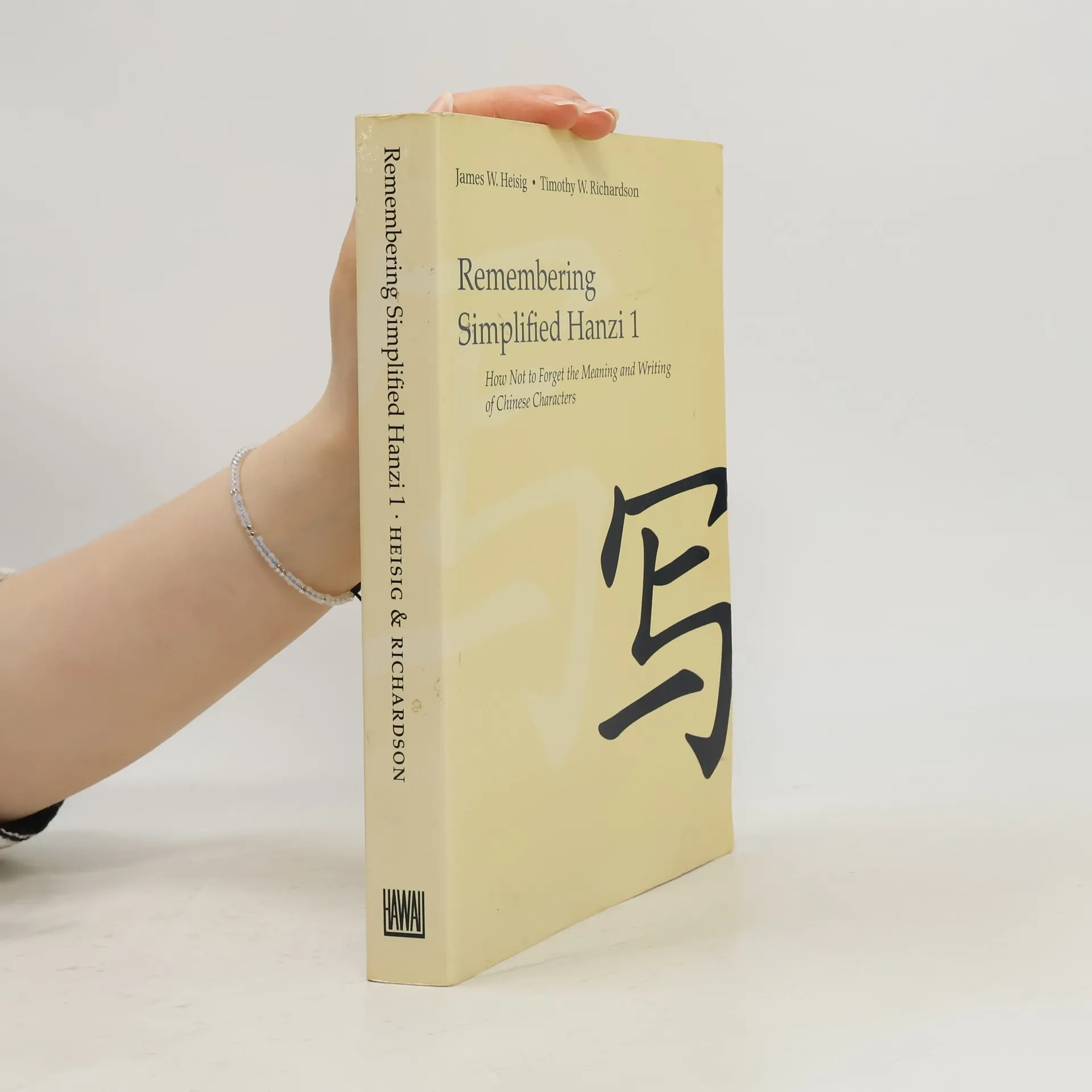
The approach that has aided thousands in memorizing Japanese kanji is now adapted for Chinese characters. This guide covers the writing and meaning of the 1,000 most commonly used characters in the simplified Chinese writing system, along with an additional 500 characters ideal for early learning. The systematic arrangement of characters is crucial for effective memorization. In the Chinese writing system, strokes and simple components are nested within simpler characters, which can form more complex characters. This logical ordering allows students to leverage prior knowledge, enhancing the learning process. Detailed guidance is provided throughout, teaching students to use "imaginative memory" to connect each character’s components, or "primitive elements," with a key word that encapsulates the character's meaning. This connection is made through the creation of a "story" that links the primitive elements and key word. By associating the dots, strokes, and components in a memorable way, this method significantly reduces the time needed for learning and helps prevent characters from being forgotten.
Zakup książki
Remembering Simplified Hanzi, James W. Heisig, Timothy W. Richardson
- Język

- Rok wydania
- 2008
- Oprawa
- (miękka)
Metody płatności
Brakuje nam tutaj Twojej recenzji.
- Tytuł
- Remembering Simplified Hanzi
- Podtytuł
- How Not to Forget the Meaning and Writing of Chinese Characters
- Język
- angielski
- Autorzy
- James W. Heisig, Timothy W. Richardson
- Wydawca
- University of Hawaii Press
- Rok wydania
- 2008
- Oprawa
- miękka
- Liczba stron
- 432
- ISBN10
- 0824833236
- ISBN13
- 9780824833237
- Seria
- Tagi
- Poradniki, Lingwistyka, Chiny
- Ocena
- 4,35 z 5
- Opis
- The approach that has aided thousands in memorizing Japanese kanji is now adapted for Chinese characters. This guide covers the writing and meaning of the 1,000 most commonly used characters in the simplified Chinese writing system, along with an additional 500 characters ideal for early learning. The systematic arrangement of characters is crucial for effective memorization. In the Chinese writing system, strokes and simple components are nested within simpler characters, which can form more complex characters. This logical ordering allows students to leverage prior knowledge, enhancing the learning process. Detailed guidance is provided throughout, teaching students to use "imaginative memory" to connect each character’s components, or "primitive elements," with a key word that encapsulates the character's meaning. This connection is made through the creation of a "story" that links the primitive elements and key word. By associating the dots, strokes, and components in a memorable way, this method significantly reduces the time needed for learning and helps prevent characters from being forgotten.