

Więcej o książce
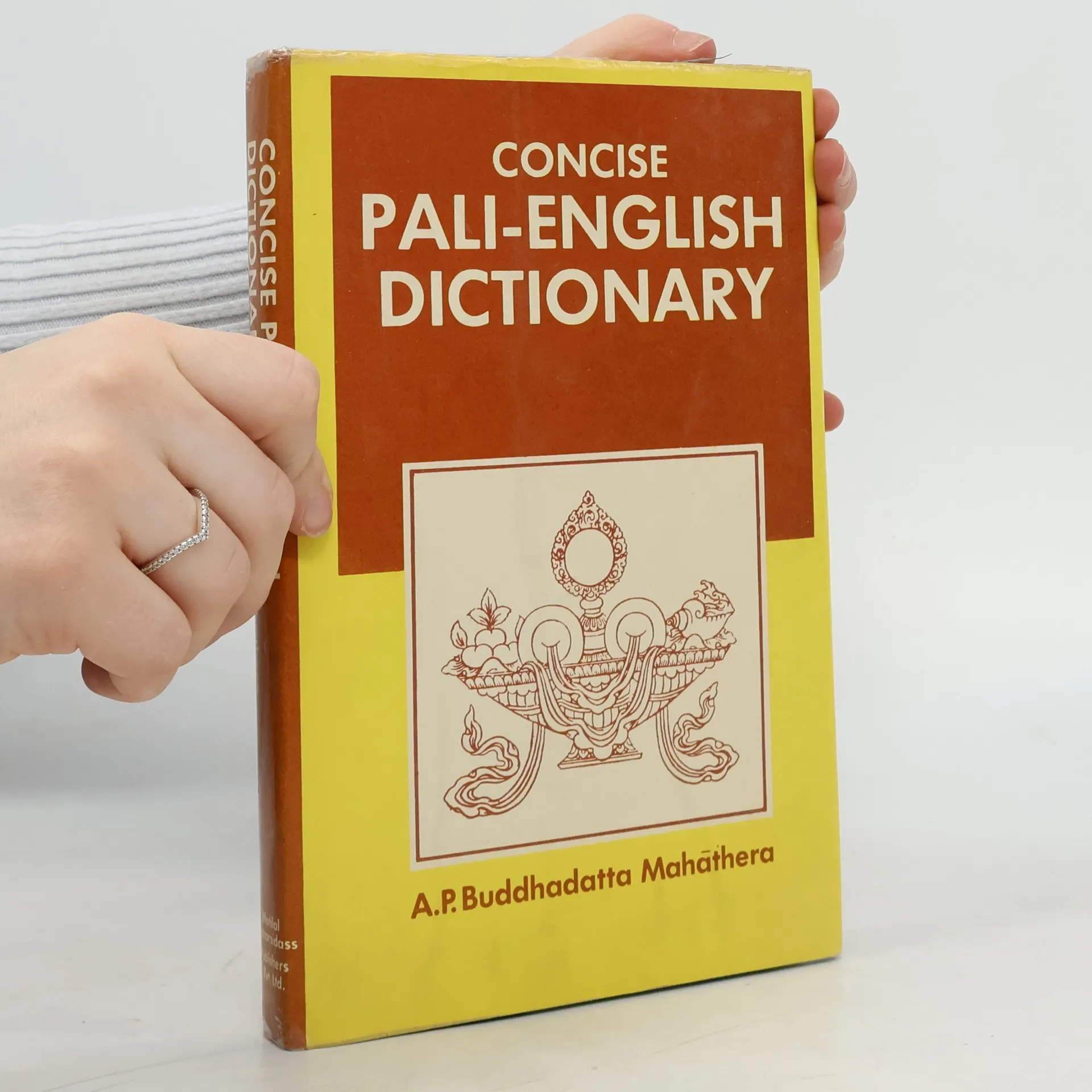
This Concise Pali-English Dictionary has been prepared mainly for use by students in schools and colleges. The author is not only an eminent Elder of the Buddhist Order but one of the leading Pali scholars recognized both in the East and the West as an authority on the subject. His experience as a teacher and as a writer of textbooks made him admirably suited for the undertaking. There were but a few Buddhist Elders in direct contact with Western scholarship through the English medium and the Rev. Buddhadatta was the most senior among that class of monks. It is to be observed that the author has kept more or less to the traditional sense of words while not altogether ignoring the meanings given by western scholars in their translations and lexicons. Many errors in the latter sources have also been rectified. Bu t the basic sense adopted is in nearly every instance the traditionally accepted meaning in accord with the commentaries and the glossaries. This, perhaps, is of social value to beginners as thereby they get introduced to the indigenous tradition, thus providing a useful basis on which to build up a more scientific knowledge as the study advances.
Zakup książki
Concise Pali-English Dictionary, A. P. Buddhadatta
- Język

- Rok wydania
- 1989
- Oprawa
- (twarda)
Metody płatności
Nikt jeszcze nie ocenił.
- Tytuł
- Concise Pali-English Dictionary
- Język
- angielski
- Autorzy
- A. P. Buddhadatta
- Wydawca
- Motilal Banarsidass
- Rok wydania
- 1989
- Oprawa
- twarda
- ISBN10
- 8120806042
- ISBN13
- 9788120806047
- Seria
- Opis
- This Concise Pali-English Dictionary has been prepared mainly for use by students in schools and colleges. The author is not only an eminent Elder of the Buddhist Order but one of the leading Pali scholars recognized both in the East and the West as an authority on the subject. His experience as a teacher and as a writer of textbooks made him admirably suited for the undertaking. There were but a few Buddhist Elders in direct contact with Western scholarship through the English medium and the Rev. Buddhadatta was the most senior among that class of monks. It is to be observed that the author has kept more or less to the traditional sense of words while not altogether ignoring the meanings given by western scholars in their translations and lexicons. Many errors in the latter sources have also been rectified. Bu t the basic sense adopted is in nearly every instance the traditionally accepted meaning in accord with the commentaries and the glossaries. This, perhaps, is of social value to beginners as thereby they get introduced to the indigenous tradition, thus providing a useful basis on which to build up a more scientific knowledge as the study advances.