


Więcej o książce
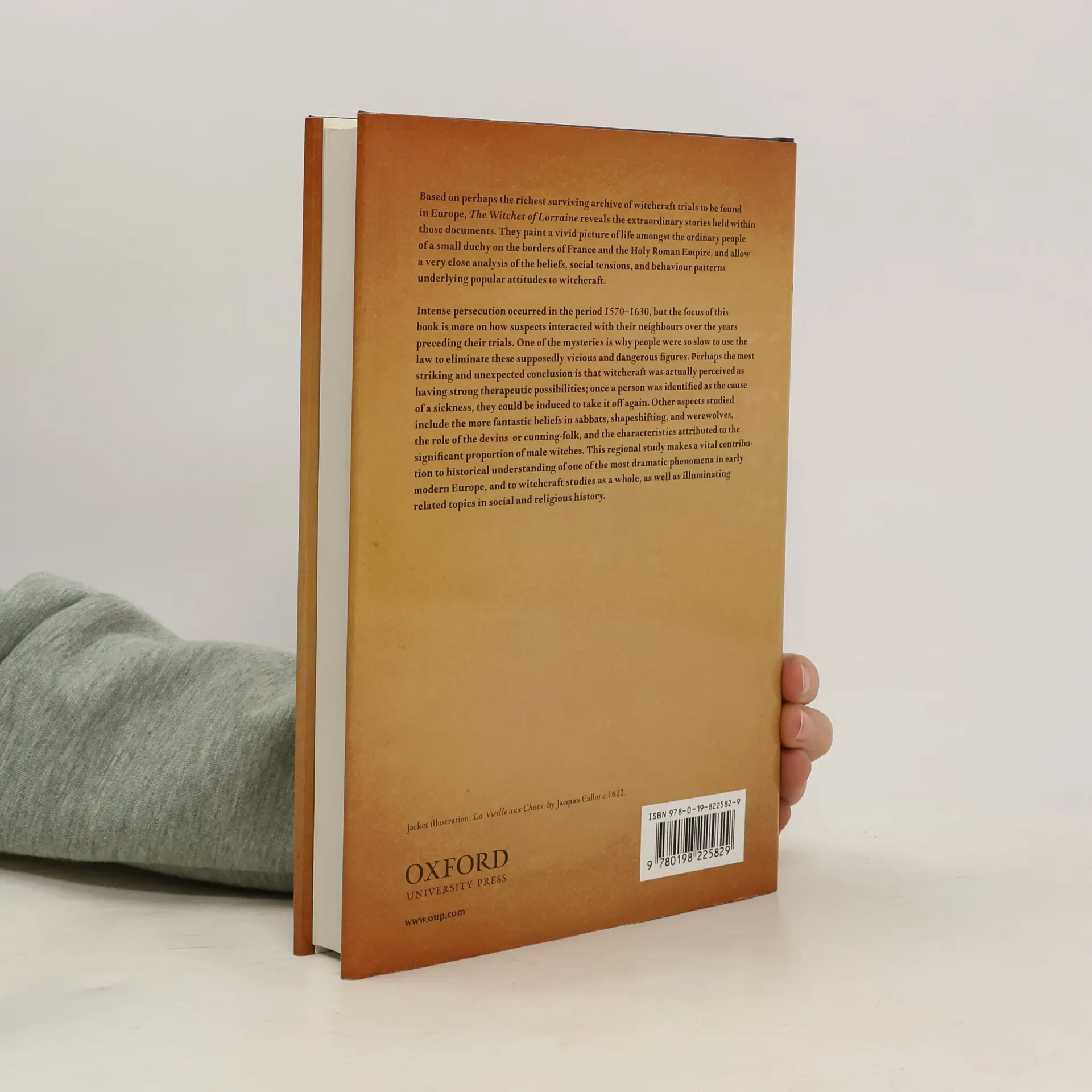
Based on perhaps the richest surviving archive of witchcraft trials to be found in Europe, The Witches of Lorraine reveals the extraordinary stories held within those documents. They paint a vivid picture of life amongst the ordinary people of a small duchy on the borders of France and the Holy Roman Empire, and allow a very close analysis of the beliefs, social tensions, and behavior patterns underlying popular attitudes to witchcraft.Intense persecution occurred in the period 1570-1630, but the focus of this book is more on how suspects interacted with their neighbors over the years preceding their trials. One of the mysteries is why people were so slow to use the law to eliminate these supposedly vicious and dangerous figures. Perhaps the most striking and unexpected conclusion is that witchcraft was actually perceived as having strong therapeutic possibilities; once a person was identified as the cause of a sickness, they could be induced to take it off again. Other aspects studied include the more fantastic beliefs in sabbats, shapeshifting, and werewolves, the role of the devins or cunning-folk, and the characteristics attributed to the significant proportion of male witches. This regional study makes a vital contribution to historical understanding of one of the most dramatic phenomena in early modern Europe, and to witchcraft studies as a whole, as well as illuminating related topics in social and religioushistory.
Zakup książki
The Witches of Lorraine, Robin Briggs
- Język

- Rok wydania
- 2007
- Oprawa
- (twarda)
Metody płatności
Brakuje nam tutaj Twojej recenzji.
- Tytuł
- The Witches of Lorraine
- Język
- angielski
- Autorzy
- Robin Briggs
- Wydawca
- Oxford University Press
- Rok wydania
- 2007
- Oprawa
- twarda
- Liczba stron
- 418
- ISBN10
- 0198225822
- ISBN13
- 9780198225829
- Seria
- Tagi
- Tematy historyczne, Tematy religijne, Poradniki, Duchowość, Francja, Czary & Magia, Europa, Historia Europy, Czarownice, Umysł & Ciało, Zachodnia Europa, New Age, Historia społeczna, Wicca, Inkwizycja, Święte Cesarstwo Rzymskie
- Ocena
- 3,75 z 5
- Opis
- Based on perhaps the richest surviving archive of witchcraft trials to be found in Europe, The Witches of Lorraine reveals the extraordinary stories held within those documents. They paint a vivid picture of life amongst the ordinary people of a small duchy on the borders of France and the Holy Roman Empire, and allow a very close analysis of the beliefs, social tensions, and behavior patterns underlying popular attitudes to witchcraft.Intense persecution occurred in the period 1570-1630, but the focus of this book is more on how suspects interacted with their neighbors over the years preceding their trials. One of the mysteries is why people were so slow to use the law to eliminate these supposedly vicious and dangerous figures. Perhaps the most striking and unexpected conclusion is that witchcraft was actually perceived as having strong therapeutic possibilities; once a person was identified as the cause of a sickness, they could be induced to take it off again. Other aspects studied include the more fantastic beliefs in sabbats, shapeshifting, and werewolves, the role of the devins or cunning-folk, and the characteristics attributed to the significant proportion of male witches. This regional study makes a vital contribution to historical understanding of one of the most dramatic phenomena in early modern Europe, and to witchcraft studies as a whole, as well as illuminating related topics in social and religioushistory.