



Więcej o książce
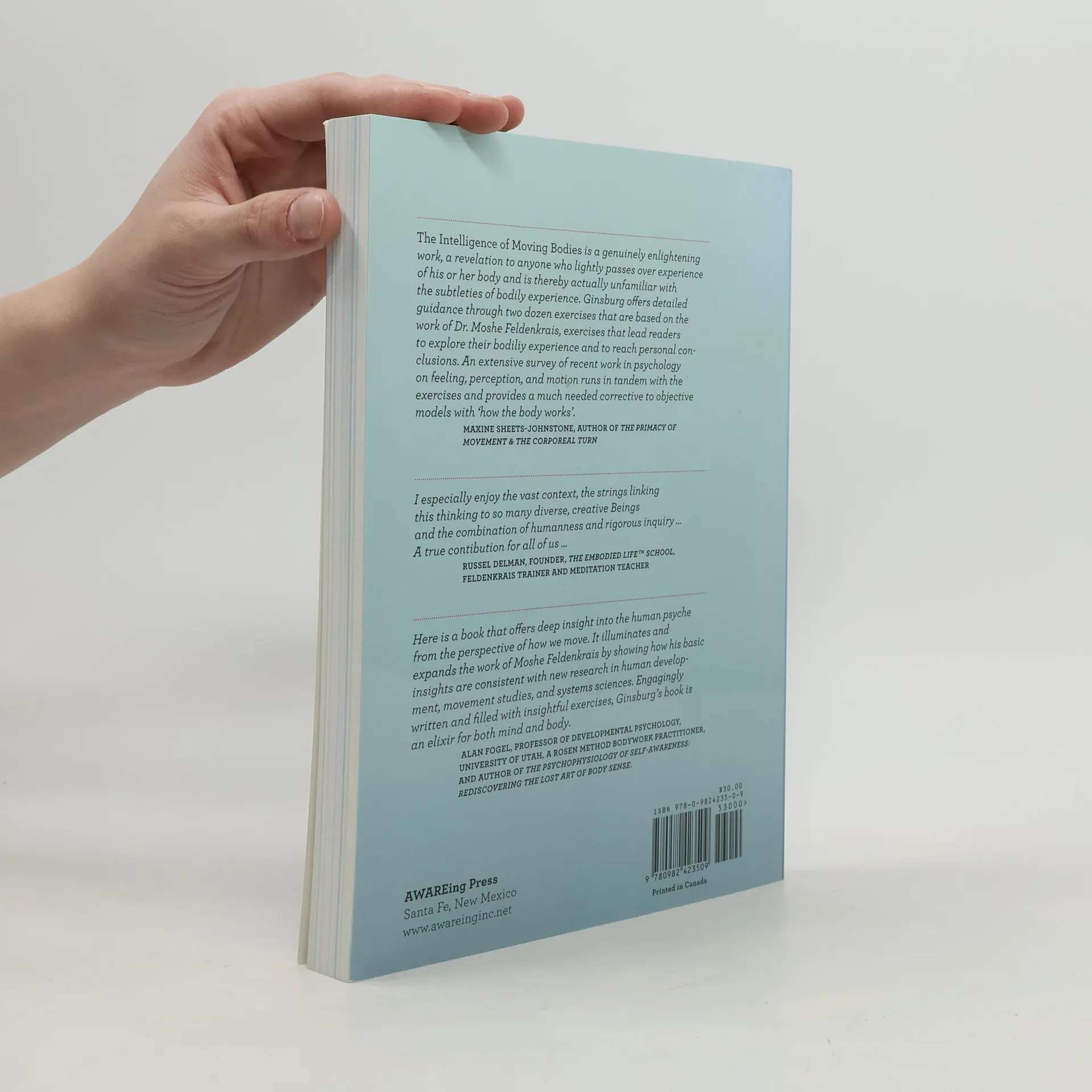
Scientific research is a valid way of learning about reality, but so is subjective experience. We must consider that we ARE embodied beings and that this fact is a challenge to the contention that objectivity even is possible. Yet, both objective and subjective research into reality and experience require a disciplined mode of investigation. The book explores how a person could apply a disciplined mode of investigation to personal experience. It explains how movement is a venue for examining personal experience that can help ‘sweep out the cobwebs of conceptualization that confuse our sensing, feeling, acting and thus our thinking.' The process of living is inconceivable without movement. Changing patterns of moving also changes patterns of conceptualization and cognition.
Zakup książki
The Intelligence of Moving Bodies, Carl Ginsburg, Lucia Schuette-Ginsburg
- Język

- Rok wydania
- 2010
- Oprawa
- (miękka)
Metody płatności
Brakuje nam tutaj Twojej recenzji.
- Tytuł
- The Intelligence of Moving Bodies
- Podtytuł
- A Somatic View of Life and Its Consequences
- Język
- angielski
- Autorzy
- Carl Ginsburg, Lucia Schuette-Ginsburg
- Wydawca
- Awareing Press
- Rok wydania
- 2010
- Oprawa
- miękka
- Liczba stron
- 304
- ISBN10
- 0982423500
- ISBN13
- 9780982423509
- Seria
- Ocena
- 4,65 z 5
- Opis
- Scientific research is a valid way of learning about reality, but so is subjective experience. We must consider that we ARE embodied beings and that this fact is a challenge to the contention that objectivity even is possible. Yet, both objective and subjective research into reality and experience require a disciplined mode of investigation. The book explores how a person could apply a disciplined mode of investigation to personal experience. It explains how movement is a venue for examining personal experience that can help ‘sweep out the cobwebs of conceptualization that confuse our sensing, feeling, acting and thus our thinking.' The process of living is inconceivable without movement. Changing patterns of moving also changes patterns of conceptualization and cognition.