

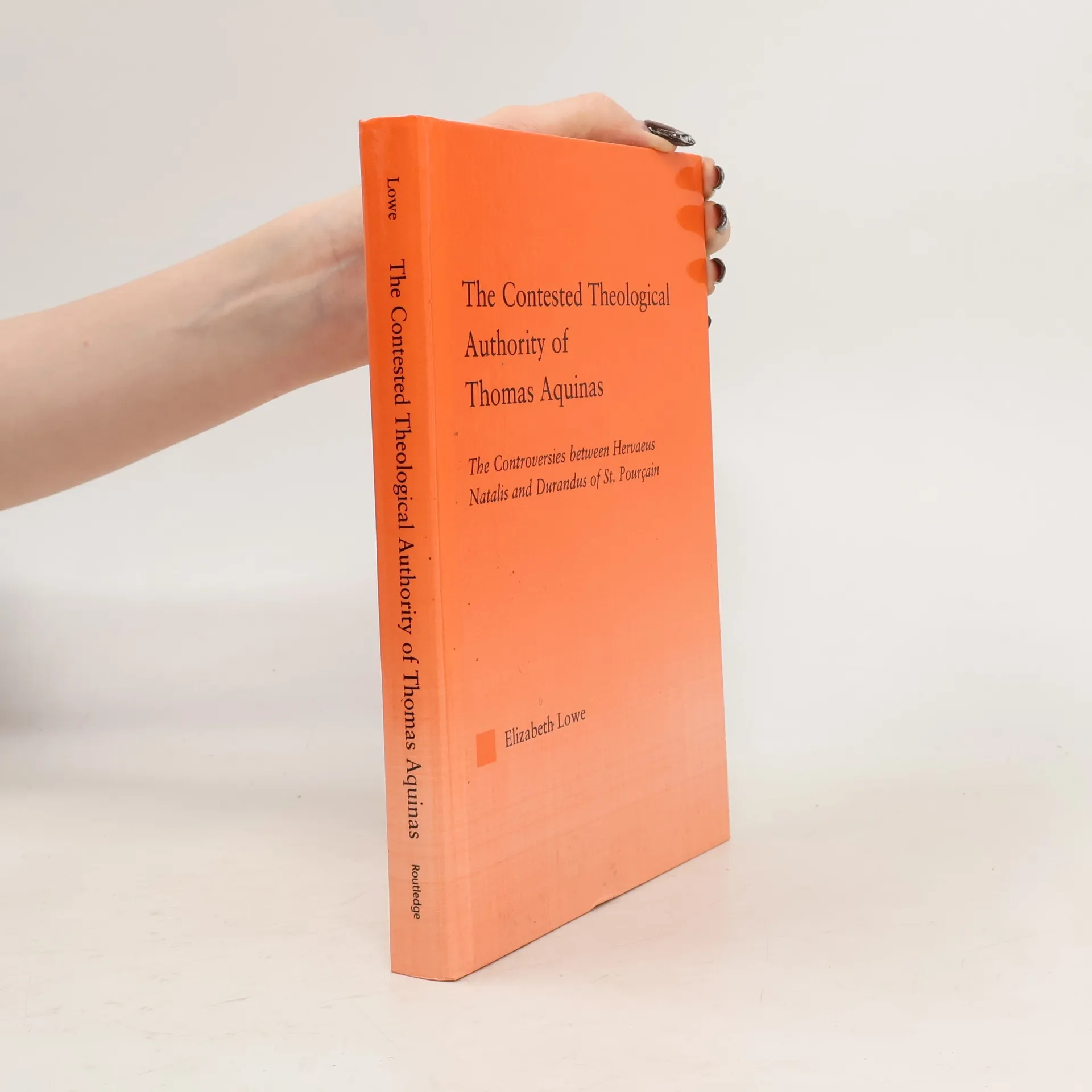
The Contested Theological Authority of Thomas Aquinas
The Controversies Between Hervaeus Natalis and Durandus of St. Pourcain, 1307-1323
Autorzy
Ocena książki
Więcej o książce
This book explains how the authority Thomas Aquinas's theological teachings grew out of the doctrinal controversies surrounding it within the Dominican Order. The adoption and eventual promotion of the teachings of Aquinas by the Order of Preachers ran counter to every other current running through the late thirteenth-century Church; most scholastics, the Dominican Order included, were wary of the his unconventional teachings. Despite this, the Dominican Order was propelled along their solitary via Thomas by conflicts between two groups of Aquinas's early Dominican followers and their more conservative neo-Augustinian brethren. This debate reached its climax in a series of bitter polemical battles between Hervaeus Natalis, the most prominent of early defenders, and Durandus of St. Pourçain, the last major Dominican thinker to attack Aquinas's teachings openly. Elizabeth Lowe offers a vivid illustration of this major shift in the Dominican intellectual tradition.
Zakup książki
The Contested Theological Authority of Thomas Aquinas, Elizabeth Lowell
- Język

- Rok wydania
- 2003
- Oprawa
- (twarda)
Metody płatności
Brakuje nam tutaj Twojej recenzji.
- Tytuł
- The Contested Theological Authority of Thomas Aquinas
- Podtytuł
- The Controversies Between Hervaeus Natalis and Durandus of St. Pourcain, 1307-1323
- Język
- angielski
- Autorzy
- Elizabeth Lowell
- Wydawca
- Routledge
- Rok wydania
- 2003
- Oprawa
- twarda
- Liczba stron
- 259
- ISBN10
- 0415943531
- ISBN13
- 9780415943536
- Seria
- Tagi
- Tematy historyczne, Tematy religijne, Tematy chrześcijańskie, USA, Teologia, Literatura fachowa, Średniowiecze, Krytyka literacka, Historia kościoła, Historia religii, Nauki humanistyczne, Religioznawstwo, Teologia chrześcijańska
- Ocena
- 4 z 5
- Opis
- This book explains how the authority Thomas Aquinas's theological teachings grew out of the doctrinal controversies surrounding it within the Dominican Order. The adoption and eventual promotion of the teachings of Aquinas by the Order of Preachers ran counter to every other current running through the late thirteenth-century Church; most scholastics, the Dominican Order included, were wary of the his unconventional teachings. Despite this, the Dominican Order was propelled along their solitary via Thomas by conflicts between two groups of Aquinas's early Dominican followers and their more conservative neo-Augustinian brethren. This debate reached its climax in a series of bitter polemical battles between Hervaeus Natalis, the most prominent of early defenders, and Durandus of St. Pourçain, the last major Dominican thinker to attack Aquinas's teachings openly. Elizabeth Lowe offers a vivid illustration of this major shift in the Dominican intellectual tradition.