



Parametry
- 302 strony
- 11 godzin czytania
Więcej o książce
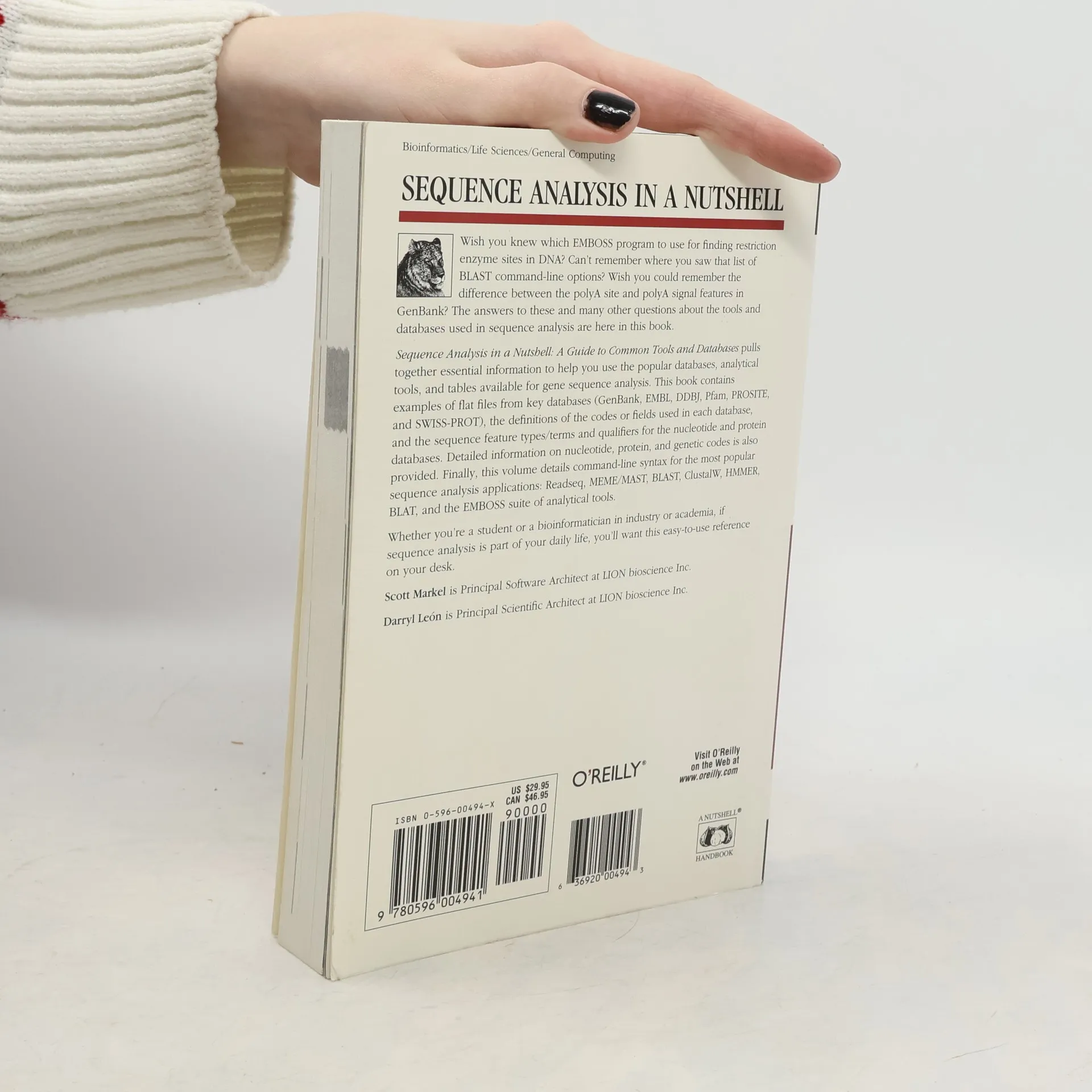
Gene sequence data is abundant, and while numerous computational methods and tools exist for analysis, the challenge lies in navigating the various flat file formats and understanding their specific field codes. If you rely on hard copies of readme files or remember where to find details, this guide is for you. It serves as a practical resource and invaluable reference for those engaged in sequence analysis. The book compiles vital information about commonly used databases, analytical tools, and tables relevant to sequence analysis, organized into three main sections. The first section, "Databases," includes examples of flatfiles from key databases like GenBank, EMBL, and SWISS-PROT, along with definitions of codes and sequence feature types for nucleotide and protein databases. The second section, "Tools," offers command line syntax for popular applications such as ReadSeq, MEME/MAST, BLAST, ClustalW, and the EMBOSS suite. The third section, "Appendixes," focuses on essential information regarding the components of biological sequences, including nucleotide and protein codes and genetic codes. Written in O'Reilly's straightforward "Nutshell" format, this guide is essential for bioinformaticians in both industry and academia, as well as students. If sequence analysis is part of your daily work, this easy-to-use book will be a valuable addition to your desk.
Zakup książki
Sequence Analysis in a Nutshell, Lorrie LeJeune, Scott Markel, Darryl León
- Język

- Rok wydania
- 2003
- Oprawa
- (miękka)
Metody płatności
Brakuje nam tutaj Twojej recenzji.
- Tytuł
- Sequence Analysis in a Nutshell
- Podtytuł
- A Guide to Tools
- Język
- angielski
- Autorzy
- Lorrie LeJeune, Scott Markel, Darryl León
- Wydawca
- O'Reilly Media
- Rok wydania
- 2003
- Oprawa
- miękka
- Liczba stron
- 302
- ISBN10
- 059600494X
- ISBN13
- 9780596004941
- Seria
- Kategorie
- Ocena
- 3,6 z 5
- Opis
- Gene sequence data is abundant, and while numerous computational methods and tools exist for analysis, the challenge lies in navigating the various flat file formats and understanding their specific field codes. If you rely on hard copies of readme files or remember where to find details, this guide is for you. It serves as a practical resource and invaluable reference for those engaged in sequence analysis. The book compiles vital information about commonly used databases, analytical tools, and tables relevant to sequence analysis, organized into three main sections. The first section, "Databases," includes examples of flatfiles from key databases like GenBank, EMBL, and SWISS-PROT, along with definitions of codes and sequence feature types for nucleotide and protein databases. The second section, "Tools," offers command line syntax for popular applications such as ReadSeq, MEME/MAST, BLAST, ClustalW, and the EMBOSS suite. The third section, "Appendixes," focuses on essential information regarding the components of biological sequences, including nucleotide and protein codes and genetic codes. Written in O'Reilly's straightforward "Nutshell" format, this guide is essential for bioinformaticians in both industry and academia, as well as students. If sequence analysis is part of your daily work, this easy-to-use book will be a valuable addition to your desk.