

Ocena książki
Więcej o książce
In this revealing history, Henry Mintzberg, a prominent figure in management thought, critiques the concept of strategic planning, which has captivated organizations since 1965. He argues that the term is an oxymoron, as strategy involves synthesis while planning focuses on analysis, leading to frequent failures in the process. Mintzberg explores the origins and evolution of strategic planning, highlighting its rise and subsequent decline. He advocates for a reimagined approach to strategy creation that prioritizes informal learning and personal vision, redefining the roles of planners. By examining various strategic planning models, he uncovers reasons for their failures and discusses the pitfalls of planning, such as its tendency to undermine commitment, limit vision, stifle change, and foster political environments. Mintzberg identifies three fundamental fallacies: the belief that discontinuities can be predicted, that strategists can remain detached from operations, and that strategy-making can be formalized. He emphasizes a new role for planners, suggesting they should support the strategy-making process rather than be embedded within it, contributing inputs and fostering strategic thinking. This work is essential for anyone involved in organizational planning or strategy-making.
Zakup książki
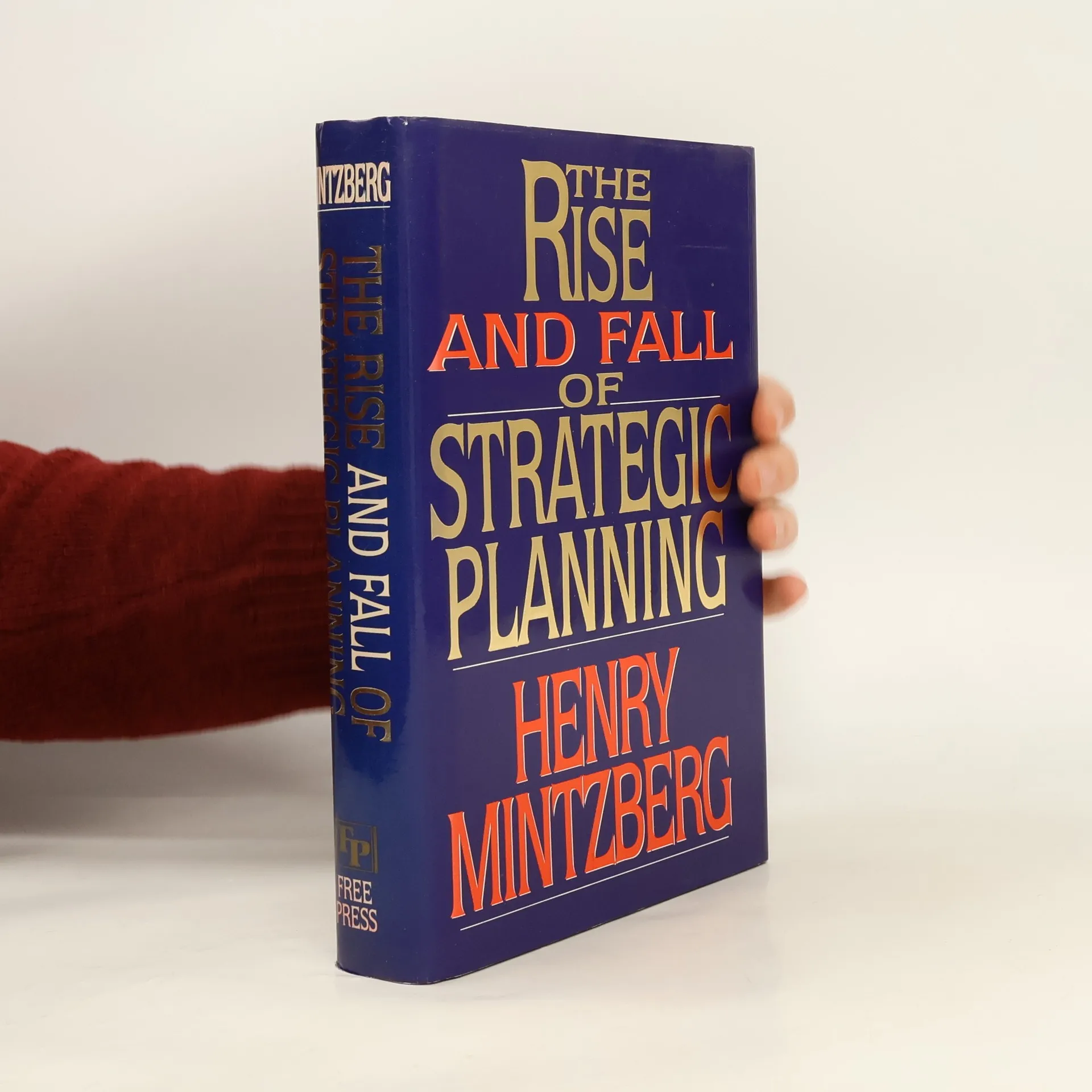
The Rise and Fall of Strategic Planning, Henry Mintzberg
- Język

- Rok wydania
- 1994
- Oprawa
- (twarda)
Metody płatności
Brakuje nam tutaj Twojej recenzji.
- Tytuł
- The Rise and Fall of Strategic Planning
- Podtytuł
- Reconceiving Roles for Planning, Plans and Planners
- Język
- angielski
- Autorzy
- Henry Mintzberg
- Wydawca
- Free Press
- Rok wydania
- 1994
- Oprawa
- twarda
- Liczba stron
- 458
- ISBN10
- 0029216052
- ISBN13
- 9780029216057
- Seria
- Kategorie
- Tagi
- Biznes, USA, Przywództwo
- Ocena
- 3,9 z 5
- Opis
- In this revealing history, Henry Mintzberg, a prominent figure in management thought, critiques the concept of strategic planning, which has captivated organizations since 1965. He argues that the term is an oxymoron, as strategy involves synthesis while planning focuses on analysis, leading to frequent failures in the process. Mintzberg explores the origins and evolution of strategic planning, highlighting its rise and subsequent decline. He advocates for a reimagined approach to strategy creation that prioritizes informal learning and personal vision, redefining the roles of planners. By examining various strategic planning models, he uncovers reasons for their failures and discusses the pitfalls of planning, such as its tendency to undermine commitment, limit vision, stifle change, and foster political environments. Mintzberg identifies three fundamental fallacies: the belief that discontinuities can be predicted, that strategists can remain detached from operations, and that strategy-making can be formalized. He emphasizes a new role for planners, suggesting they should support the strategy-making process rather than be embedded within it, contributing inputs and fostering strategic thinking. This work is essential for anyone involved in organizational planning or strategy-making.