



Więcej o książce
Social scientific studies of medicine typically assume that systems of medical knowledge are uniform and consistent. But while anthropologists have long rejected the notion that cultures are discrete, bounded, and rule-drive entities, medical anthropology has been slower to develop alternative approaches to understanding cultures of health. This provocative volume considers the theoretical, methodological, and ethnographic implications of the fact that medical knowledge is frequently dynamic, incoherent, and contradictory, and that and our understanding of it is necessarily incomplete and partial. In diverse settings from indigenous cultures to Western medical industries, contributors consider such issues as how to define the boundaries of “medical” knowledge versus other kinds of knowledge; how to understand overlapping and shifting medical discourses; the medical profession’s need for anthropologists to produce “explanatory models”; the limits of the Western scientific method and the potential for methodological pluralism; constraints on fieldwork including violence and structural factors limiting access; and the subjectivity and interests of the researcher. On Knowing and Not Knowing in the Anthropology of Medicine will stimulate innovative thinking and productive debate for practitioners, researchers, and students in the social science of health and medicine.
Zakup książki
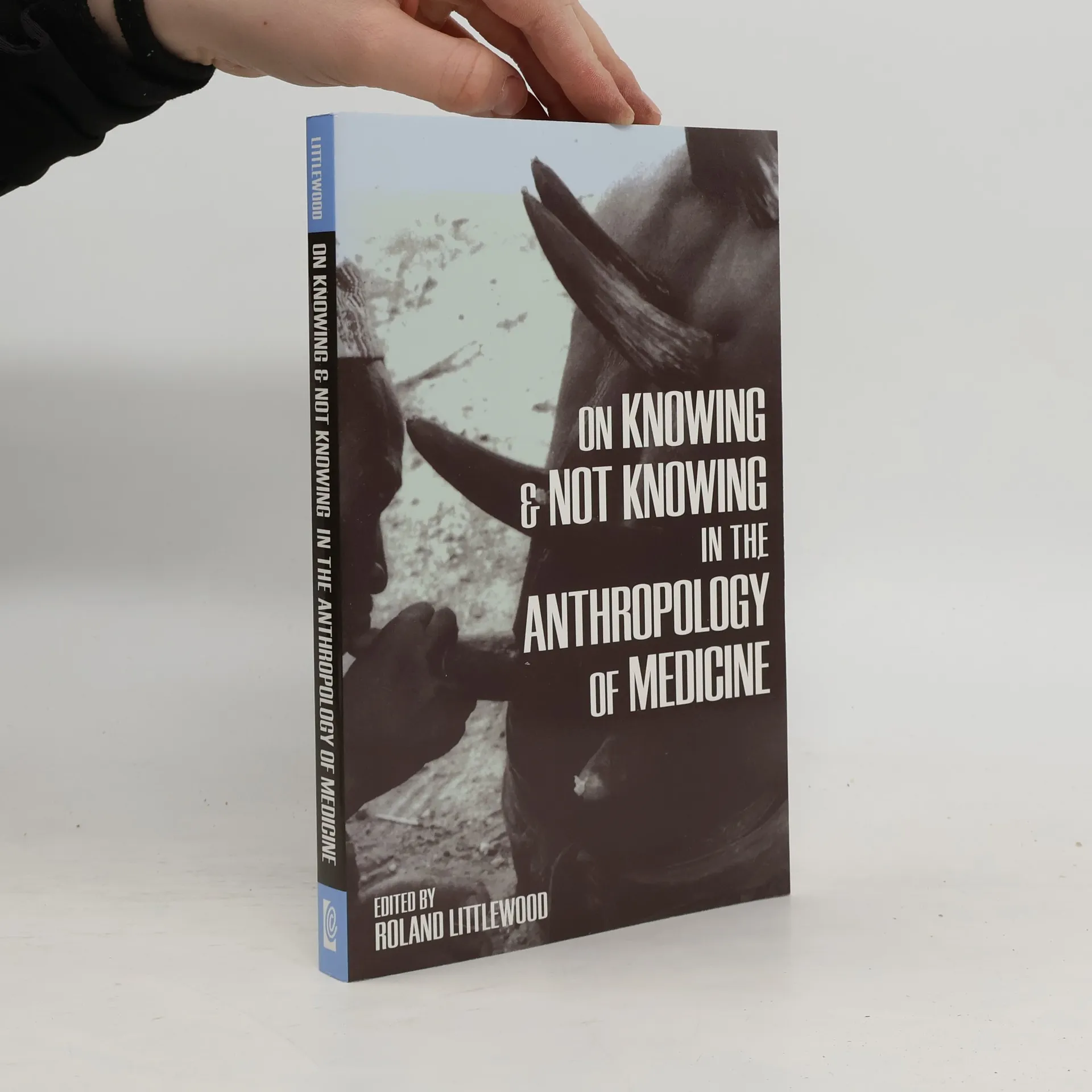
On Knowing and Not Knowing in the Anthropology of Medicine, Roland Littlewood
- Język

- Rok wydania
- 2010
- Oprawa
- (miękka)
Metody płatności
Brakuje nam tutaj Twojej recenzji.
- Tytuł
- On Knowing and Not Knowing in the Anthropology of Medicine
- Język
- angielski
- Autorzy
- Roland Littlewood
- Wydawca
- Routledge
- Rok wydania
- 2010
- Oprawa
- miękka
- Liczba stron
- 244
- ISBN10
- 1598742752
- ISBN13
- 9781598742756
- Seria
- Tagi
- Ocena
- 3,35 z 5
- Opis
- Social scientific studies of medicine typically assume that systems of medical knowledge are uniform and consistent. But while anthropologists have long rejected the notion that cultures are discrete, bounded, and rule-drive entities, medical anthropology has been slower to develop alternative approaches to understanding cultures of health. This provocative volume considers the theoretical, methodological, and ethnographic implications of the fact that medical knowledge is frequently dynamic, incoherent, and contradictory, and that and our understanding of it is necessarily incomplete and partial. In diverse settings from indigenous cultures to Western medical industries, contributors consider such issues as how to define the boundaries of “medical” knowledge versus other kinds of knowledge; how to understand overlapping and shifting medical discourses; the medical profession’s need for anthropologists to produce “explanatory models”; the limits of the Western scientific method and the potential for methodological pluralism; constraints on fieldwork including violence and structural factors limiting access; and the subjectivity and interests of the researcher. On Knowing and Not Knowing in the Anthropology of Medicine will stimulate innovative thinking and productive debate for practitioners, researchers, and students in the social science of health and medicine.