



Więcej o książce
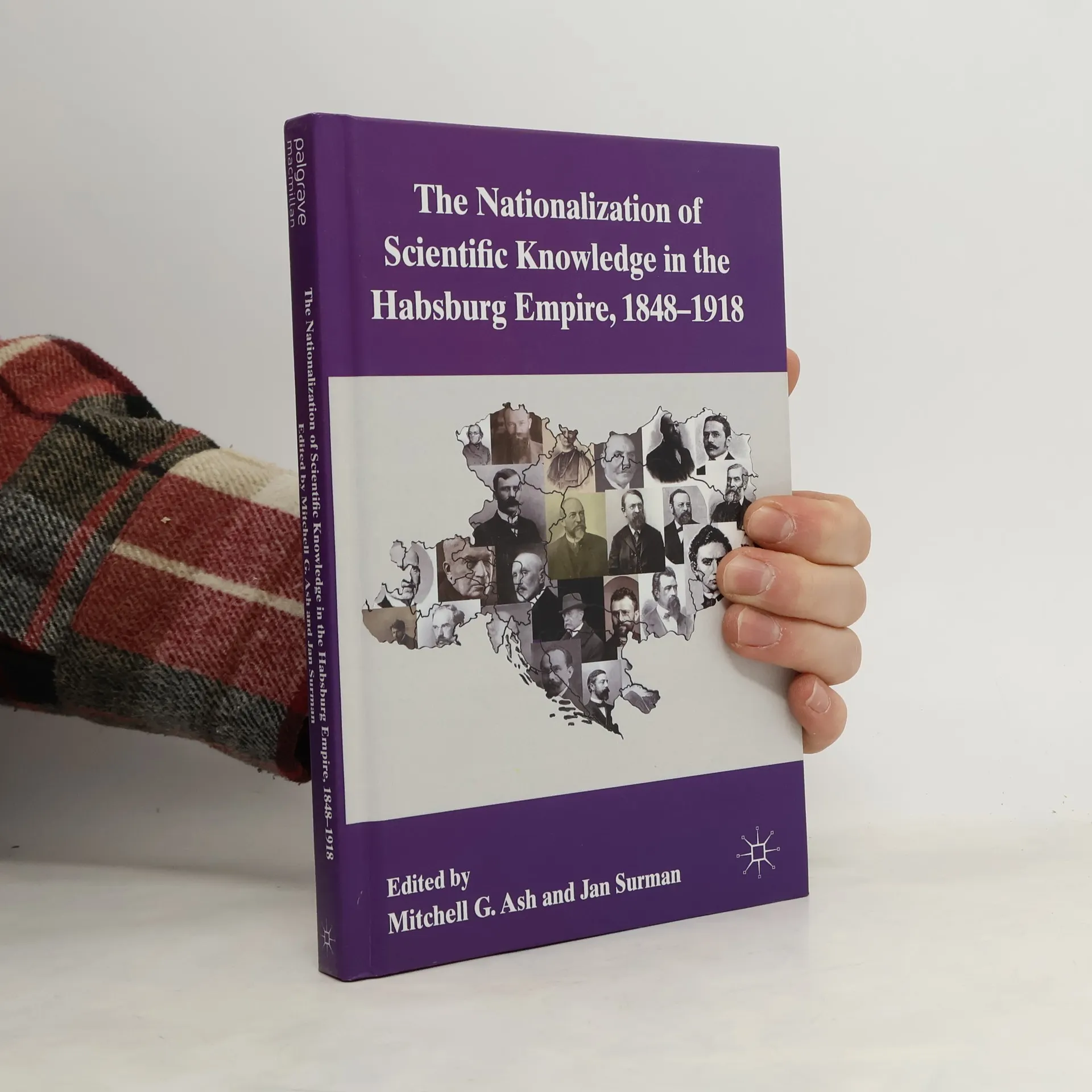
This volume challenges the common belief that scientific knowledge is international. Employing case studies from Austria, Poland, the Czech lands, and Hungary, the authors show how scientists in the late Habsburg Monarchy confronted the problem of simultaneously nationalizing and internationalizing their knowledge in a multi-national empire during the 'age of nationalism'. The case studies go beyond traditional emphasis on history, ethnology or other 'national' disciplines, ranging from chemistry and physics to natural history, geology, seismology, surgery, linguistics and eugenics, focusing inter alia on scientific terminology in various national languages, supra-national networks of observation or data gathering, language issues in science education, and research practices in cross-national comparison.
Zakup książki
The Nationalization of Scientific Knowledge in the Habsburg Empire, 1848-1918, Mitchell G. Ash, Jan Surman
- Język

- Rok wydania
- 2012
- Oprawa
- (twarda)
Metody płatności
Brakuje nam tutaj Twojej recenzji.
- Tytuł
- The Nationalization of Scientific Knowledge in the Habsburg Empire, 1848-1918
- Język
- angielski
- Autorzy
- Mitchell G. Ash, Jan Surman
- Wydawca
- Palgrave Macmillan
- Rok wydania
- 2012
- Oprawa
- twarda
- Liczba stron
- 268
- ISBN10
- 0230289878
- ISBN13
- 9780230289871
- Seria
- Tagi
- Tematy historyczne, Biznes, Nauki przyrodnicze, Nauka, Technologia, Europa, Historia Europy, Historia nauki, Historia nauk przyrodniczych
- Ocena
- 3 z 5
- Opis
- This volume challenges the common belief that scientific knowledge is international. Employing case studies from Austria, Poland, the Czech lands, and Hungary, the authors show how scientists in the late Habsburg Monarchy confronted the problem of simultaneously nationalizing and internationalizing their knowledge in a multi-national empire during the 'age of nationalism'. The case studies go beyond traditional emphasis on history, ethnology or other 'national' disciplines, ranging from chemistry and physics to natural history, geology, seismology, surgery, linguistics and eugenics, focusing inter alia on scientific terminology in various national languages, supra-national networks of observation or data gathering, language issues in science education, and research practices in cross-national comparison.