

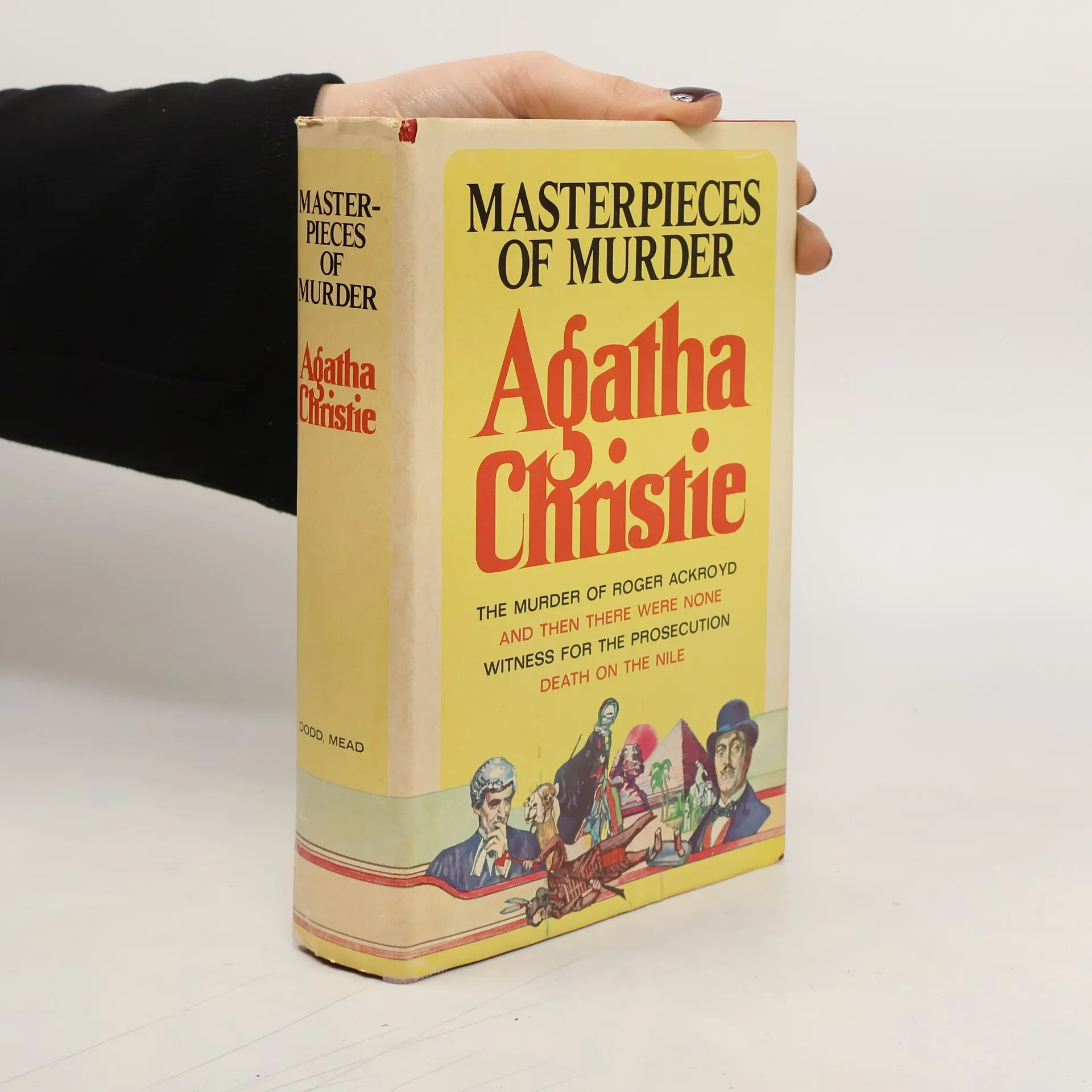
Masterpieces of Murder
The Murder of Roger Ackroyd, And Then There Were None, Witness for the Prosecution, Death on the Nile
Autorzy
Ocena książki
Więcej o książce
This volume features four murder classics that solidified Agatha Christie’s status as the unparalleled “Queen of Crime.” "The Murder of Roger Ackroyd" (1926) is often hailed as her most brilliant work, where Hercule Poirot investigates a doctor’s murder in a small English village. The clues are all present, yet the killer's identity remains a shocking surprise for most readers. "And Then There Were None" (1939), also known as "Ten Little Indians," became a successful play and was adapted for film and television. This iconic “locked room” mystery involves ten strangers, each harboring a guilty secret, who are systematically murdered on an isolated island, following a nursery rhyme. Its ending surpasses even the adaptations. "Witness for the Prosecution" (1948), adapted into a hit play and film, tells the story of a wife who, for mysterious reasons, testifies against her husband in a murder trial, culminating in a breathtaking “double-twist” ending that has captivated audiences. Lastly, "Death on the Nile" (1937), inspired by Christie’s travels in Egypt, showcases Hercule Poirot’s exceptional skills as he unravels the motiveless murder of a beautiful newlywed in the land of the Pharaohs, highlighting Christie’s keen psychological insight.
Zakup książki
Masterpieces of Murder, Agatha Christie
- Język

- Rok wydania
- 1977
- Oprawa
- (twarda)
Metody płatności
Brakuje nam tutaj Twojej recenzji.
- Tytuł
- Masterpieces of Murder
- Podtytuł
- The Murder of Roger Ackroyd, And Then There Were None, Witness for the Prosecution, Death on the Nile
- Język
- angielski
- Autorzy
- Agatha Christie
- Wydawca
- Dodd, Mead & Company
- Rok wydania
- 1977
- Oprawa
- twarda
- Liczba stron
- 594
- ISBN10
- 039607412X
- ISBN13
- 9780396074120
- Seria
- Tagi
- Ocena
- 4,4 z 5
- Opis
- This volume features four murder classics that solidified Agatha Christie’s status as the unparalleled “Queen of Crime.” "The Murder of Roger Ackroyd" (1926) is often hailed as her most brilliant work, where Hercule Poirot investigates a doctor’s murder in a small English village. The clues are all present, yet the killer's identity remains a shocking surprise for most readers. "And Then There Were None" (1939), also known as "Ten Little Indians," became a successful play and was adapted for film and television. This iconic “locked room” mystery involves ten strangers, each harboring a guilty secret, who are systematically murdered on an isolated island, following a nursery rhyme. Its ending surpasses even the adaptations. "Witness for the Prosecution" (1948), adapted into a hit play and film, tells the story of a wife who, for mysterious reasons, testifies against her husband in a murder trial, culminating in a breathtaking “double-twist” ending that has captivated audiences. Lastly, "Death on the Nile" (1937), inspired by Christie’s travels in Egypt, showcases Hercule Poirot’s exceptional skills as he unravels the motiveless murder of a beautiful newlywed in the land of the Pharaohs, highlighting Christie’s keen psychological insight.